
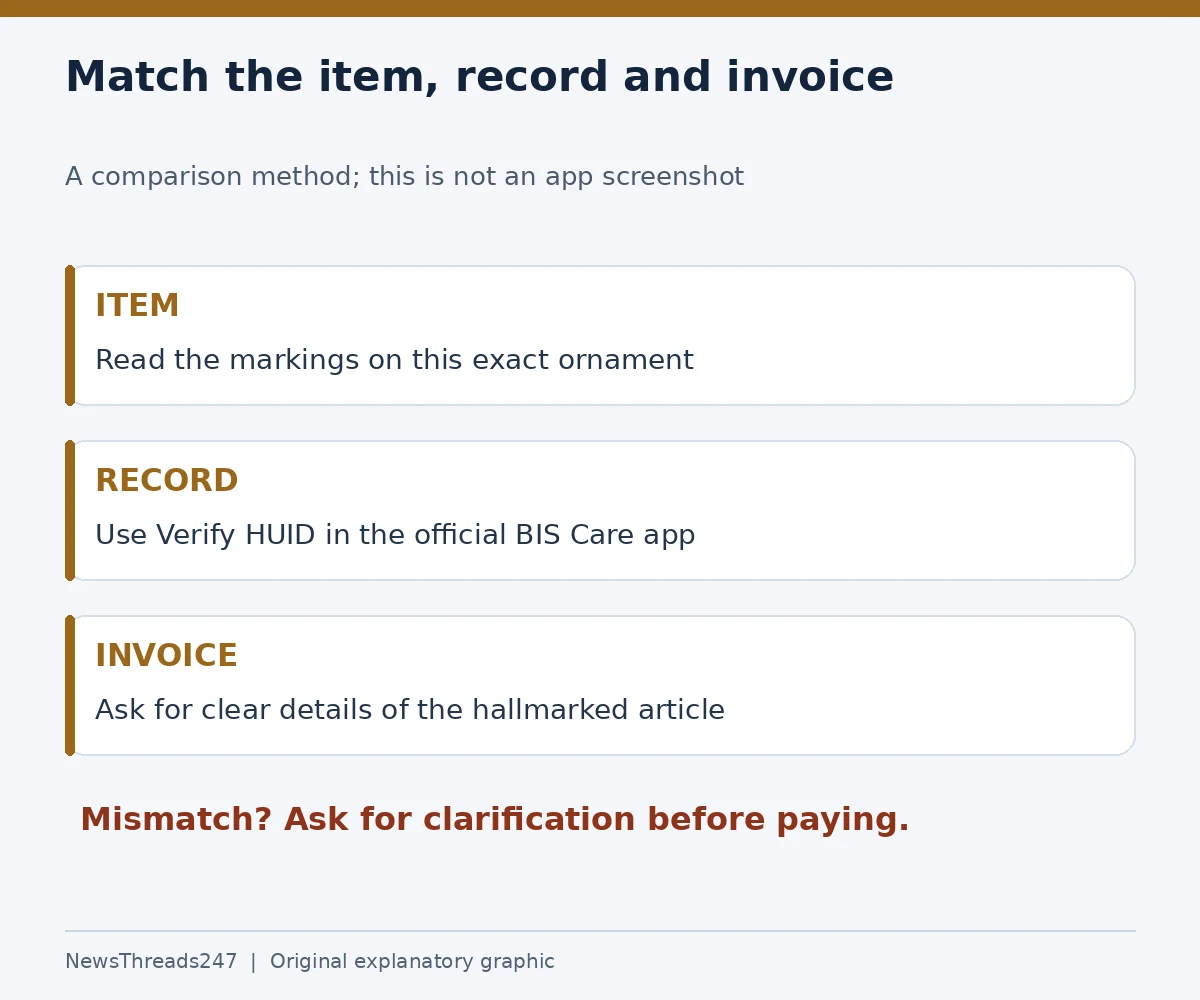
Before paying for gold jewellery in India, connect three things: the exact ornament, its hallmark record and the invoice you will take home. A purity number on a tag, a reassuring sales explanation or a successful-looking phone screen should not replace checking that they refer to the same article.
Festive buying is receiving fresh attention, including Mint’s 26 October buying guide. The checks below follow the Bureau of Indian Standards’ existing guidance and help you assess a jewellery purchase.
Read the hallmark on the article, not only the tag
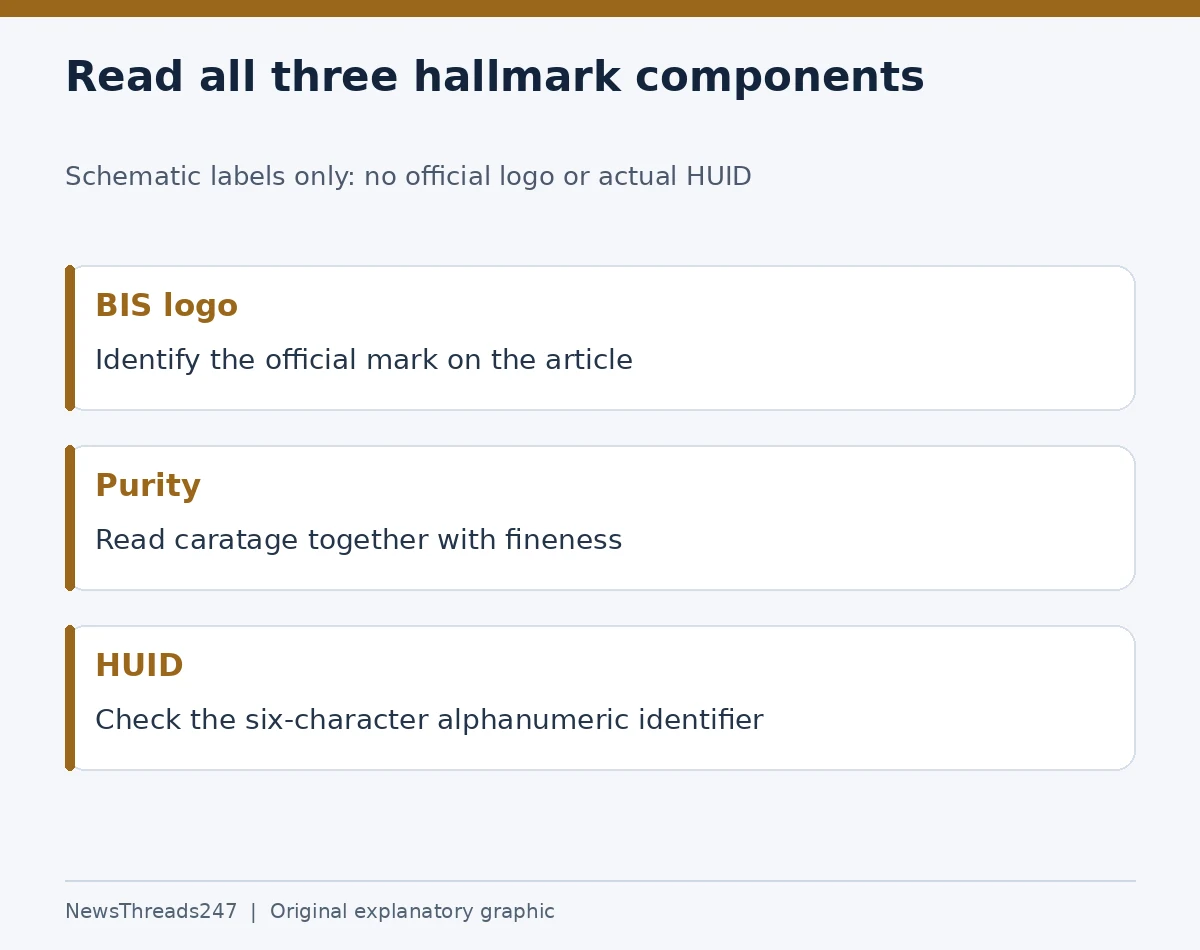
BIS’s general hallmarking FAQ describes three components: the BIS logo, purity expressed through caratage and fineness, and the six-character alphanumeric Hallmark Unique Identification number, or HUID. Ask to see the markings on the item you are considering.
Read the characters slowly enough to distinguish similar shapes. If a mark is too small to see, ask the seller to show it with magnification. Keep the article identifiable while moving between the counter, the lookup and the invoice. Checking one bangle and later buying another similar-looking piece defeats the comparison.
This is also why a close-up of an unrelated hallmark in a brochure proves little about the ornament in your hand. The useful question is not whether the shop can display a hallmark, but whether the markings and records for this particular article make sense together.
Use the official HUID verification route
BIS’s consumer-protection guidance directs buyers to the Verify HUID feature in its official BIS Care app. Use the identifier from the article and read the returned information. Do not treat a seller’s unrelated screenshot as your own verification.
If the identifier is not recognized, first check the characters you entered. If the returned information seems inconsistent with what the seller describes, stop and ask for clarification before paying. A transcription error and an unresolved discrepancy are different situations; neither is improved by rushing to a conclusion.
Keep a record sufficient to identify what you checked, where the app allows it. Do not share personal information with an unofficial “verification” service simply because it appears in a search advertisement. Start from BIS’s own guidance when locating its app or recognised service.
Make the invoice useful for the same article
BIS says buyers should obtain an authentic invoice and that it should contain details of the hallmarked articles for dispute or complaint redressal. A bill describing only “gold item” may leave you with avoidable questions about which piece was sold and what the seller represented.
Ask the seller to explain the item description, stated purity, weight basis and each charge before you approve the final amount. The following worksheet is an editorial comparison aid, not a claim that every field below is a separate statutory invoice requirement. Its purpose is to make the seller’s calculation understandable.
| Question | What to compare | What remains separate |
|---|---|---|
| Which article? | Description and identifying details | Another similar ornament |
| Which purity? | Marking, lookup and seller description | Colour or appearance |
| Which weight? | Metal weight and any stones/non-metal parts | A single unexplained gross figure |
| Which charges? | Metal value, making/wastage and other stated lines | A purity check alone |
| Which terms? | Written exchange or return conditions | An assumed resale promise |
BIS specifically distinguishes hallmarking charges from making and wastage charges. Therefore, “hallmarked” does not mean all sellers’ final bills will be the same. Once the item’s identity and purity are clear, compare the commercial terms on their own basis.
A fictional bill shows where confusion begins
Suppose two fictional ornaments are each described as weighing 12 grams in total. One is a plain bangle; the other includes stones or other non-metal components. Before comparing a quoted metal value, ask which weight the seller is actually using for the gold calculation. Equal gross weights alone do not provide that answer.
Now suppose the seller offers a reduction in making charges on the second piece. That may affect the purchase total, but it does not settle the earlier question about metal weight. Put the inputs on paper first, then compare the resulting bills. Use the seller’s actual dated figures when comparing offers.
The same discipline helps with an exchange offer. If an older item is part of the transaction, ask for the assessment of that item separately from the new jewellery’s bill. Keep the offered exchange value, deductions and purchase charges visible instead of accepting one unexplained net figure.
Ask about returns before the occasion has passed
A hallmark check does not tell you whether a seller will accept a change of mind, how a resized item is treated or what deductions may apply in an exchange. Ask for the applicable written terms before buying, especially when the jewellery is a gift or the size may need changing.
For a useful comparison, describe the same situation to each seller: the item, when you might return or exchange it and whether it would be altered or worn. Record the answer with the date and the relevant conditions. “Buyback available” is less informative than an explanation of what is valued, what is deducted and when.
Avoid converting a salesperson’s verbal reassurance into a future price guarantee. This guide has not established a universal return period, resale percentage or tax treatment. Those are separate questions requiring the applicable terms and, where necessary, current official rules.
A lookup and a physical purity test do different work
BIS also describes chargeable consumer testing through recognised Assaying and Hallmarking Centres, which issue an assay report identifying the article. This is a route for a physical testing concern; it is different from reading a HUID record on a phone.
If a concern remains after purchase, keep the invoice, identifying information and relevant communications together before approaching the seller or BIS. Use BIS’s consumer FAQ for its complaint guidance. Do not rely on an unsourced promise of automatic compensation or assume an informal home test can resolve a dispute.
For the purchase itself, the most useful pause is before payment: can you identify the item, explain what the verification showed and understand the bill? If one of those remains unclear, ask for it to be resolved while the article is still on the counter.
Sources and visual credits
BIS general, consumer-protection and consumer FAQ pages were checked on 27 October 2026. This guide does not attempt to restate every district, product or exemption in mandatory hallmarking orders. Comparisons are original editorial examples, not dealer quotations. The featured illustration is AI-generated; the two original explanatory graphics contain no actual HUID, official logo reproduction or app screenshot.