
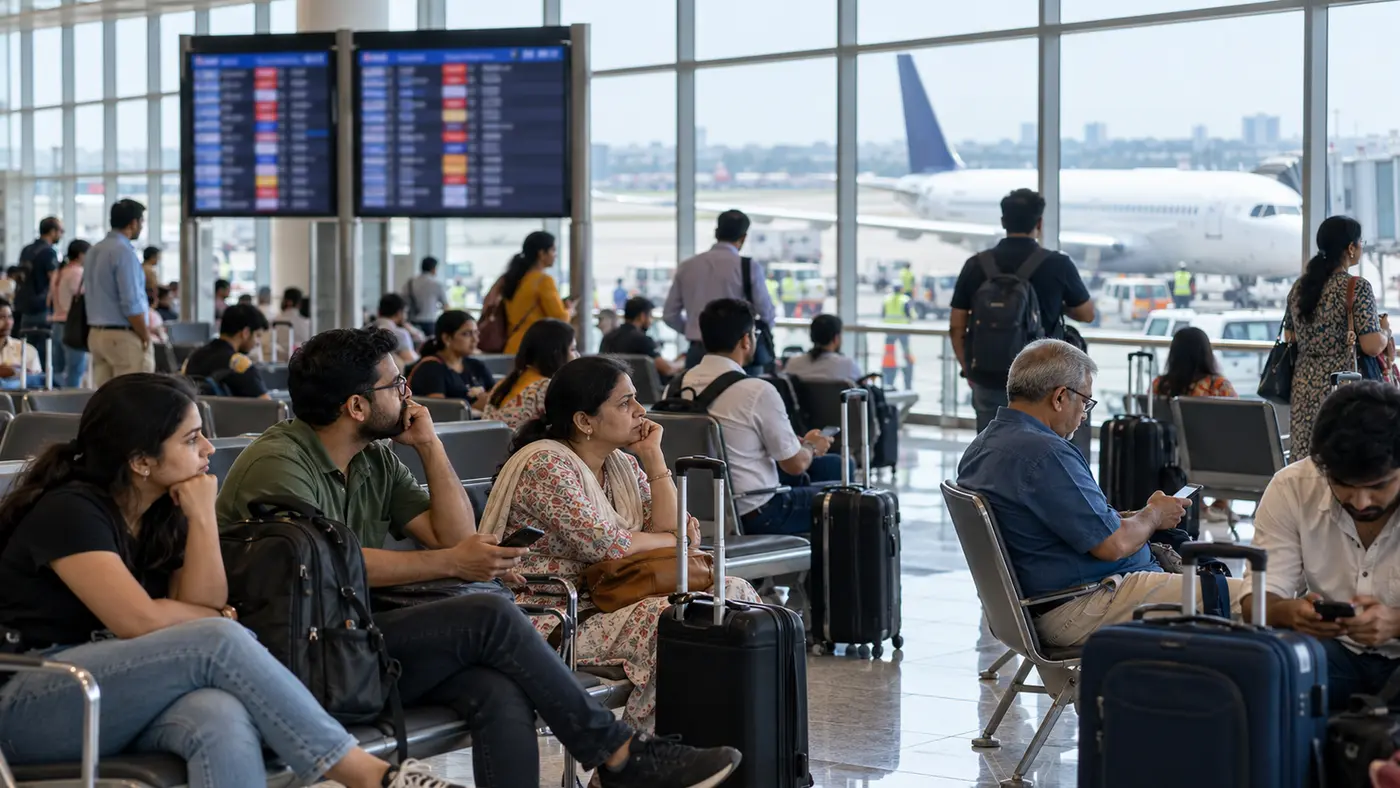
A flight delay, an airline cancellation and your own voluntary ticket cancellation are three different situations—and the refund rules are not identical. When travel plans fail, a useful first step is to identify who changed the booking, how much notice was given, whether you are at the airport, and what the operating airline actually offered.
India’s Directorate General of Civil Aviation (DGCA) has a civil aviation requirement on airline assistance for denied boarding, cancellation and delay, and a separate refund-of-tickets requirement revised in February 2026 and effective from March 2026. This guide distinguishes them and shows what evidence to keep. It does not promise automatic compensation for every disruption.
Start by identifying the disruption
| Situation | The central question | Where to look |
|---|---|---|
| Airline cancels your flight | What notice and acceptable alternative or refund did the airline provide? | DGCA Section 3, Series M, Part IV; operating airline notice |
| Flight remains scheduled but is delayed | How long is the delay and what assistance is due under the rules? | Same DGCA disruption CAR and Passenger Charter |
| You voluntarily cancel a booking | What fare terms and minimum refund requirements apply? | DGCA Section 3, Series M, Part II and ticket conditions |
| You are denied boarding despite holding a confirmed ticket | What were the circumstances and alternative arrangements? | DGCA denied-boarding provisions |
| A connection on one ticket is missed | What was the cause and booking structure? | Applicable CAR provisions and airline terms |
The official DGCA Series M, Part IV disruption CAR explains assistance obligations. The Ministry of Civil Aviation Passenger Charter presents practical summaries. Check the full operative text and the airline’s communication rather than quoting an isolated compensation figure.
If the airline cancelled your flight
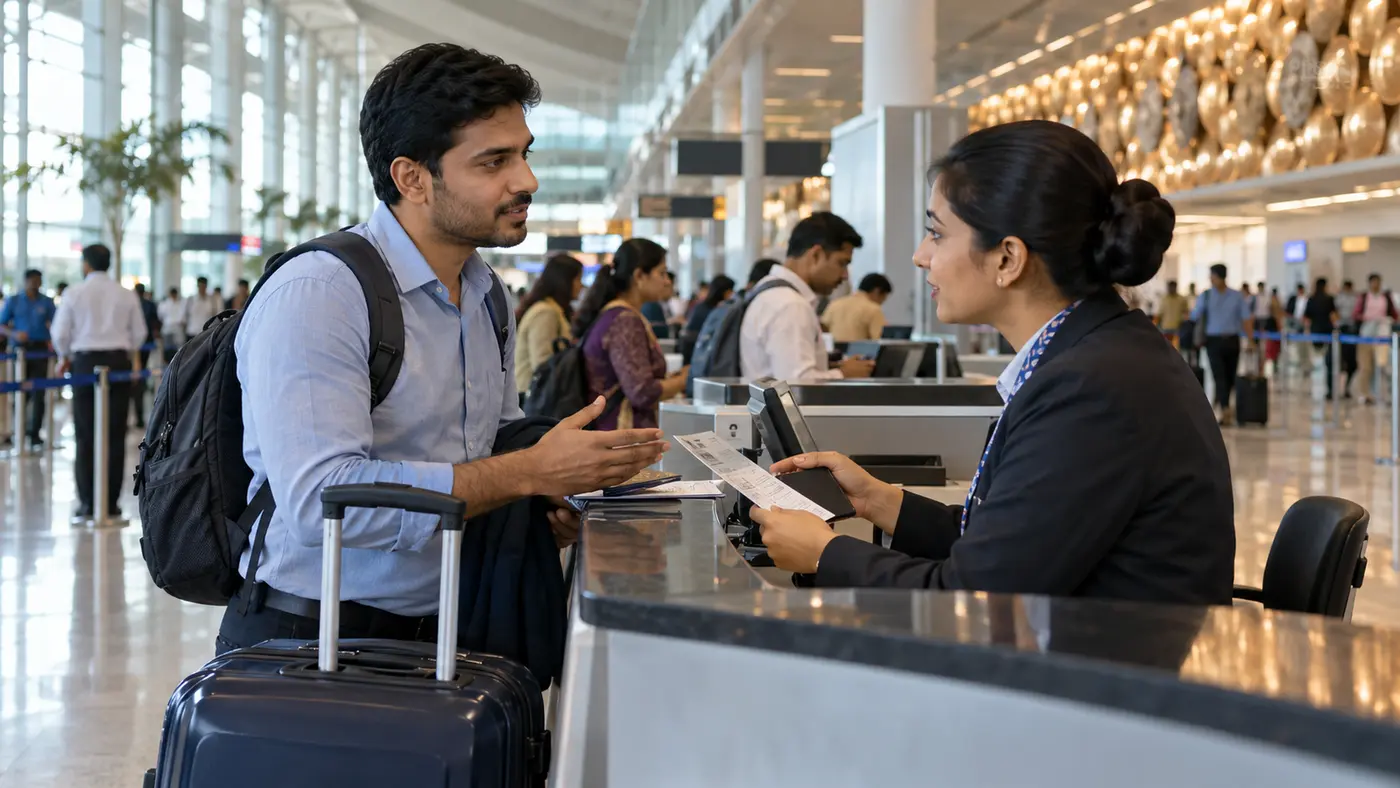
The timing of the notice matters. The published Passenger Charter distinguishes earlier notice from notification closer to departure, and discusses acceptable alternative flights or refunds. Under specified circumstances, an airline may owe compensation in addition to a refund or alternate arrangement. But this depends on notification conditions, passenger information and exclusions, including extraordinary events beyond the airline’s control.
For example, the charter describes compensation ceilings linked to scheduled block time, with caps of ₹5,000, ₹7,500 or ₹10,000 or the booked one-way basic fare plus airline fuel charge, whichever is less, in its specified cancellation scenario. These are conditional ceilings, not automatic cash amounts for every cancellation. Even where financial compensation is not due, relevant refund or assistance obligations may still apply.
If your flight is delayed but not cancelled
A delay does not automatically trigger the same cancellation-compensation table. DGCA assistance rules consider the waiting period, scheduled flight duration and other facts. Depending on the circumstances, the operating airline may need to provide meals and refreshments, alternate travel or refund, or hotel accommodation and transfers. Ask the airline for the written disruption reason and its passenger-assistance options.
Before accepting a reroute, check arrival airport, connection risk, baggage transfer, ticket validity and any changes in date. Keep a copy of the original booking and the airline’s new itinerary. If your trip involves a separate onward ticket, protection may be different from a through-ticketed connection; do not assume the operating airline owes the entire cost of an unrelated booking.
Refunds when you cancel the ticket yourself
Voluntary cancellation must be analysed under fare conditions and the DGCA Series M, Part II refund CAR. A revised version dated 24 February 2026 became effective on 26 March 2026. Its provisions address refund processes and practices, including limits on charges and prescribed treatment of eligible circumstances.
Never assume a ‘non-refundable’ label means that every component of a ticket price can always be retained. Equally, do not assume a passenger who changes plans is automatically entitled to a full fare refund. Review the current CAR, ticket type, booking channel and applicable airline policy, and ask for an itemised calculation of deductions.
The evidence you should save before leaving the airport

- Original ticket, booking reference (PNR), boarding pass if issued and payment receipt.
- Airline cancellation, delay or rerouting SMS, email or app notices with timestamps.
- Scheduled departure and actual revised departure/arrival data.
- Written or photographed information about meals, hotel, alternate flight or refund offered.
- Receipts for necessary costs you actually incur, keeping in mind that reimbursement depends on applicable rules.
- Names or official case references from airline support; avoid recording or publishing unrelated travellers’ private information.
Some disruptions produce confusing verbal explanations. A timestamped notice can help distinguish a cancellation announced several days beforehand from one first communicated at check-in. Preserve the operating airline’s name, since the DGCA disruption CAR places obligations on the carrier operating or intending to operate the flight, subject to its conditions.
A step-by-step response when plans change
- Verify status: check the airline’s official app, website or airport desk. Do not rely on a forwarded message alone.
- Ask which category applies: cancellation, delay, denied boarding or a voluntary change.
- Request the applicable choice: alternative transportation, refund and assistance as provided for your facts.
- Check the complete itinerary: route, time, airport, baggage, onward segments and reasonable ground transfers.
- Keep written evidence: record the specific option offered and your acceptance or refusal.
- Escalate with the airline: file a case and retain the reference, then use official aviation grievance channels if unresolved.
How AirSewa complaints work
The Ministry of Civil Aviation describes AirSewa as a platform for air-travel grievances, flight information and follow-up between passengers and stakeholders. Raise a clear complaint with the airline first and provide the reference, journey details and documents where required. AirSewa may route and escalate complaints through its process; it is not an instant-compensation button.
In the grievance, state the relevant flight and date, what happened, when you were informed, the assistance or refund requested, the response received and the precise resolution you seek. Requests supported by a dated timeline are usually easier to assess than a generic complaint that a flight was ‘very late’.
Practical comparison: three common examples
| Example | Relevant next question | What not to assume |
|---|---|---|
| Airline cancels a domestic flight the day before departure | Was an acceptable alternate flight offered, and what does the CAR provide given notice and cause? | Every passenger automatically gets the highest listed compensation |
| Flight is delayed for hours and you remain in terminal | What meals, rerouting or accommodation provisions apply to this delay? | The cancellation-compensation table automatically applies |
| Passenger changes holiday dates on a discounted ticket | What do ticket conditions and the refund CAR allow to be retained or refunded? | All cancellation charges must be zero |
These examples describe decision paths, not legal findings. Exact notice periods, schedule, operating cause, booking information and rule exceptions determine the final outcome.
Frequently asked questions
Does every flight cancellation in India require ₹10,000 compensation?
No. The published Passenger Charter contains conditional compensation bands and ceilings. The amount and obligation depend on the specified circumstances; extraordinary-event exclusions and passenger-information conditions can matter.
Is a long delay the same as a cancellation?
No. The DGCA disruption CAR treats delay and cancellation through distinct provisions. The type and length of assistance can depend on waiting time, flight duration and other factors.
What if the airline offers only credit instead of money back?
Review the refund CAR and your circumstances. The 2026 refund rules address refund practices; do not assume the airline may unilaterally substitute credit in every case. Ask for the applicable basis in writing.
Does a travel-agent booking remove airline obligations?
The booking channel can affect the refund-processing route, but the operating airline remains subject to relevant DGCA requirements. Check both the airline’s notice and the travel agent’s documented process.
Where do I complain if airline customer service does not resolve the problem?
Use the operating airline’s official grievance system and, where appropriate, the government AirSewa grievance platform. Retain all case references and written responses.
Bottom line
For a disrupted flight, write down the disruption type, notice time, operating carrier, assistance offered and actual expenses before discussing compensation. Read the DGCA disruption CAR, the 2026 refund CAR and the official Passenger Charter to determine the right question for your case.
Editorial check: 1 November 2026. Passenger entitlements depend on facts and the operative DGCA text; this general explainer is not individual legal advice or a promise of compensation.
Visual disclosure: All three images associated with this article are AI-created editorial illustrations. They do not depict an identified real applicant, organisation, official interface or recorded event.