
A tyre-pressure light comes on before breakfast, then disappears on the drive to work. The tempting conclusion is that the car has fixed itself. It may simply mean the tyres have warmed enough to move above the warning threshold. Check the pressure with a gauge before treating the warning as resolved.
The useful first distinction is between a low-pressure warning and a monitoring-system fault. A reset is not a repair for a leak, and a quiet dashboard is not a measurement of all four tyres. This guide covers routine passenger-car checks for readers in India and the United States; the vehicle’s own manual governs its pressures, warning sequence and reset procedure.
Read the behaviour of the light
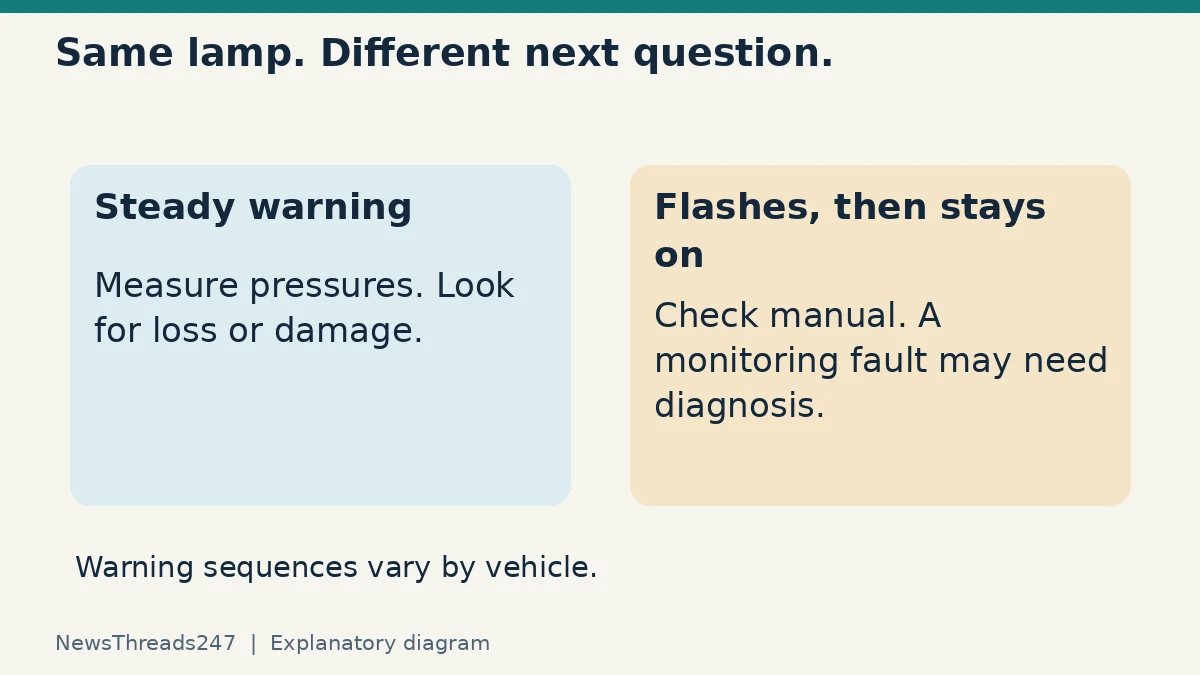
The US National Highway Traffic Safety Administration explains that a steady TPMS warning indicates significant underinflation. It also describes a cold-morning light that goes out as marginally low pressure rises with warming. A light flashing for 60–90 seconds before staying on can indicate a system malfunction on vehicles covered by its guidance. These patterns are a starting point, not a diagnosis of a particular Indian or US model. NHTSA’s TPMS guidance recommends checking the tyres and seeking a system inspection for a malfunction.
Make a short note before dismissing the message: did it stay steady, flash first, identify one wheel, or appear after a wheel change? Photograph the message while safely parked. That record gives a workshop something more useful than “the light comes on sometimes”. Never operate a phone while driving to capture it.
If the car pulls, vibrates, makes an unusual tyre noise, or a tyre looks damaged or flat, stop somewhere safe and arrange appropriate assistance. The routine pressure-check process below is not permission to continue driving on a visibly damaged tyre.
The pressure you need is on the car
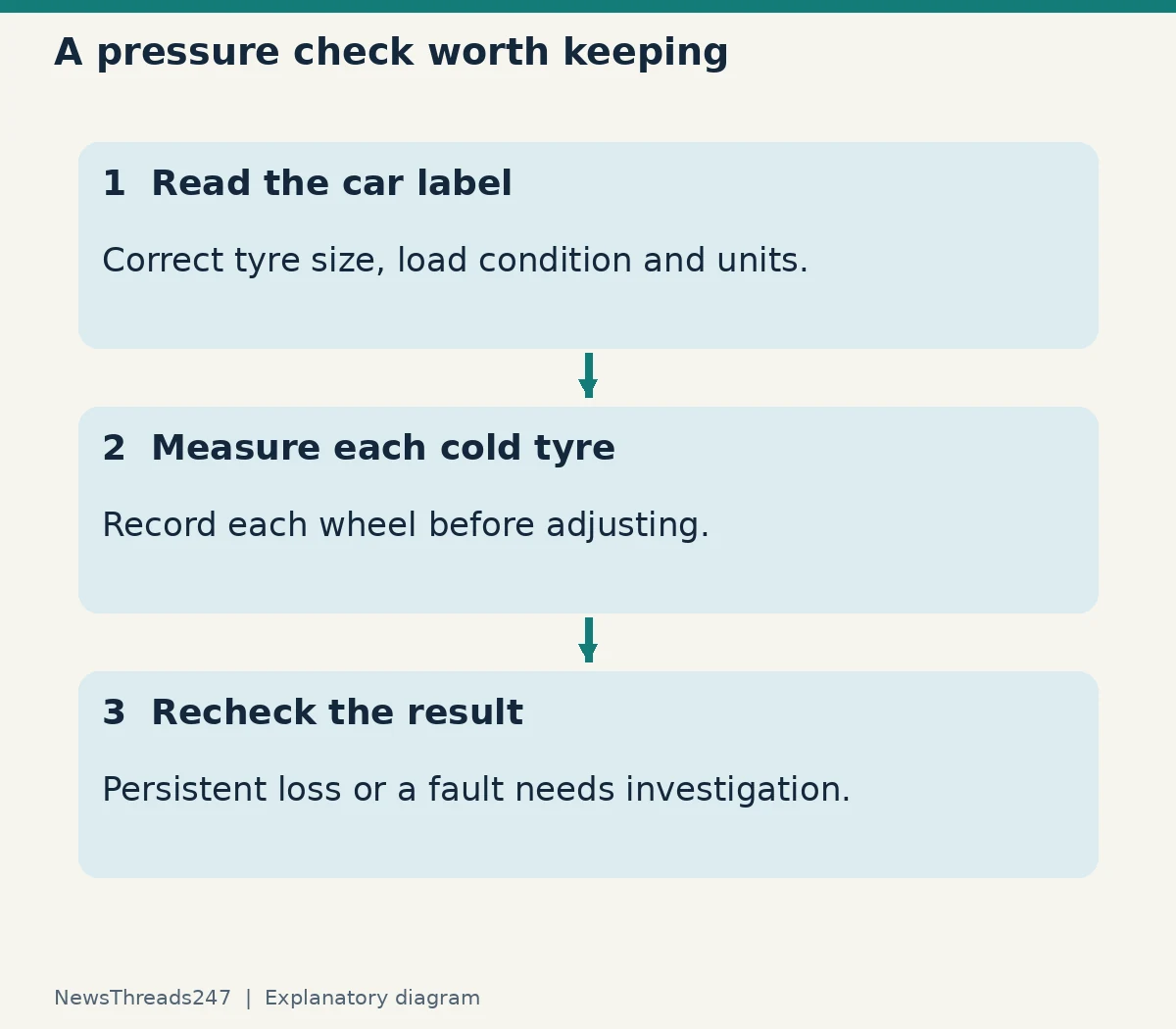
Find the vehicle manufacturer’s pressure label and the corresponding section of the manual. Depending on the car, information may be around a door opening or fuel flap. Check the tyre size and loading condition shown. Front and rear recommendations can differ; a fully loaded car may have another specified setting. Do not copy a number from a neighbour’s car or a social-media comment.
The large pressure number moulded on a tyre sidewall is not a universal target for your car. Michelin’s pressure-check guide directs drivers to the vehicle placard. For a replacement wheel or tyre size that the label does not cover, obtain the correct specification from the vehicle manufacturer or a qualified tyre professional rather than improvising.
Write down the units as well as the number. A label in kPa and a compressor in psi can create an avoidable mistake if someone treats the digits as interchangeable. Ask for the specified value in the unit the gauge actually displays. A display showing a plausible-looking number is not enough if the unit is wrong.
Cold means before the journey heats the tyres
NHTSA defines a cold tyre for this check as one on a vehicle that has not been driven for at least three hours. An early check before leaving home is easier to interpret than a reading after motorway driving. Measure all road tyres, and check the spare according to its own instructions; some temporary spares have a very different requirement.
Michelin India explains that falling temperatures reduce tyre pressure and recommends regular checks, including before long trips or heavy loads. Its winter-pressure advice also stresses the vehicle manufacturer’s recommendation. Seasonal cooling is a reason to measure, not a reason to add the same arbitrary extra amount to every car.
Imagine an illustrative car whose label specifies different front and rear pressures. A driver remembers only the front value, inflates every tyre to it and resets the warning. The light may disappear, but the exercise has not established that the rear tyres match the car’s instructions. Recording four separate readings prevents that shortcut. The example deliberately supplies no universal inflation number.
A repeatable check without guesswork
Park safely, find the correct label and use a suitable pressure gauge. Remove the valve cap, seat the gauge securely and read it. If the connection hisses continuously, reposition it and take another reading. Record each wheel’s measurement before adjustment so an unusually low tyre is not lost in a set of freshly equalised numbers.
Adjust to the applicable cold specification using appropriate equipment, then recheck rather than trusting the compressor setting alone. Replace valve caps. Follow the manual if the system requires calibration or a particular driving procedure after pressures are corrected. If you cannot make a cold check immediately, follow the manual or obtain professional help rather than releasing air from a warm tyre merely to match a cold target.
Keep the record simple: date, whether the tyres were cold, label requirement, each wheel’s reading, any adjustment and the warning’s later behaviour. Comparing like-for-like cold readings is more useful than comparing a warm afternoon measurement with a cold dawn one.
Why resetting first can hide the problem
There are direct systems that use pressure sensors and indirect systems that infer a pressure-related change from wheel rotation. Michelin India’s TPMS explainer describes both. The distinction helps explain why equipment and calibration procedures differ. It does not make either system a substitute for measuring pressure.
If one tyre repeatedly loses more pressure than the others, have the tyre, valve and wheel checked. If pressures are correct but a fault warning remains, tell the workshop about recent rotations, replacement wheels or tyre work. Do not buy a sensor simply because an online post lists it as the most common cause; a fault needs diagnosis on the actual car.
A reset button can acknowledge or recalibrate a system under the manufacturer’s procedure. It cannot seal a puncture or prove that a wheel is undamaged. Preserve the warning history until the cause is understood.
A useful handover to the workshop
Bring the pressure log, warning photograph and details of recent work. Ask what was checked, what was found and whether the TPMS needs a separate repair or relearning procedure. If the answer is only “we reset it”, ask whether the pressures and source of any loss were checked first.
Pressure and age answer different questions. A correctly inflated tyre can still need replacement because of damage, wear or ageing; our tyre date-code guide explains that separate assessment. A warning that has stopped illuminating is reassuring only after the underlying checks support it.
Sources and scope
This is a practical explanation of the NHTSA and Michelin guidance linked above, checked on 25 October 2026. It is not a vehicle-specific repair instruction. Use the correct manual, label and professional inspection for your model and any persistent loss or fault.