
A pre-adverse action notice can arrive while a job applicant still believes the offer is moving forward. If the attached background report contains someone else’s record, a wrong employment date or another error, a general message saying the report is unfair will not identify what needs correcting.
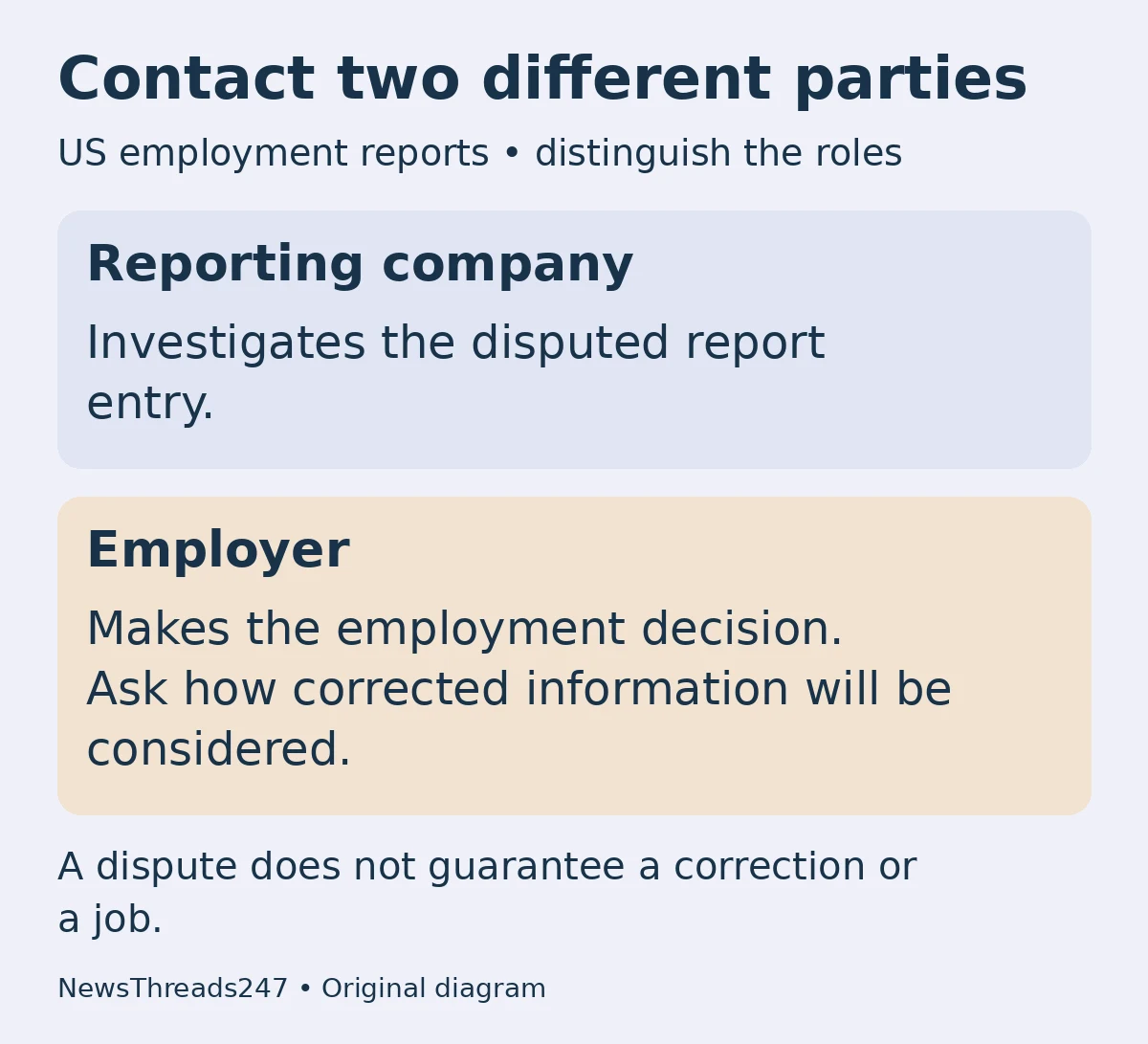
For a US employment check supplied by a background reporting company, obtain the actual report and notice, identify the disputed entry, contact the reporting company through its verified process and tell the employer what you have disputed. Keep the two conversations connected: the screening company handles the report, while the employer makes the hiring decision.
First identify the stage and who supplied the information
The FTC’s employer guidance says that before taking an adverse employment action based on a third-party consumer report, an employer must provide the report and a summary of Fair Credit Reporting Act rights. This gives the person an opportunity to review and explain the information. A pre-decision notice and a final adverse-action notice therefore serve different purposes.
The Consumer Financial Protection Bureau explains that employment reports can contain credit information, public records and employment history. These reports are not all the same. Identify the company and the specific report used rather than assuming an ordinary credit-score check explains every issue.
Read the date and exact wording of the employer’s communication. Does it say a decision is being considered, ask for information, or say the decision has been made? If the report or rights summary is missing, request the missing document promptly. Keep the message and attachments in their original form.
Turn the error into a precise, supported dispute
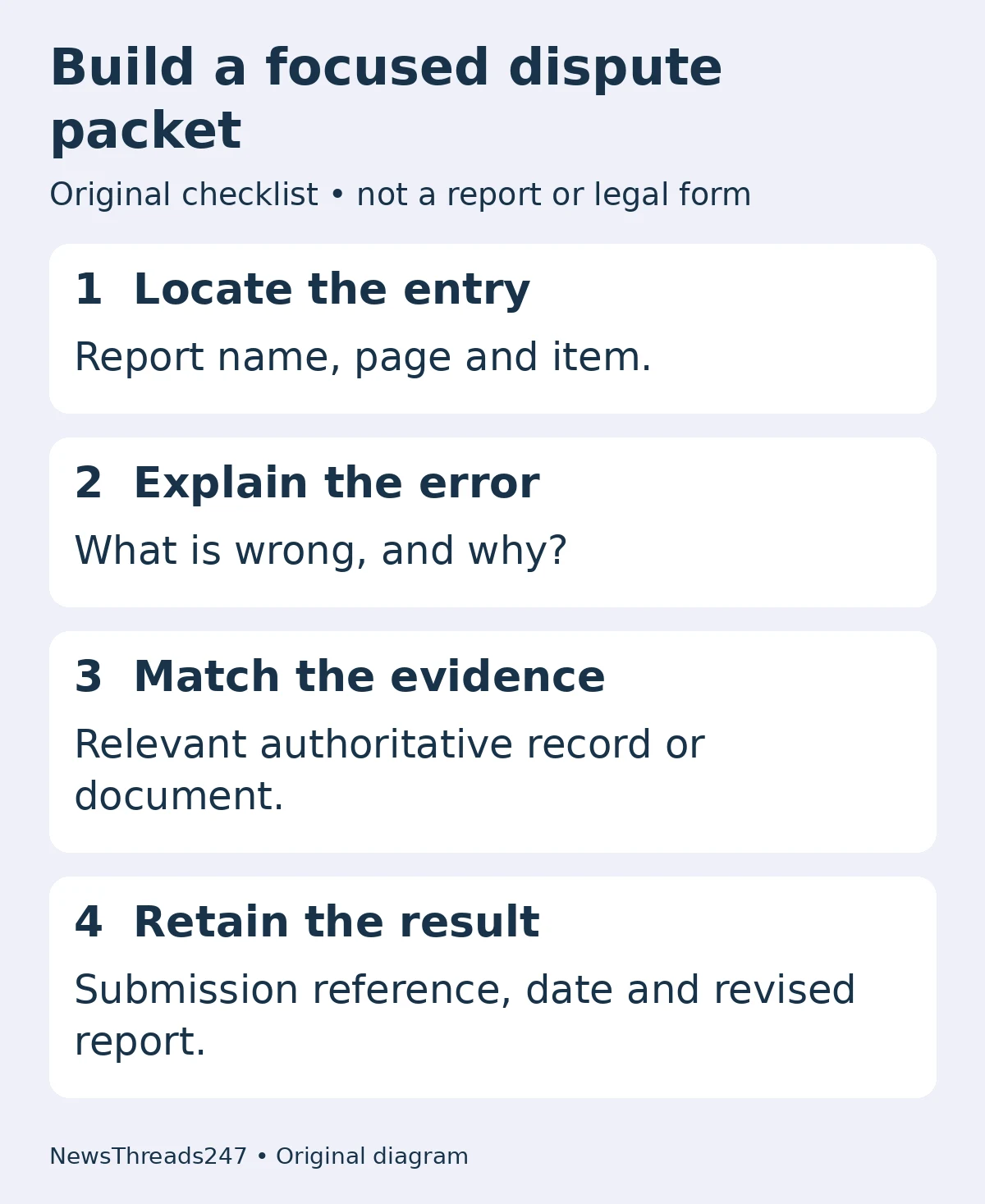
Create a small evidence list with four fields: the report page or item; what it says; what you believe is wrong; and the document or source that supports your position. Distinguish an identity mismatch from an incorrect detail in a record that does belong to you. The supporting evidence will differ.
For a hypothetical employment-date error, the useful packet might identify the disputed employer entry and provide a relevant employment record showing the dates. For a public-record issue, identify the record reference and use authoritative case information where available. Do not alter documents, conceal accurate information or send a large unrelated file collection hoping the recipient will find the issue.
The FTC’s consumer guidance advises contacting the reporting company, explaining the mistake and providing supporting documents. It also advises reviewing a revised report, asking that it be sent to the employer and telling the employer about the mistake. A dispute is a request for investigation, not proof that a correction has already been made.
Send different requests to the reporting company and the employer
To the reporting company, identify yourself through its secure process and state the exact item being disputed. Explain the requested correction and attach only the evidence relevant to that item. Save the submission acknowledgement, reference number and date. Use the company’s verified contact route, not an address in an unsolicited message promising to clear a check.
To the employer, keep the message concise: identify the report and disputed entry, say when the dispute was submitted, provide its reference if available and ask how the employer wants corrected information supplied. If the employer specifies a response date, acknowledge it and explain any evidence still being obtained.
Avoid sending a complete report or identity documents through an insecure group email. A background report can contain sensitive information about you and others. Ask for the appropriate recipient and secure upload method; preserve a copy of exactly what you submitted.
These requests solve different problems. The employer needs to know why the report may be unreliable for the decision. The reporting company needs enough detail to investigate the entry. Sending evidence to one does not establish that the other has received or considered it.
Do not assume a universal five-day promise
A response period described in a screening company’s article is not a guaranteed period for your case. Read the employer’s notice, respond promptly and ask for clarification if the timing is unclear. The FTC guidance explains the opportunity to review before a decision; it does not establish that a generic five-day instruction resolves every federal, state or local requirement.
Likewise, do not assume that filing a dispute guarantees the position will stay open or that a corrected report guarantees a job. Ask the employer for the current status and its process for reconsidering corrected information. Any legal deadline or right in a particular jurisdiction needs to be checked against the applicable rules.
If the decision is already final
The FTC’s consumer guidance says a report-based rejection notice must identify the reporting company and explain that it did not make the employment decision. It must also explain dispute rights and the right to an additional free report if requested within 60 days of the decision. The 60-day report-request right is not a reason to postpone a dispute.
Save the final notice together with the earlier notice, original report, dispute acknowledgement and later results. If a revised report arrives, compare the disputed item with the original, not just the cover page. Confirm whether the correction reached the employer and retain any response about the hiring decision.
Keep screening, hiring and work-authorisation paperwork separate
A background-report dispute is different from correcting or completing Form I-9. Our US I-9 document-choice guide explains that separate onboarding process. Ask which process a request belongs to before sending extra documents or assuming one resolution settles the other.
Also distinguish an inaccurate report from a concern about unlawful discrimination. The FTC and EEOC joint guidance explains that employers must comply with federal nondiscrimination requirements when using background information; local rules may add protections. A lawyer or relevant agency can assess a specific legal situation. This article is general process guidance, not an opinion on the legality of an individual decision.
The FTC directs reports of missing required notices, unauthorised reports or screening errors to ReportFraud.ftc.gov. Reporting a problem to an agency does not itself correct the file or guarantee hiring. Keep pursuing the documented reporting-company process and the employer’s response route.
Sources and visual credits
Primary references checked 26 October 2026: FTC consumer guidance, FTC/EEOC employer guidance and the CFPB employment-report explainer. Examples and diagrams are original decision aids. Featured image: AI-generated conceptual illustration, not a background report, a real applicant or evidence of an employer’s decision.