
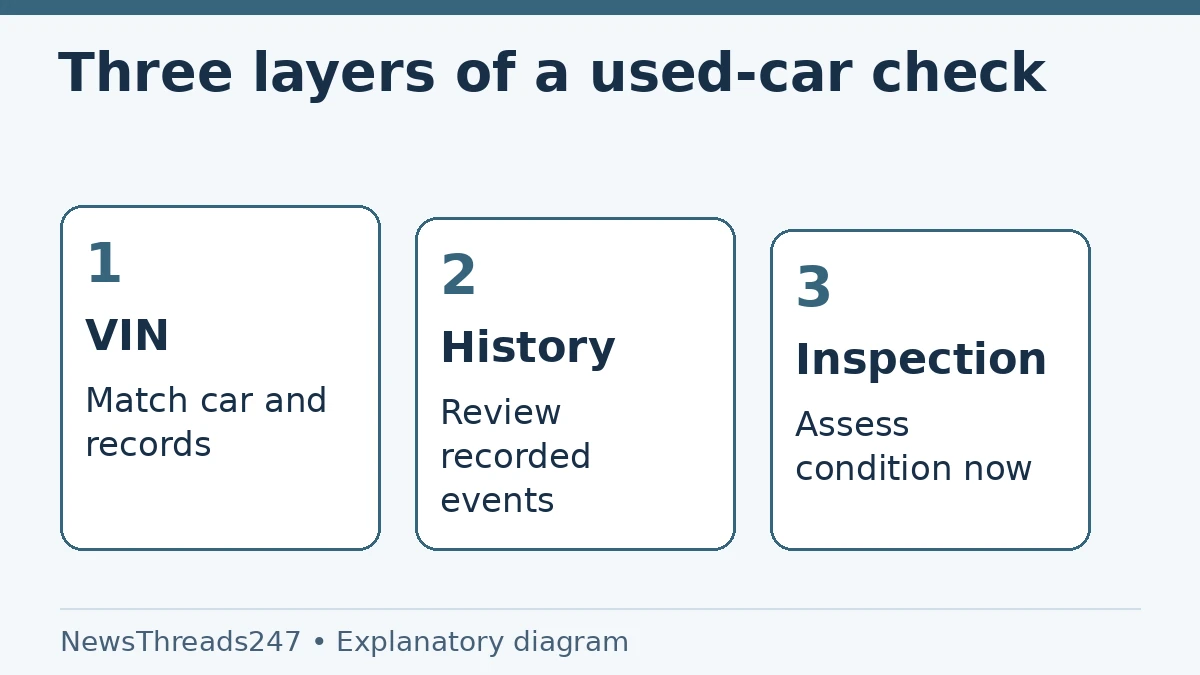
The used car looks dry, smells freshly cleaned and comes with a title the seller calls clean. None of those details settles whether it was once flooded. Before paying a deposit, put the vehicle’s identity, recorded history and physical condition beside one another. A mismatch is a reason to pause, even when the price is attractive.
For US buyers, the useful approach is a sequence: confirm the VIN, examine title and insurance-loss records, and commission an independent inspection. Each check has limits. This is a buying guide for the United States, checked on October 26, 2026; it does not describe Indian registration procedures or claim a particular car has been damaged.
Why a car can look convincing after a flood
NHTSA’s flood-vehicle guidance warns that damaged cars can reach markets far from the original flood and that problems may emerge later. Cosmetic cleaning is therefore a poor substitute for checking electrical and mechanical condition. The buyer may see clean upholstery while important questions remain underneath it.
That makes this a relevant precaution after flood season, rather than a claim about a new disaster today. NICB’s recent consumer warning describes damaged vehicles returning to sale and sellers concealing history. A car being offered in a dry inland town does not establish where it spent its earlier life.
Ask the seller directly whether the vehicle has had flood, water or insurance-total-loss damage. Request the answer in writing with the VIN attached. A seller’s statement is useful evidence of what was represented; it is not an inspection certificate. Avoid treating an evasive answer as something a discount will automatically compensate for.
Start by matching the vehicle’s identity
Record the VIN shown on the car and compare it with the title, listing and documents supplied. Do this before ordering reports. A beautifully detailed report for a different vehicle is irrelevant to the purchase in front of you. Ask the inspector to investigate inconsistent identification rather than trying to alter or decode suspicious markings yourself.
Save the original advertisement, the seller’s name and the representations about condition. Record the mileage and inspection date alongside the report date. The aim is a coherent transaction file: which vehicle was offered, what was claimed and what evidence you used to decide. Keep identity documents and payment details out of public posts.
If a seller wants payment before providing enough identification for a proper check, you do not yet have the information needed to assess the car. Ask for the missing evidence first. A promise to send the paperwork after collection reverses the sensible order of the purchase.
Use records for what they can establish
NHTSA points buyers to the National Motor Vehicle Title Information System for title-history research. Follow its current consumer instructions and approved-provider information. Review title brands, odometer entries and loss or salvage information in context; do not assume every type of repair appears in one report.
NICB recommends its free VINCheck for relevant records supplied by participating insurers. That participation limit matters. A search returning no record means no matching record was returned within that service’s coverage. It does not mean an engineer examined the car, or that every unreported incident has been ruled out.
The FTC’s buying advice pairs history research with an independent mechanic. These are complementary checks. A historical record can direct an inspection toward a concern; an inspection can reveal a concern absent from the records. Neither should be presented as a universal guarantee.
Three checks, three different answers
| Check | Question it helps answer | What it cannot establish alone |
|---|---|---|
| Vehicle and document identity | Are these records for this VIN? | Whether the car is mechanically sound |
| Title and insurer-history research | What relevant events were recorded? | That no unreported water damage exists |
| Independent physical inspection | What condition and warning signs are present now? | A complete record of every past event |
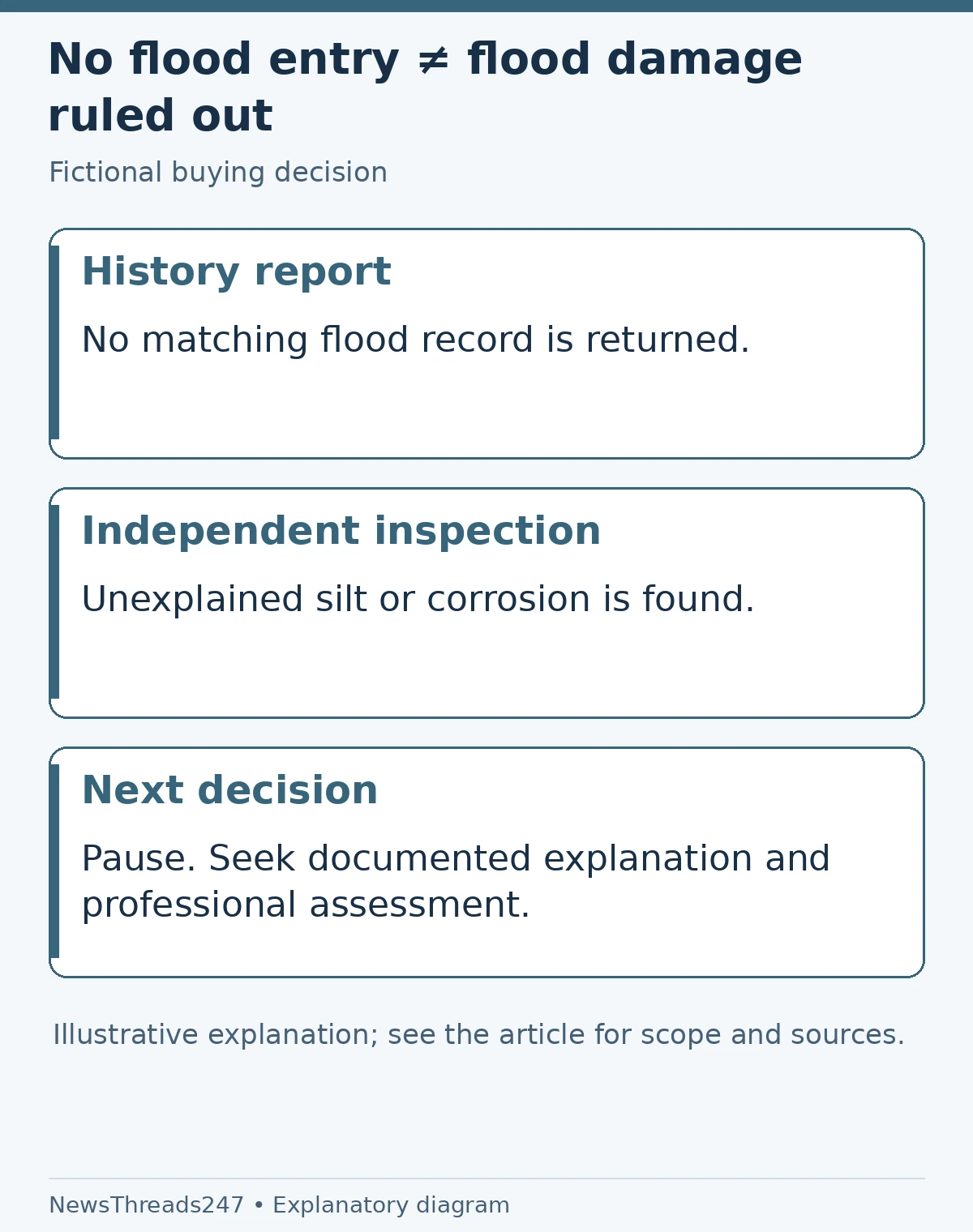
For example, imagine a fictional car with no flood entry in the history report but corrosion and unexplained silt found during inspection. The report does not cancel the physical evidence. The next step is to seek a documented explanation and professional assessment, or leave the transaction unresolved—not relabel the inspection as unnecessary.
Ask the inspector a flood-specific question
Arrange the inspection with a mechanic or repair facility independent of the seller. Say explicitly that you want water-damage concerns assessed, rather than requesting only a routine oil-and-tyre check. Ask what access the inspection needs, what can be examined and what will remain concealed without further work.
NHTSA identifies musty smells, heavy deodorising, mud and waterlines in hidden areas as possible warning signs. These are clues to investigate, not a reliable home test that classifies every car. A spill, ordinary wear or a replaced carpet may have another explanation. Conversely, the absence of an obvious smell is not clearance.
Request a written report that separates observations from conclusions. ‘Corrosion seen at this location’ is more useful than a vague ‘looks okay’. Ask about safety-related concerns and the limits of any estimate. Do not energise damaged systems, dismantle safety equipment or test a suspected flooded electric vehicle yourself.
Resolve the paperwork before agreeing on the price
Put the seller’s explanation next to the history and inspection. If they disagree, identify the exact unresolved point: an unexplained title change, a missing repair invoice, a VIN mismatch or a condition finding. Ask for evidence that answers that point rather than another general assurance that the car drives well.
Title branding and resale requirements are jurisdiction-specific. NHTSA explains the distinction between flood or salvage history and rebuilt vehicles, but a label is not a substitute for your state’s current requirements. Verify the registration and insurance implications through the relevant agencies and insurer before committing. Do not assume another state’s terminology means the same thing.
A fictional seller might offer a lower price instead of allowing an independent inspection. That is a commercial proposal, not new information about the condition. Decide whether you can assess the remaining uncertainty at all. An unanswered safety question does not become answered because the asking price changes.
Keep a record if a representation appears false
If you suspect concealed damage or a misleading sale, preserve the listing, VIN, correspondence, report and payment records. The FTC identifies reporting routes including ReportFraud.ftc.gov, NICB and the relevant state attorney general. A report is not a promise of reimbursement or a finding that the seller committed fraud.
For a vehicle already purchased, describe the specific discrepancy and seek appropriate local consumer or legal assistance where necessary. Avoid publishing personal accusations as a substitute for a documented complaint. This guide cannot determine an individual seller’s liability or whether a particular vehicle is safe.
Other checks remain separate. Our tyre age and condition guide explains why low mileage alone does not settle replacement. Passing one buying check does not remove the need to assess the rest of the vehicle.
Sources and visual credits
This US buying explainer draws on the NHTSA, FTC, NMVTIS and NICB resources linked above, checked October 26, 2026. The comparison and fictional decision example are editorial explanations, not vehicle testing. Featured image: AI-generated conceptual illustration. Context and decision diagrams: original NewsThreads247 visuals.