
Wednesday, 4 November 2026 · United States. Most Americans set their clocks back on Sunday, 1 November. Three days later, your phone may show the right time while your evenings still feel oddly early. That does not automatically mean you slept badly—or that one extra hour on the clock should have made you feel rested.
If you are waking too early, getting sleepy at 7 PM, or losing your normal evening rhythm, the practical goal is not to fight the clock. It is to rebuild a few dependable cues: daylight, a steady wake time and a calm night routine. Here is what can help this week, and what the science does—and does not—say.
In this article — open the table of contents
What changed on November 1—and what did not
The National Institute of Standards and Technology (NIST) confirms that US daylight saving time ended at 2:00 AM local time on Sunday, 1 November 2026. Clocks returned to 1:00 AM in areas observing the change. Standard time will remain in effect there until 14 March 2027. Hawaii and most of Arizona do not observe the seasonal switch. The US Department of Transportation explains the exemptions.
At the same physical sunset, the clock now reads roughly one hour earlier than it would have the previous week. That can change when you feel ready for a walk, family dinner or the journey home. It does not imply everyone has a biological problem or needs a rigid three-day programme.
Our existing US–India meeting-time guide covers the separate calendar and scheduling implications. This article focuses on sleep, daylight and the routines that make ordinary evenings manageable.
Why the ‘extra hour’ does not guarantee extra sleep
A clock repeats an hour, but your body does not automatically add sixty minutes of sleep. Some people wake at their usual biological time, while others sleep later or adjust quickly. The amount of light reaching your eyes, the timing of meals and activity, and habits around bedtime help cue the internal sleep–wake rhythm.
The National Heart, Lung, and Blood Institute explains how light and darkness influence the circadian system, including the timing of melatonin. A 2026 Association of American Medical Colleges review notes that the fall transition is often easier than the spring shift, but earlier evening darkness can still contribute to fatigue or changes in routine.
That nuance matters. Feeling a little sleepy earlier after the change is different from persistent insomnia, and not every bad night’s sleep can be blamed on daylight saving time. Look at the whole week—work hours, stress, caffeine and household demands—rather than treating the clock as the single cause.
A practical reset for the rest of this week
These steps are suggestions for a regular daytime schedule, not a treatment plan. Choose the changes that fit your job and family. Night-shift workers and people with diagnosed sleep conditions may need a different strategy.
| When | What to try | Why it helps |
|---|---|---|
| After waking | Keep your regular wake time and get outside or near bright daylight when practical | Light helps signal daytime and reinforce the daily rhythm |
| Afternoon | Make room for movement; avoid using late-day caffeine to overcome every dip | Regular activity supports sleep; late caffeine can delay it |
| Last hour before bed | Reduce bright screens and lights, and do something quiet | A consistent, low-stimulation routine helps prepare for sleep |
| At bedtime | Use a dark, quiet, comfortably cool room and avoid forcing an unusually early bedtime | Comfort and consistency are more useful than chasing a perfect clock time |
The CDC recommends regular sleep and wake times, a comfortable dark and quiet room, and turning off electronic devices at least 30 minutes before bed. The agency recommends at least seven hours for adults aged 18–60; the right amount varies with age and individual needs. Sleep quality also matters.
1. Find daylight early in your waking day
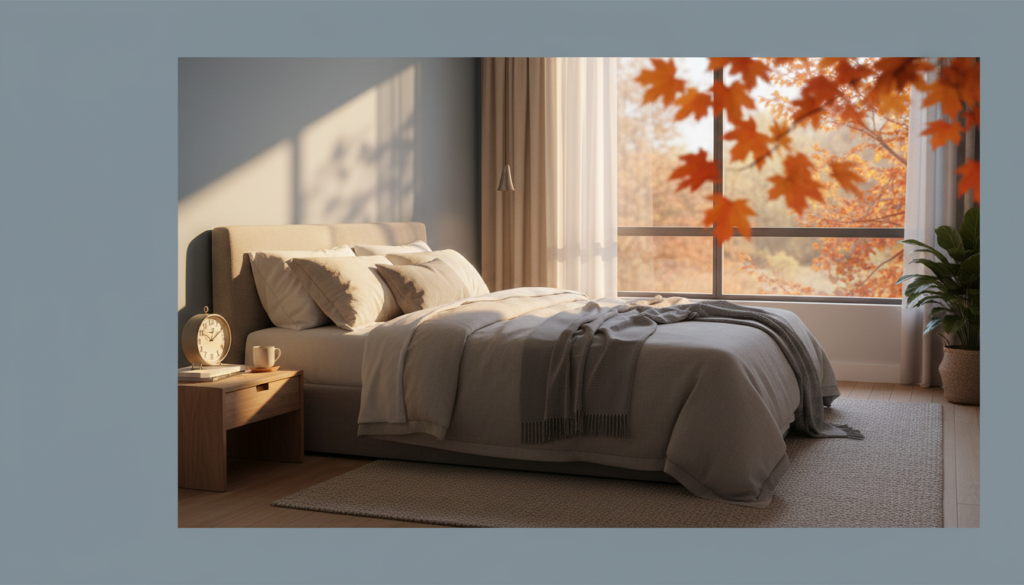
If you have a normal daytime schedule, open the curtains or walk outside after waking, where practical and safe. A ten-minute walk may be an easy habit to begin, but there is no universal ten-minute treatment dose. The CDC’s NIOSH guidance explains that morning and evening light influence the circadian system differently.

For example, someone who wakes for work at 7 AM could pair breakfast or a short trip outdoors with morning light. The aim is repeatability. If you leave home before dawn, use whatever daylight is available later without making unsafe changes to your commute.
2. Keep the morning steady; adjust evenings gently
You do not have to force yourself into bed an hour earlier just because it is darker outside. Try keeping a familiar wake time, then make your evenings quieter as bedtime approaches. If you have been drifting later, modest changes—say 10 to 15 minutes at a time—may be easier than an abrupt shift. This is a practical approach, not a promise that everyone will adapt in three days.
The NIH sleep guidance recommends similar bed and wake times, a cool and dark sleeping space and avoiding caffeine, nicotine and alcohol close to bedtime. These habits can matter more than the seasonal calendar date.
3. Make the late-afternoon dip less disruptive
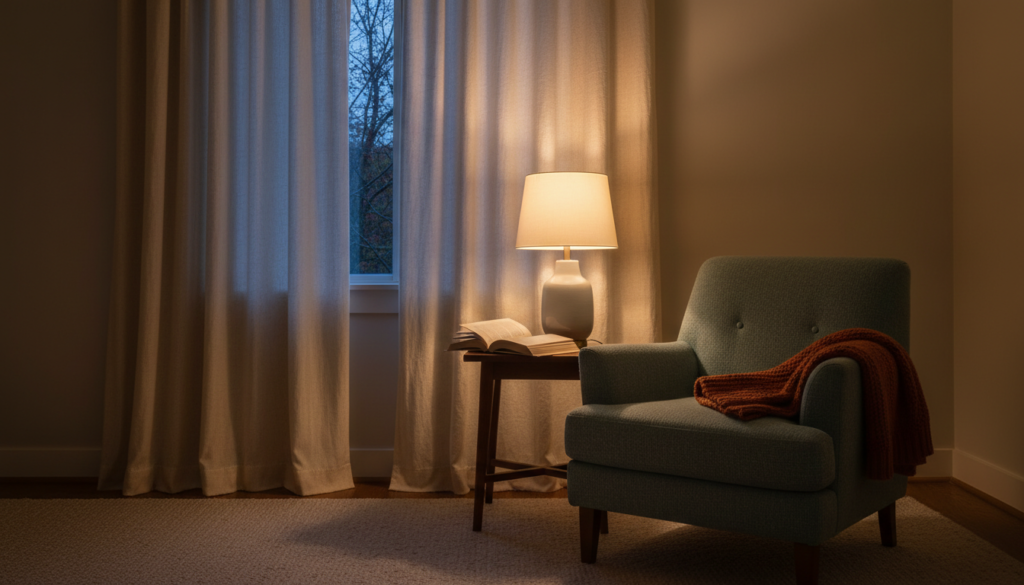
Earlier darkness can make the journey home or the end of the working day feel abruptly different. Instead of immediately reaching for another coffee, consider a brief walk before dusk, a regular mealtime or a manageable activity that you enjoy. Those actions will not fix every sleep problem, but they give shape to the hours when the light has changed and your responsibilities have not.
A current AAMC discussion of the health debate points to morning light, physical activity, attention to late caffeine and caution with driving when tired. If you feel drowsy behind the wheel, do not rely on music or caffeine to make unsafe driving acceptable.
What about children, older adults and shift workers?
The clock change happens on the same night, but it meets different lives. A child who becomes sleepy before dinner, an older adult who wakes unusually early, and a nurse on a rotating shift should not be given identical advice.
For families with children: keep meals, school preparation and bedtime cues predictable. If a child has a stable routine, avoid changing everything at once. The CDC’s age-specific sleep guidance is a better reference than assuming adults’ seven-hour minimum applies to children.
For older adults: light exposure and routine may still help, but medication effects, medical conditions and different sleep needs deserve individual attention. Persistent new sleep problems should be discussed with a healthcare professional.
For people working nights: general ‘get morning light’ advice can be counterproductive if morning is when you need to sleep. The NIOSH shift-work guidance discusses timing light to the intended sleep window; individualized advice is important for rotating schedules.
When tiredness calls for more than a clock adjustment
Short-lived schedule confusion and a lasting sleep disorder are not the same thing. Consider seeking medical advice if sleep difficulties persist, substantially affect concentration or safety, or come with concerns such as loud snoring, breathing pauses, unusual daytime sleepiness or worsening mood.
The NIH’s insomnia information and CDC sleep guidance explain healthy habits and when to speak with a healthcare provider. Avoid starting sleep medication or supplements simply because the clocks changed without appropriate professional advice.
Questions readers are asking
When did daylight saving time end in 2026?
For areas of the United States observing the change, daylight saving time ended on Sunday, 1 November 2026 at 2:00 AM local time. Clocks moved back to 1:00 AM. The next spring change is scheduled for 14 March 2027. Source: NIST.
Is it normal to feel tired after the fall clock change?
Some people notice earlier evening sleepiness or a shifted routine, while others adjust with little trouble. The fall transition is often less disruptive than spring, but there is no guarantee of an ‘extra hour’ of sleep for any individual. Source: AAMC.
Should I sleep one hour earlier now?
Not automatically. A familiar wake time and good sleep habits may be more useful than forcing a one-hour bedtime shift. If tiredness or insomnia persists, consider professional guidance rather than a strict self-imposed schedule.
Did Hawaii and Arizona change clocks?
Hawaii and most of Arizona do not observe daylight saving time, though the Navajo Nation in northeastern Arizona does. Source: US Department of Transportation.
Sources and editorial note
Verified for publication on 4 November 2026. Primary time-rule reference: NIST: Daylight Saving Time Rules and US DOT: Daylight Saving Time. Sleep and light references: CDC: About Sleep, NIH: Sleep–Wake Cycle, NIOSH: Effects of Light, and AAMC: 2026 expert commentary. Image scenes are original AI-generated illustrations, not photographs of specific households.
Editorial scope: This is general educational lifestyle information for US readers, not medical advice or an individualized treatment programme. If unusual sleep problems are ongoing, seek appropriate medical care. Browse more Lifestyle explainers or read our US–India time-zone planning guide.