
The first firecracker goes off and your dog disappears beneath the bed. A few minutes earlier, the same animal was following you around the house, hoping for a treat. A festival that feels joyful to us can sound unpredictable and frightening to an animal that cannot understand why the noise has begun.
The practical answer: Prepare a quiet indoor refuge before the evening, finish walks and toilet breaks in daylight, close escape routes, reduce sudden light and noise where possible, and let your pet choose whether to hide or stay close. If your dog or cat has previously panicked, speak to a veterinarian before the celebrations—not after the first frightening episode.
Why fireworks frighten some dogs and cats
Fireworks combine several surprises: a loud bang, a flash, an unfamiliar smell and a vibration you may feel through the floor. They also arrive without a pattern an animal can easily anticipate. One dog may sleep through the evening; another may pant, pace, tremble, bark, drool, refuse food or frantically seek an exit. Cats may retreat to a wardrobe or a dark space and refuse to emerge for some time.
Guru Angad Dev Veterinary and Animal Sciences University (GADVASU) has described the risk of stress, escape and injury to companion and stray animals during Diwali. The RSPCA also advises owners to prepare a secure, calming environment and to speak with a vet about severe reactions. There is no reliable one-size-fits-all trick; watch the individual animal, especially if it is elderly, ill, rescued recently or already anxious around thunder.
Set up a calm place before the evening
Choose a familiar room rather than a last-minute hiding spot
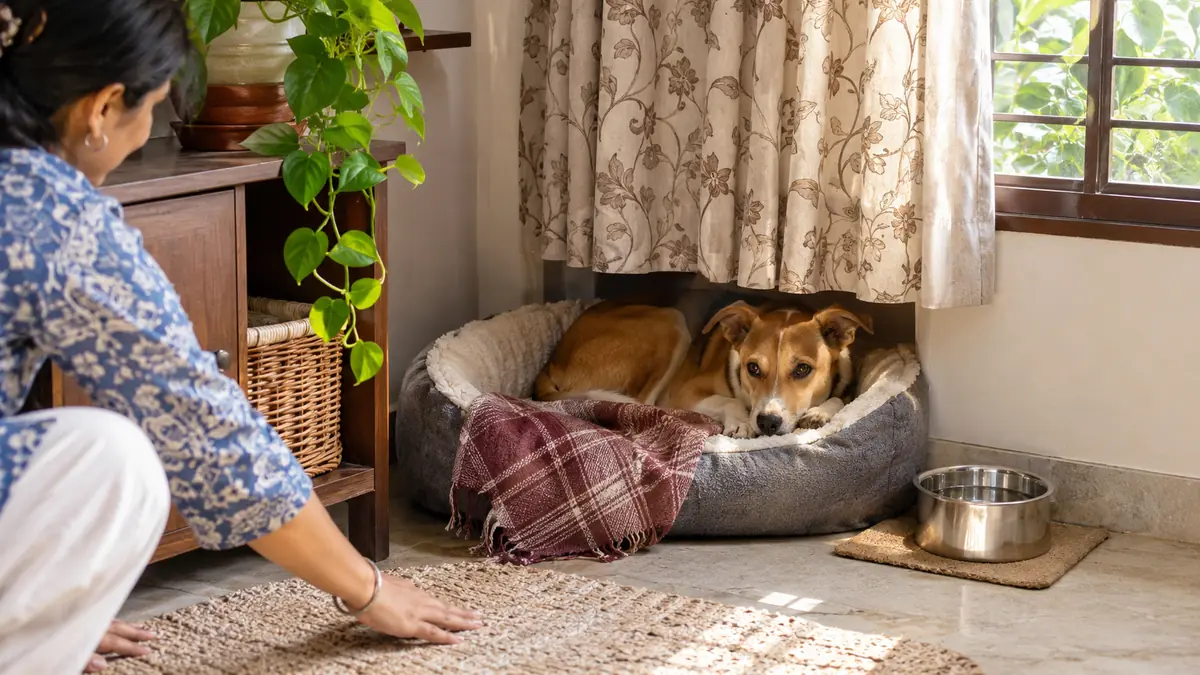
Pick a part of the home with fewer outside-facing windows if you can. Put down the bed or mat your pet already uses, a clean water bowl and a familiar blanket. Keep access to a crate only if the pet is already comfortable with it. Do not suddenly shut an untrained dog inside a crate and expect it to become a safe space. A hiding animal needs the ability to settle, not another reason to panic.
Close curtains to soften flashes and shut windows and balcony doors securely. A fan, quiet television or familiar music at a comfortable volume may blunt some outdoor noise. Do not turn the sound up so high that it becomes another stressor. Keep the room ventilated; smoke can enter from surrounding buildings even when the windows are closed.
Prepare the household, not just the pet
Ask family members to avoid repeatedly opening the front door while fireworks are going off. If relatives are visiting, explain that the pet may prefer not to be touched or photographed. Children should understand that a hiding dog is not playing a game of chase. Set aside a safe place away from hot diyas, incense, candles, sparklers and loose decorations. Some festive sweets and leftovers can be unsafe for animals, so use their normal food instead.
What to do before fireworks begin
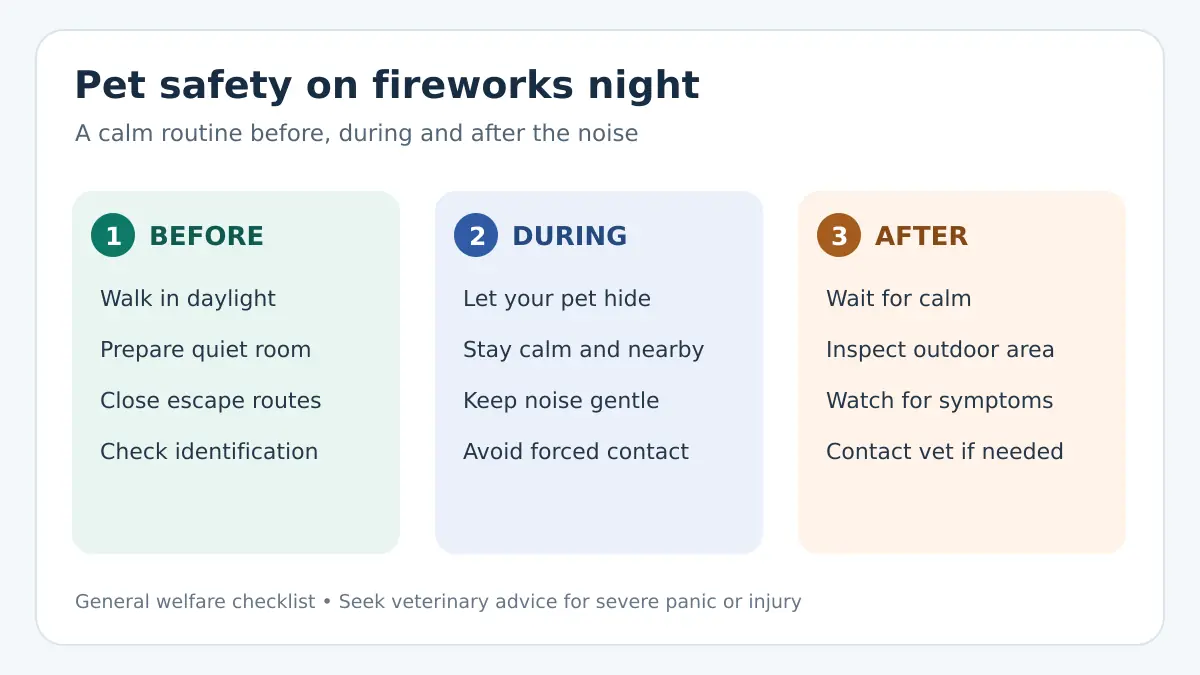
Move the routine earlier. A dog that usually walks at 8 p.m. may be safer with a longer, familiar daylight walk followed by an early toilet break. Keep the leash secure even on a normally quiet road: one unexpected bang is enough to startle a calm dog. Feed at the usual time or a little earlier if that suits the pet. Leave a little quiet time before guests and noise arrive.
Check identification and contact details. A correctly fitted collar with a readable phone number can help if a pet escapes, but it is not a substitute for secure doors and windows. If your animal uses identification or registration records, make sure the details are current. Tell the person opening the door that the pet must be contained safely before visitors enter.
During the noise: follow the pet’s lead
If your dog comes to you for contact, stay calm and offer gentle company. If your cat chooses the space under a bed, let it remain there as long as it is safe. Do not drag a frightened animal out to reassure visitors or carry it into the garden to “show there is nothing to fear.” Sudden exposure can deepen the panic.
Some pets will accept a familiar chew, puzzle feeder or quiet game. Others will be too frightened to eat or play. Neither response is a failure. You can sit nearby without demanding attention. Keep your voice and movements ordinary. The goal is not to train away a long-standing fear in one night; it is to reduce the chance of injury and help the animal recover.
Important: Never give a human sleeping pill, anti-anxiety medicine, painkiller or leftover prescription to a pet. Some medicines are toxic to animals, and even veterinary medication must be selected and dosed for the individual animal. Discuss significant firework anxiety with a vet ahead of time.
A simple timeline for festival day
| When | What to do | Why it helps |
|---|---|---|
| Morning | Check doors, window latches, tags and the quiet room | Reduces last-minute mistakes |
| Afternoon | Exercise and toilet breaks while it is light | Less need to go out during bursts of noise |
| Before dusk | Bring pets indoors, close curtains, set water and bedding | Fewer escape and flash triggers |
| During fireworks | Stay available, keep volume gentle, allow hiding | Lets the pet choose its safest behaviour |
| After the noise | Check breathing and behaviour; clear litter before going outside | Identifies problems and avoids sharp debris |
Warning signs that need more than home reassurance
Ordinary fear may involve hiding, pacing or trembling. Seek prompt veterinary guidance if the animal appears injured, collapses, has a seizure, cannot settle after the noise ends, or develops persistent breathing difficulty. Smoke exposure is an additional concern for animals with respiratory problems. If the pet has eaten firecracker material or a suspected toxic festive item, contact a veterinary professional promptly and explain what was involved; do not induce vomiting without their instruction.
For repeated severe panic, arrange a consultation well before the next festival. A vet can consider medical conditions, a behaviour plan or appropriate medication if indicated. Slow desensitisation to carefully controlled sound may be useful over weeks or months, but it is not an activity to begin by blasting firework recordings on festival day.
What about community dogs and birds?
Street dogs do not have the advantage of a closed living room. If you help local animals, keep water available in a safe, accessible place away from fireworks and vehicle traffic. Avoid crowding or trying to grab an unfamiliar frightened animal, which may bite or bolt. Contact a local veterinary service or animal rescue group if you notice an injury. Birds and smaller animals also need distance from fireworks, smoke and litter. Clear spent crackers only after they are cool and safe to handle.
You do not need a dramatic campaign to make a difference: a quieter celebration, no firecrackers near animals, and a careful word to children can reduce avoidable distress. If you are planning your household’s festivities, our Diwali home and lights safety checklist covers other practical preparations.
After the fireworks stop
Do not assume silence means the outdoors is safe again. Some neighbourhoods have sporadic fireworks long after the main display. Wait for a genuinely calmer period, then inspect the path, balcony or yard for spent crackers, broken glass, wire and food scraps before taking your pet outside. A dog that was frightened may need time to return to its normal appetite and energy. Give it space and routine, and watch for lasting changes.
A good night is not necessarily one in which a nervous dog never shivers. Sometimes success is simply that the dog stayed indoors, had a place to retreat, was not forced into contact, and woke up safe the next morning. That is worth planning for.
Common questions
Should I comfort my dog when it is scared?
If your dog seeks you out, calm company and gentle contact are reasonable. Do not force touch or attention on an animal that wants to hide. Its behaviour is the best guide to what feels safe.
Can I leave my cat or dog alone during the celebrations?
When practical, arrange for a familiar responsible adult to be present, particularly with an animal that has panicked before. A secure room helps, but it cannot respond if the pet becomes injured or extremely distressed.
Do calming sprays and medicines work?
Some owners and vets use environmental aids, but effects vary. Medicines require individual veterinary advice; avoid human medicines and unverified home remedies. Preparation and a secure setting remain essential even when a vet recommends an additional measure.
Is it safe to walk a dog once the main fireworks finish?
Only when the environment is calm and the route has been checked for debris. Keep the dog securely leashed and be prepared for unexpected additional fireworks.