
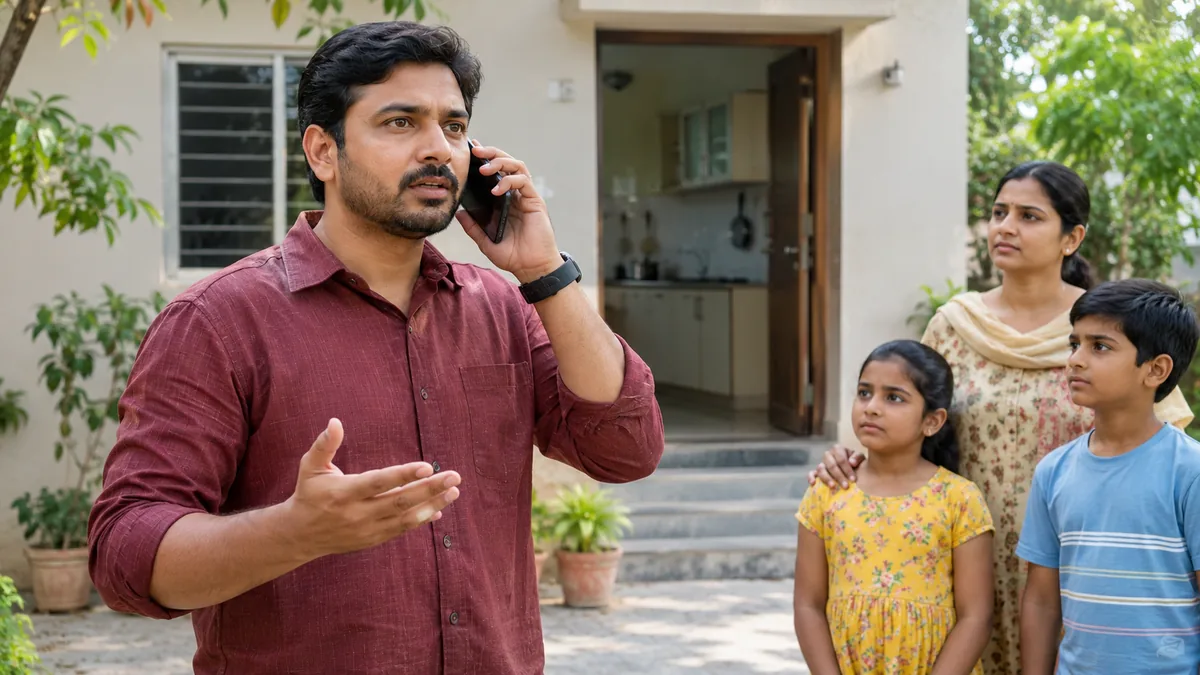
If you smell LPG in an Indian kitchen, turn the pressure regulator knob to OFF if it is safe to reach, put out every flame, avoid operating any electrical or battery-powered device, open doors and windows manually, move people away and call the 24×7 LPG emergency helpline on 1906. Do not test the leak with a flame, switch a light or exhaust fan on or off, or try to repair the cylinder, regulator or hose yourself.
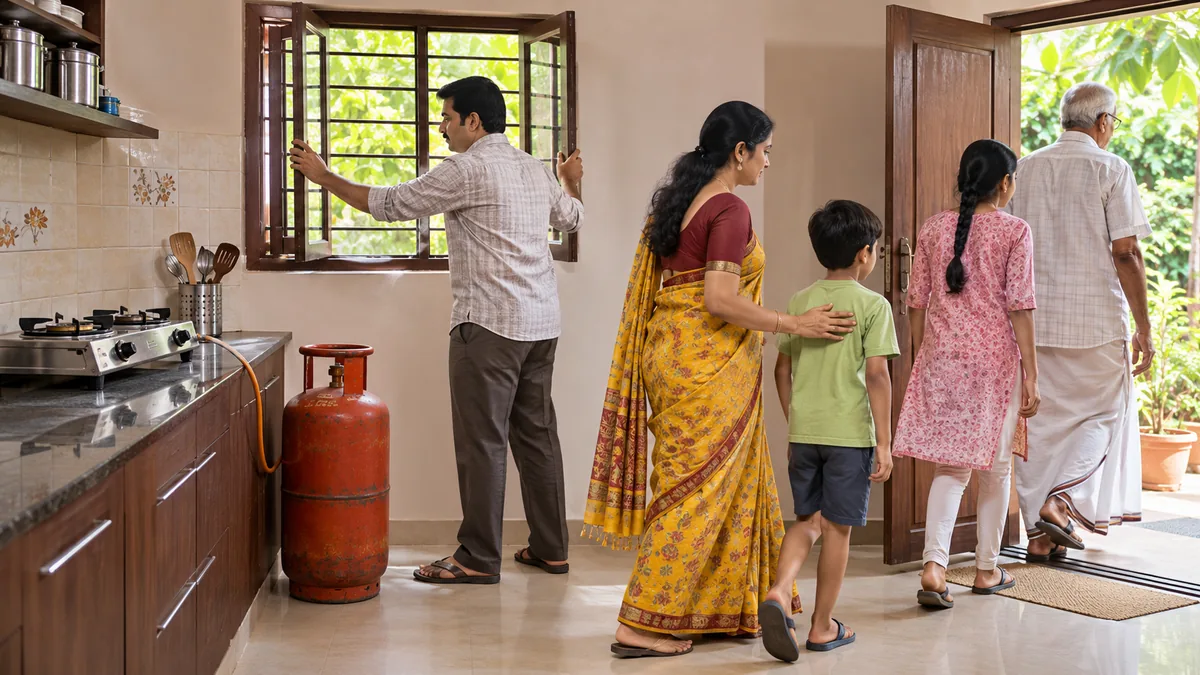
That order matters. A switch can create a spark, and a phone or dry-cell torch should be kept away from the leak area. The January 2026 Bharat Petroleum Citizen’s Charter and the Government of India’s PMUY safety pledge give a short sequence that is easy to remember: stop gas flow, remove ignition, ventilate, then get trained help.
The first minute: follow one calm sequence
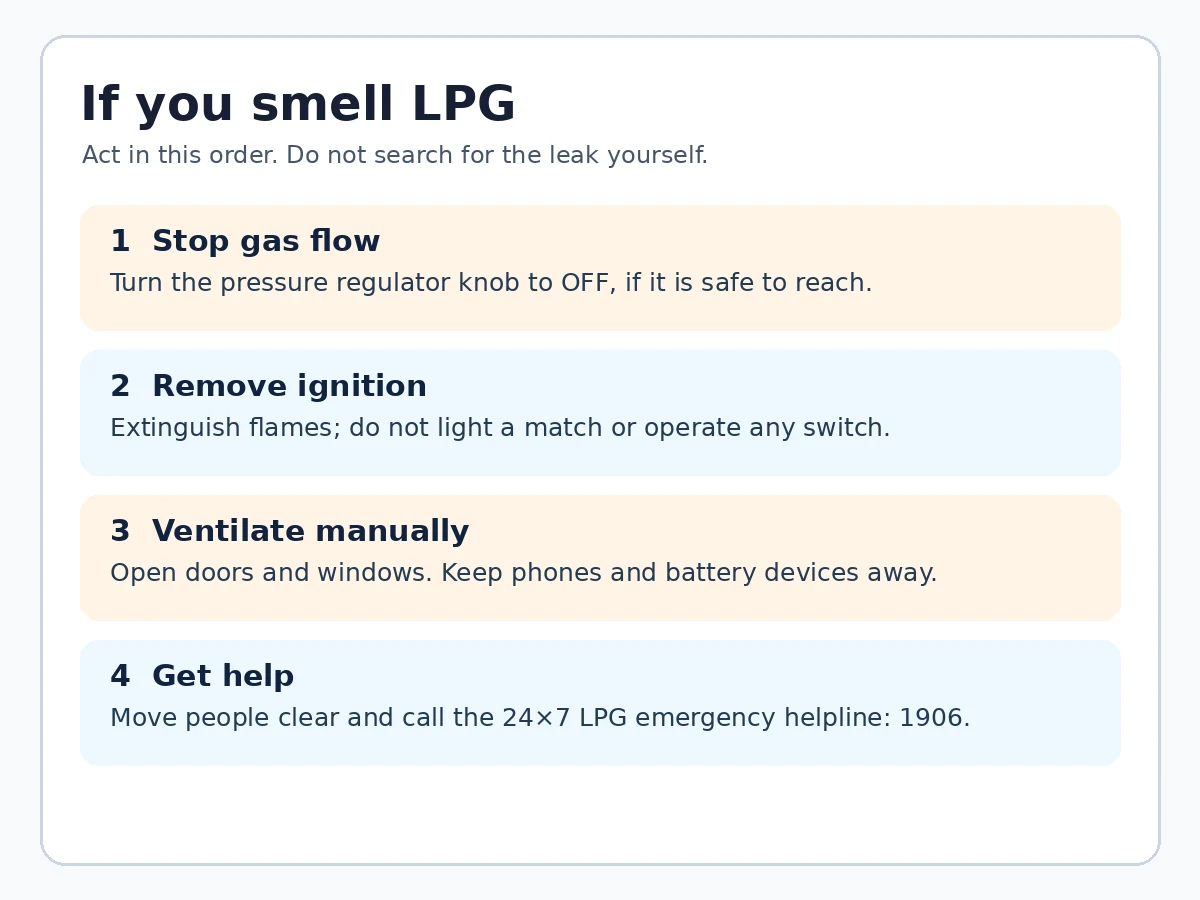
- Turn the domestic pressure regulator knob to OFF, but only if it can be reached without moving into danger.
- Extinguish burner flames, candles, agarbatti, pooja lamps and other open flames. Do not strike a match or lighter.
- Do not switch any electrical device on or off, including the main switch, light, exhaust fan or appliance. Keep mobile phones and battery-operated devices away from the area.
- Open doors and windows manually to ventilate. Do not use an electric fan.
- Move children, older people, pets and other occupants away from the kitchen. From a safe place, call 1906 and contact the authorised LPG distributor or emergency service cell.
BPCL states that the 1906 helpline is for LPG leakage complaints and that distributor assistance for a leakage complaint is free of charge. The Ministry of Petroleum and Natural Gas describes 1906 as a multilingual, 24×7 emergency service. If there is fire, injury or immediate danger to life, leave the premises and contact local fire and emergency services as well.
What not to do, even if you want to find the source
| Tempting action | Why it is unsafe | Safer choice |
|---|---|---|
| Switch on the light or exhaust fan | A switch can spark | Leave switches untouched; open doors/windows manually |
| Use a phone beside the cylinder | The official charter says to keep phones away | Move to a safe location before calling 1906 |
| Test with a match or lighter | A flame can ignite accumulated LPG | Do not search for the leak; wait for trained assistance |
| Tighten, disconnect or repair parts | Tampering can worsen a leak | Turn the regulator OFF if safe and call the distributor |
| Turn off the main electrical switch | Switching it can also spark | Do not operate it inside the affected area |
Some older guides describe detaching a regulator or fitting a safety cap. That is not a suitable default instruction for an untrained householder during an active leak. The current BPCL charter’s immediate public steps are to turn the regulator knob OFF, remove flames and sparks, ventilate and call for help. Follow the responding technician’s instructions rather than attempting a repair.
How to report the problem so help can respond
From outside the affected area, give the 1906 operator your name, registered consumer or LPG ID if readily available, complete address, landmark, distributor name and what you observed: smell, hissing, suspected cylinder or hose location, and whether there is fire or anyone is unwell. Do not re-enter just to collect an account number.
The Ministry’s 1906 emergency-helpline page says calls are logged and monitored with contact information for mechanics and field officers. HP Gas also identifies 1906 as the 24×7 number for leakage during nights and holidays.
Before the next cylinder is used
Do not resume cooking merely because the smell has faded. Ask the authorised distributor’s trained mechanic to check the cylinder, pressure regulator, hose, connections and stove. BPCL says customers should never tamper with or repair the installation themselves, and visible damage to any component requires trained attention.
- Keep the cylinder upright, ventilated and away from heat.
- Place the hot plate on a non-flammable platform above cylinder level.
- Turn the regulator OFF when the stove is not in use, especially at night.
- Inspect the approved LPG hose for visible cracks or damage and arrange replacement through the distributor. BPCL’s January 2026 charter says its Suraksha LPG hose should be replaced every five years.
- Insist on the periodic installation inspection by a trained mechanic; PMUY and BPCL describe a five-year interval.
Check a refill at delivery, before an emergency
A useful safety check happens at the doorstep. The BPCL Citizen’s Charter, January 2026, says the customer should check the cylinder seal and weight, have the seal opened in their presence, and have the cylinder connected to the regulator and the installation checked for proper operation. Report a damaged seal, unusual condition or leak immediately rather than accepting and storing the cylinder.
This is also why viral video or social-media advice should not control an emergency response. A reported incident may remind people to review safety, but the actions in this guide come from official government and public-sector oil-company instructions, not from an unverified clip.
If the smell is in a common corridor or outside
Do not assume the source is your cylinder and do not approach a suspected pipeline or storage leak. Keep people away, avoid flames, engines, phones and electrical operations near the suspected area, and report it to the responsible provider or emergency service from a safe location. IndianOil’s pipeline guidance is for pipeline incidents, so it should not be used as a substitute for domestic-cylinder handling.
A refrigerator-note version
- Smell LPG → regulator OFF if safe.
- Flames out. No match, lighter, switch, fan, phone or torch nearby.
- Open doors and windows manually. Move everyone away.
- Call 1906 from a safe place. Do not repair or re-enter until trained help says it is safe.
For another household electrical-safety check before Diwali, see NewsThreads247’s guide to matching BIS registration on decorative LED lights.
Sources and scope
Primary guidance checked November 4, 2026: PMUY LPG safety pledge, the BPCL Citizen’s Charter, January 2026, and the Ministry of Petroleum and Natural Gas 1906 page, last updated October 6, 2026. This is general emergency-safety information for domestic LPG users in India; always follow the attending emergency service and authorised technician.