

Before you buy online, check the return window, refund method, seller identity and who pays for return shipping. An ‘easy returns’ banner can be less informative than the product-specific policy. And when something goes wrong, a clear timeline of the order, delivery and complaint often makes a stronger case than an angry message with no evidence.
India’s Consumer Protection (E-Commerce) Rules, 2020 contain transparency and grievance requirements. A government update in September 2026 also announced amendments with an important date: the 2026 amendments are due to come into force on 1 January 2027, not on 1 November 2026. Buyers should not treat future obligations as already operative. This guide distinguishes practical steps, current rights and upcoming rule changes without promising a universal no-questions refund.
What to read before placing an order
- Who sells it? Identify the seller and whether the platform is a marketplace or acts as the inventory seller.
- Return eligibility: check the policy for this exact category, condition and item, including seals and packaging.
- Refund method and timeline: look for how and when money is returned, especially for prepaid orders.
- Shipping and collection: determine who arranges pickup and whether return-shipping costs apply.
- Warranty and guarantees: distinguish a seller return from a manufacturer warranty claim.
- Delivery and cancellation: record the expected arrival date and any cancellation restrictions.
- Grievance contact: save the seller/platform complaint channel and case-number mechanism.
The current 2020 E-Commerce Rules address disclosure of returns, refunds, exchanges, delivery, payment, warranties and grievance channels. Category-specific limitations may be relevant, but a blanket ‘no refund ever’ statement cannot necessarily override consumer protections for defective, deficient, misdescribed or otherwise legally covered goods.
Changed your mind versus a defective or wrong item
The cancellation rule for a booked service can differ from the return policy for a delivered product. Our BookMyShow cancellation explainer, for example, focuses on a ticket’s deadline and refundable components rather than a physical-goods return.
| Situation | What to check | What evidence helps |
|---|---|---|
| Changed mind or no longer needed | Item-specific voluntary return policy and time window | Order page, terms at purchase, sealed-condition record |
| Wrong item or material mismatch | Description and contract, seller/platform complaint procedure and applicable law | Listing screenshot, unboxing evidence, package label |
| Defective or deficient product | Consumer protections, warranty terms and remedy options | Clear photo/video, fault description, service inspection where relevant |
| Item not delivered or delivered late | Delivery promise and communications, cause of delay | Order date, tracking, promised delivery window |
| Refund announced but not received | Payment method and transaction reference | Refund confirmation, bank statement and complaint number |
Not every problem has the same remedy. A return because you simply prefer another colour can depend on a seller’s disclosed policy. A materially different or defective item involves different duties and protections. Avoid assuming every online order carries an unlimited cooling-off period by law.
What changed in 2026—and when it begins
On 10 September 2026, the Ministry of Consumer Affairs announced amendments to strengthen e-commerce transparency, including seller information, dark-pattern compliance, sponsored-listing and price-reduction practices, and consumer disclosures. Its official announcement expressly gives 1 January 2027 as the commencement date.
That means a November 2026 complaint needs to be assessed under the rules actually in force, while the upcoming amendments are useful context for how online purchasing standards are changing. Do not cite a January 2027 obligation as though a platform violated it in November. For important legal decisions, check the published amendment text and later notifications.
The evidence folder that saves time
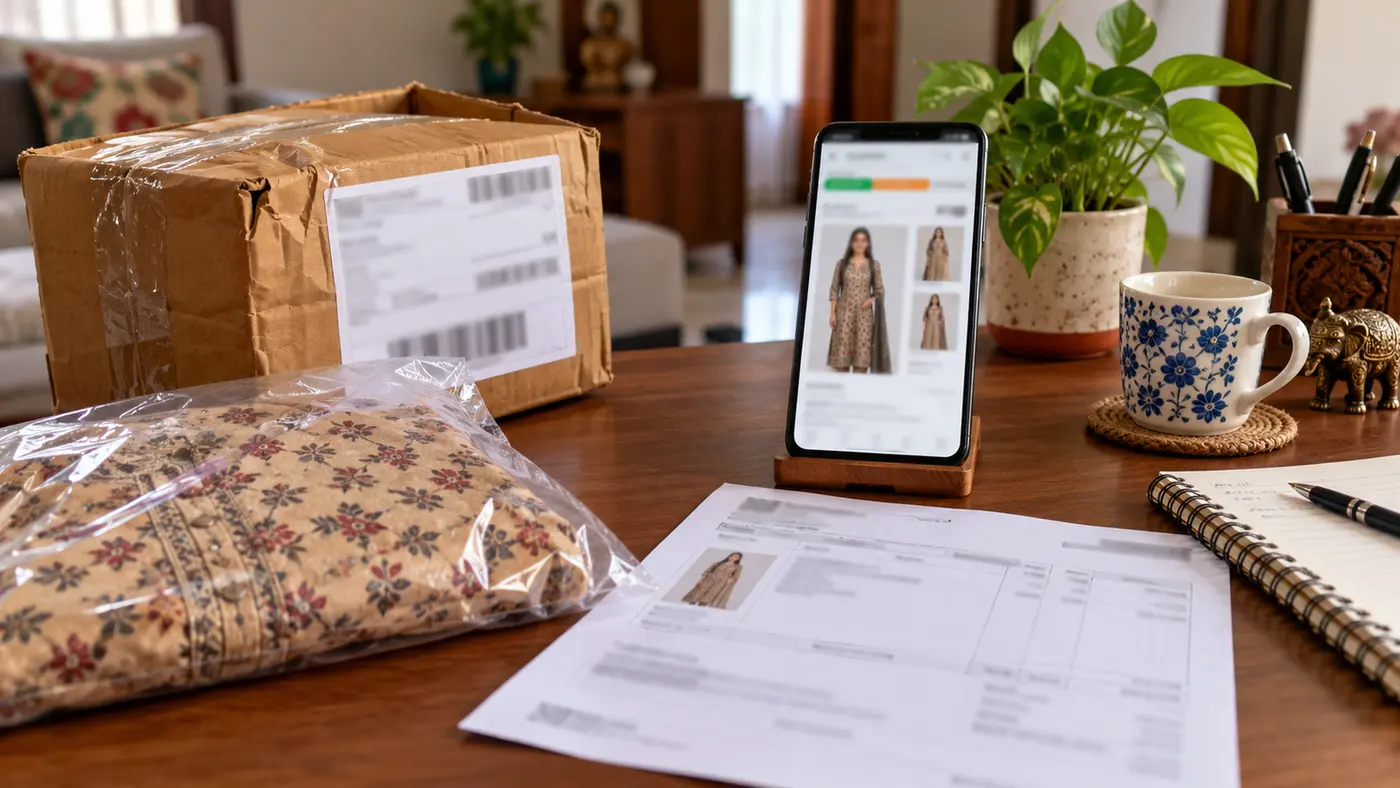
For an expensive purchase, keep a digital folder with the listing and seller identity at checkout, full price breakdown, cancellation/return rules shown at that time, payment confirmation, delivery receipt, invoice, package photos and customer-service messages. If a defect is visible, photograph it before attempting repairs or removing serial labels.
Use a brief factual problem description: what you ordered, what arrived, when, what the order page said, and which remedy you request. Ask for a tracking number or reference ID. Avoid posting other people’s phone numbers, addresses or allegations of fraud publicly before facts have been established.
A practical complaint sequence

- Read the product-specific policy and contract again, noting the relevant date and reason for the request.
- Open the official in-app or website support channel and select the appropriate issue category.
- Provide concise facts, order number and relevant photographs; request the remedy you believe is applicable.
- Save the case number and written response. If a phone agent makes a promise, ask for confirmation through the official channel.
- If unresolved, escalate through the platform or seller’s specified grievance officer in accordance with its process.
- Consider the Government of India’s National Consumer Helpline for appropriate complaints; preserve your documents for any subsequent formal remedy.
The National Consumer Helpline lists 1915 and 1800 11 4000 for lodging consumer grievances, with its official portal, app and additional channels. NCH is an assistance and grievance channel; registering a complaint is not a guaranteed refund or a substitute for a competent forum’s decision.
Returns versus warranty: a common source of confusion
A short return period may close while a manufacturer’s warranty remains in force. Conversely, a warranty may cover only specified faults and may require authorised service inspection, while a seller return could address an incorrect item or a delivery problem. Read both documents. A support agent’s assertion that an item is ‘under warranty’ does not alone settle whether a refund or replacement should be considered under applicable consumer law.
For products with serial numbers, keep the invoice and serial details together. If a service centre takes the device, obtain an acknowledgement of condition and complaint. For hygiene or personal-use products, study both the hygiene-specific policy and consumer protections for defects; do not make the common mistake of treating a voluntary exclusion as a universal waiver of legal remedies.
Preventing refund-scams during a real dispute
A criminal posing as customer support may ask you to install a remote-access app, share a one-time password or pay a ‘refund release charge’. A legitimate refund process should not require disclosing your banking login or approving an unrelated incoming-debit request. Return to the platform’s official app or site, and independently verify any call or message.
If money has been stolen through online fraud, contact your financial provider immediately and use India’s official cybercrime reporting portal or its financial-fraud helpline as appropriate. That process is separate from a normal consumer-return complaint.
Frequently asked questions
Is every online purchase returnable just because I changed my mind?
No. Voluntary change-of-mind returns depend on the applicable item policy and contract. Consumer rights for defective, deficient or misdescribed goods are a different issue.
Are the September 2026 amendments already effective?
The government announced that the E-Commerce (Amendment) Rules, 2026 take effect on 1 January 2027. Do not treat them as operative before that date unless an official later change says otherwise.
What if the seller says no refund for a defective item?
Document the issue and review the current Consumer Protection Act and E-Commerce Rules alongside the seller’s policy. Take the complaint through official channels and consider NCH or suitable formal advice if unresolved.
Can the National Consumer Helpline order an instant refund?
NCH helps register and route consumer grievances, but it does not guarantee immediate payment or determine every disputed right. Keep evidence and follow the prescribed resolution process.
Should I share my OTP with a refund agent?
No. Do not share bank passwords, OTPs or remote-device access to receive a refund. Use the official order account and support channel.
Bottom line
A good online-shopping habit is to save the listing, seller, full price, return/refund terms and order evidence before anything goes wrong. If it does, distinguish voluntary returns from a defective-product remedy, file a traceable complaint and use the current legal framework. Primary sources: E-Commerce Rules, 2020, the 2026 amendment announcement and NCH contact details.
Editorial check: 1 November 2026. Legal and consumer guidance is general; specific remedies depend on facts and the law in force at the time. This is not individual legal advice.
Visual disclosure: All three images associated with this article are AI-created editorial illustrations. They do not depict an identified real applicant, organisation, official interface or recorded event.