
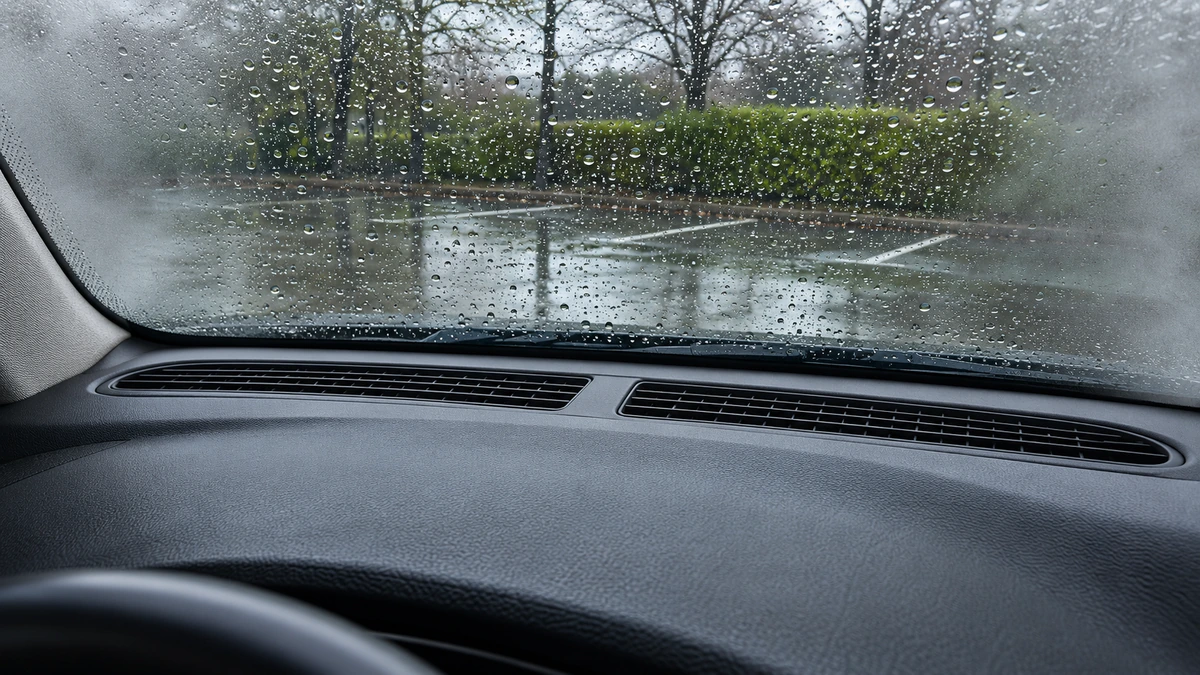
Car recirculation reuses cabin air; fresh-air mode admits air from outside. That choice is separate from temperature, fan speed and where the air is directed. If the windows mist, follow your car’s front-windscreen demisting procedure rather than assuming that turning the heater hotter is the whole solution. If visibility is impaired while driving, stop somewhere safe before investigating the controls.
In this article
Separate air intake, temperature and direction
A climate-control panel answers several questions at once: where the air comes from, how it is conditioned, how strongly it moves and which outlets receive it. An illuminated button does not explain all four. Locate the intake control and the front-windscreen demisting function in your own manual while parked.
The Hyundai Grand i10 NIOS manual hosted for India describes fresh mode as admitting outside air and recirculation as drawing air from the passenger compartment through the climate system. In either case, heating or cooling follows the selected settings. Recirculation therefore does not mean “air conditioning on,” and fresh air does not mean “heating off.”
Imagine a parked car with a warm cabin but an increasingly misty windscreen. Raising the temperature alone changes only part of the setup. Ask whether the intake and airflow settings match the manufacturer’s demisting instructions. Conversely, pressing a windscreen button may change several settings automatically. Observe what the system selects before repeatedly trying to reverse it.
These distinctions are useful even when your car has a large touchscreen instead of physical buttons. Find the relevant functions in its manual; do not assume a button in a photograph of another car has the same effect. The images in this article are illustrations, not instructions for a particular climate panel.
Why recirculation can matter when glass mists
A Ford owner-manual warning says prolonged recirculation can cause the windows to mist and directs drivers to the windscreen-demisting settings if that happens. That makes intake mode a relevant check. It does not establish that every misting problem is caused by one button.
The Hyundai manual adds an important condition: continued recirculation without air conditioning can allow cabin humidity to increase and fog the glass. Toyota’s air-conditioning manual section also explains the dehumidifying role of air conditioning and notes that recirculation may contribute to fogging. Warmth and moisture removal are related parts of the problem, not interchangeable controls.
Consider a fictional rainy-day trip with passengers entering in wet coats. Before blaming the heater because the cabin feels warm, check the demisting procedure and the settings actually selected. Change controls deliberately while stationary. If you change temperature, fan, intake and outlet selection at random, a clearer screen gives little information about which mismatch you corrected.
Do not use one successful change to diagnose the entire ventilation system. “The glass cleared after I selected the prescribed front-demist mode” is a useful observation. “The car has no ventilation fault” goes further than that observation supports. If misting persists or quickly returns despite following the manual, arrange an appropriate inspection rather than repeatedly driving with poor visibility.
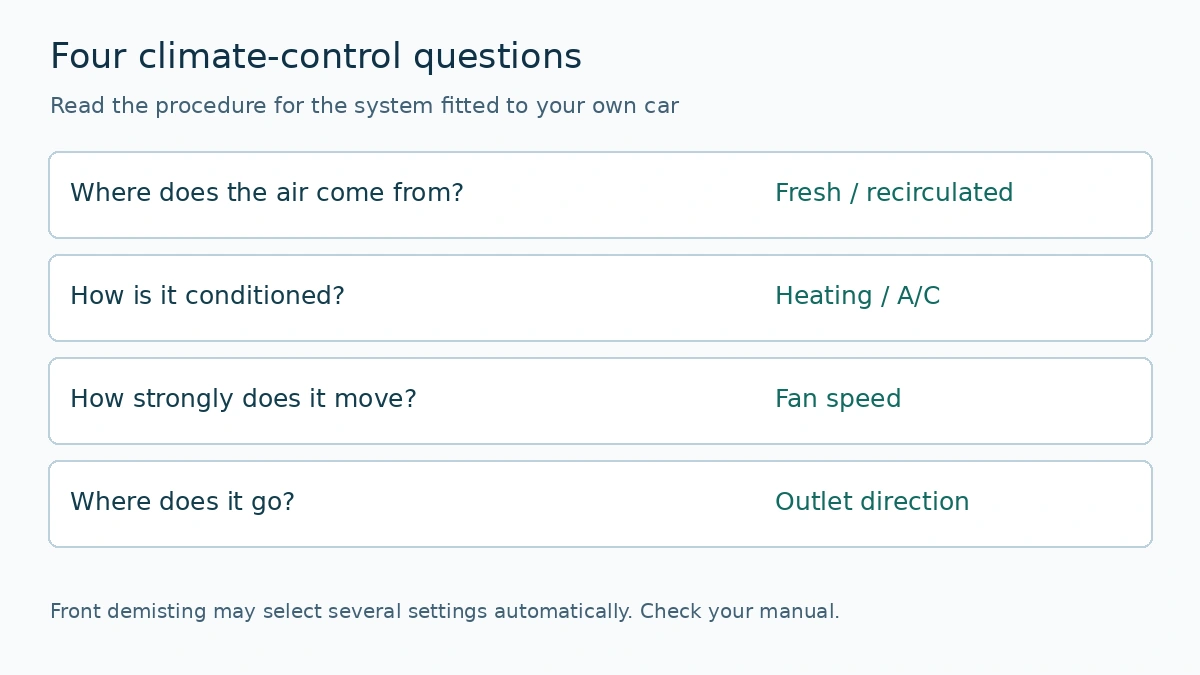
Use the front-demist procedure for your car
Read the manual’s section for the climate system actually fitted: manual and automatic versions can differ. Identify the front-windscreen function separately from the rear-window heater. A rear-window button is not a substitute for clearing the forward view. Check any associated side-window instructions too; a clear patch in the centre of the windscreen alone is not the whole visibility check.
As a model-specific example, the Hyundai manual’s automatic-system defogging instructions describe automatic selection of fresh air and air conditioning according to ambient conditions. This explains why a system may override an earlier intake choice when you select demisting. Follow your own car’s sequence rather than copying every temperature or fan step from a different model.
If air conditioning does not engage in a particular condition, consult the manual before treating that as a fault. The manufacturer may describe temperature-dependent operation. The practical task is to achieve and maintain the required clear view using the intended settings, not to make every indicator match a photograph from the internet.
Check whether the moisture is on the inside or outside of the glass while parked. Wipers act on the outer surface; cabin controls and rear-window heating have different roles. If wiping outside does not remove what you see, do not keep treating the problem as ordinary rain. Use the appropriate manual guidance and check the result before setting off.
For an airflow problem rather than mist alone, record whether air reaches the selected outlets. Our guide to weak airflow from car vents explains a separate check. A cabin-filter discussion should not replace the immediate need for a clear view.
Reconsider the intake mode when conditions change
Recirculation can have a temporary purpose. Hyundai’s operating tips describe using it to limit dust or unpleasant fumes entering through the ventilation system, then returning to fresh mode after the irritation passes. That is different from deciding the same intake setting should stay selected for every journey.
For an ordinary example, distinguish passing a dusty stretch from sitting in a parked car after the windows start misting. The reason you originally chose recirculation may no longer be the priority. Make the next decision from current conditions and the manual, rather than treating an earlier sensible choice as permanent.
Before departure, check the windscreen, side glass and mirrors needed for the trip. During use, reassess if visibility changes. If you have to keep clearing recurring mist, describe the conditions to the workshop: weather, occupants, intake mode, air-conditioning selection, outlets and whether the problem is inside or outside. Those observations are more useful than reporting only that “the heater is weak.”
This guide compares manufacturer explanations; it does not report a hands-on test or promise a universal setting. Recheck it when model-specific climate instructions change. The dependable routine is to understand the separate controls, use the prescribed demisting function and verify visibility before continuing.
Cover image: original AI-generated editorial illustration. People, vehicle and scene are fictional. No real measurement, exact vehicle model or first-hand test is represented. This guide explains linked manufacturer documents; use the instructions and ratings for your own vehicle.