
Quick answer: A batter can be given out leg before wicket (LBW) when a legal delivery, without touching the bat first, is intercepted by the batter’s body and would otherwise have hit the wicket—but that is only the beginning of the test. The ball’s pitching location and the point where it hits the body matter, and an important exception applies if the batter makes no genuine attempt to play the ball with the bat.
The most common television argument begins when a ball appears to strike the front pad in front of the stumps: surely that must be out? Not necessarily. The on-field umpire is applying a sequence of conditions, not voting on whether the bowler’s delivery looked dangerous. Here is a practical way to read an appeal using the MCC Laws of Cricket, 2017 Code, fourth edition (2026), which came into force on 1 October 2026. International matches may add ICC playing conditions and DRS.
1. The five legal tests: follow the ball in order
MCC Law 36.1 provides five conditions that must all be satisfied. They are most easily understood as a journey from the bowler’s hand to the stumps. If a condition fails, the LBW decision is not out—however promising the rest of the ball’s path may look.
- Test 1 — a legal delivery. The bowler must not deliver a no-ball. A ball that would hit middle stump still cannot produce LBW if it is a no-ball.
- Test 2 — where it pitched. If the ball lands before reaching the batter, it must first land in line with the wickets or on the off side. A ball that pitches outside leg stump cannot be LBW.
- Test 3 — first contact with bat or body. The ball must be intercepted by the batter’s person without having already touched the bat. The body can include more than the front pad; the Law is not limited to the leg.
- Test 4 — impact location. The point where the ball hits must be in line with the wickets, unless the striker made no genuine attempt to play with the bat, in which case impact outside off may also qualify.
- Test 5 — predicted path. Without that bodily interception, the ball must have gone on to strike the wicket.
Notice that the five conditions are cumulative. The ball can be expected to hit the wickets but still be not out because it pitched outside leg. It can strike a batter exactly in line but still be not out because it hit the bat first. The Law prevents the apparent certainty of one fact from erasing the other conditions.
2. Why pitching outside leg stump ends the LBW question
Imagine a right-handed batter facing a ball that lands just outside the leg stump, swings sharply toward middle stump and hits the front pad. Even if replay shows it would go on to break the wicket, LBW is not available: the ball pitched outside leg. The direction of later swing does not undo the original landing location.
Reverse the example. A ball lands outside off stump, seams into the batter’s front pad and is going on to hit leg stump. Pitching outside off does not automatically rule out LBW. The next questions are where the body was struck and whether a genuine shot was attempted. This is why commentators distinguish “pitching outside leg” from “pitching outside off”—the phrases have different legal consequences.
There is another variation: a full toss does not land before the batter. The pitching-location condition deals with a ball if it does land before interception; for a non-bouncing ball, officials do not pretend there was an actual pitching spot in front of the batter. They still evaluate the other conditions and whether the path would have struck the wicket.
Left-handed and right-handed batters: which side is “outside leg”?
Picture the wicket from the striker’s end. A right-handed batter normally has their right side toward the leg side; for a left-hander, the relationship reverses. The umpire judges off and leg in relation to the striker’s batting position, not the side of the television screen where the ball appears. A ball pitched outside the relevant leg stump rules out LBW for either batter, even if it swings back sharply toward the wicket.
Worked example: A left-handed batter faces a right-arm bowler bowling around the wicket. The ball lands just beyond the striker’s leg-stump line, then curves into the pad directly in front of middle stump. The decisive fact is the pitch mark outside the left-hander’s leg line; the later swing and apparently central impact cannot make that ball LBW.
3. The impact rule changes when the batter offers no genuine shot
Suppose a batter plays a forward defensive stroke, misses, and the ball hits the pad outside the line of off stump before coming back toward the stumps. Under the ordinary impact test, that is not out LBW. The fact that the wickets are threatened does not compensate for the location of impact when a genuine attempt to play was made.
Now suppose the batter deliberately shoulders arms and leaves a ball that pitches outside off, moves inward and strikes the pad outside off before heading toward the wickets. Law 36 allows impact outside off in that specific situation because there was no genuine attempt to play the ball with the bat. The batter cannot rely on the same outside-off impact protection that applies to a genuine stroke.
A “genuine attempt” is not the same thing as making contact. A batter can miss a perfectly serious defensive shot. Equally, making a token movement with the bat is not necessarily decisive if, in the umpire’s assessment, it was not a genuine attempt. The striker’s batting stance also determines what counts as their off side under Law 36.3.
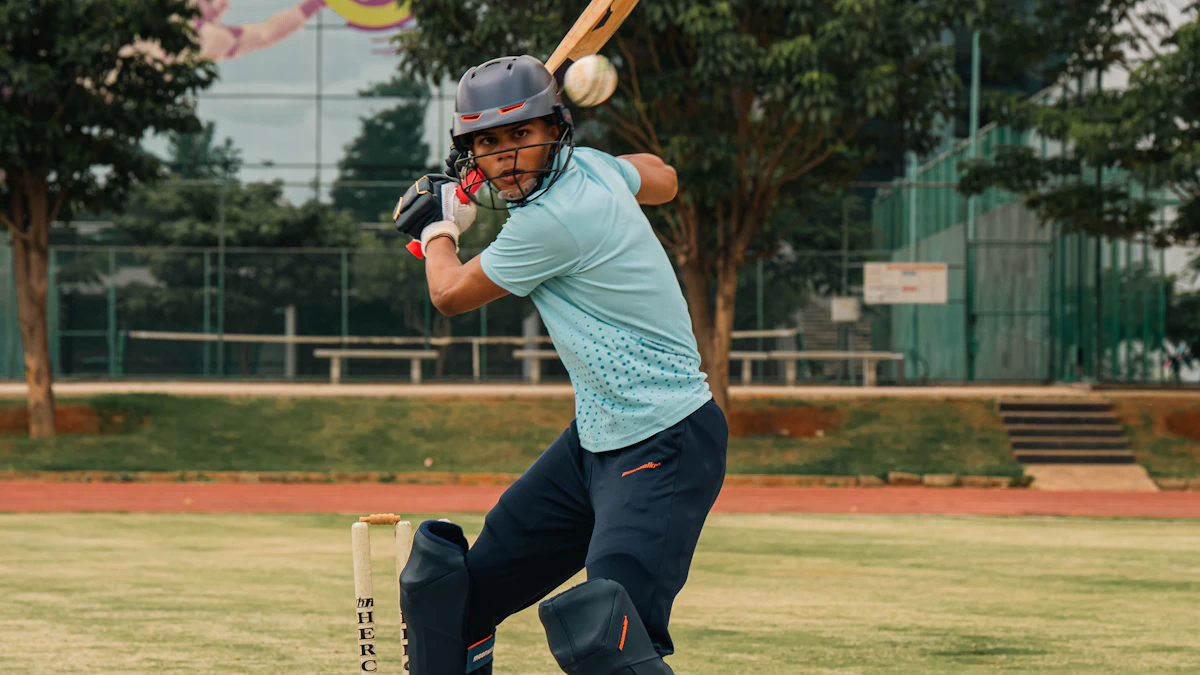
Can a ball hit the pad above the bails and still be LBW?
Yes, the height of bodily contact alone does not decide the appeal. MCC Law 36.1.4 expressly permits the point of impact to be above the level of the bails; Law 36.1.5 still requires the umpire to be satisfied that the ball would have hit the wicket. A rising delivery that strikes high on the pad and is plainly going over the stumps is therefore not out LBW. A different rising delivery that is projected to fall into the wickets must be judged on all the other conditions too.
Example: A legal ball pitches in line, hits the batter in line just above knee height and would have struck the top of leg stump. The impact height is not a separate automatic exemption. Contrast that with a ball that hits in line at a similar height but would pass over the bails: the projected-path condition fails.
4. Bat first, pad first, or both together? The order matters
Under Law 36.2, it is the first interception that matters. If the ball clips the bat before hitting a pad, that delivery cannot produce an LBW dismissal. If it strikes the pad first and then the bat, the earlier bodily interception is the relevant one for the LBW assessment. The order can be difficult to judge at live speed, so replays, sound and movement may be relevant evidence where the match uses reviews.
One subtle detail often disappears from television arguments: under the 2026 MCC text, if contact with bat and person is simultaneous, it is treated as the bat having touched first for the relevant LBW assessment. This is not an invitation to decide that two close contacts were simultaneous without evidence; it is simply how the Law resolves a true simultaneous interception.
The ball can strike the glove while it holds the bat, or another part of the person. Because the legal categories of bat and person have particular meanings, a viewer should be cautious about assuming every glove contact or every body touch is equivalent. When the sequence or contact point is unclear, a careful explanation is more honest than a confident verdict from a single camera angle.
Projection after first contact: Under MCC Law 36.2.3, the ball’s path before the first interception is assumed to continue after that point, irrespective of whether it might have bounced subsequently. That is one reason a viewer should not draw a new hypothetical bounce beyond the pad when predicting the wicket path.
5. Seven worked scenarios: apply the rule instead of memorising slogans
| What the replay shows | Likely LBW outcome | Reason to check |
|---|---|---|
| Good ball pitches outside leg, swings into middle and hits pad | Not out LBW | Pitching condition failed |
| Legal ball pitches in line, hits pad in line, would hit stumps, no bat | Out if appealed and umpire satisfied | All five tests can be met |
| Ball pitches outside off, batter plays a genuine shot, impact outside off | Not out LBW | Ordinary impact test not met |
| Ball pitches outside off, no genuine shot, hits pad outside off, would hit | Can be out | No-shot impact exception |
| Ball hits bat before leg and would hit stumps | Not out LBW | Prior bat contact |
| Front-foot no-ball hits pad in line, predicted to hit middle | Not out LBW | Delivery not legal for LBW |
| Legal full toss hits pad in line and would hit wicket | Can be out | No actual bounce is required |
These are simplified teaching examples, not rulings on actual matches. For example, the “would hit” conclusion is built into a scenario when shown; a real umpire must decide it from the delivery and evidence available. In the second example an appeal is also necessary: under the general Laws, an umpire does not give a batter out without one.
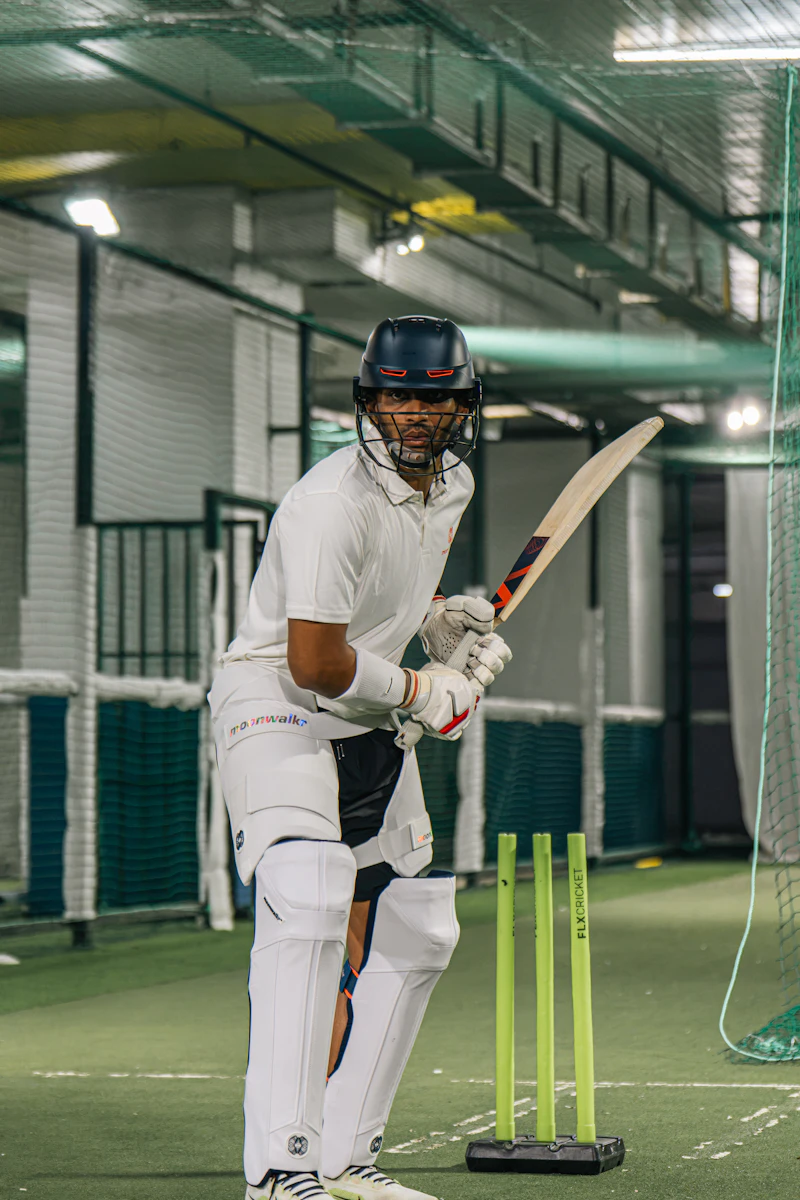
Three appeals, step by step: what the umpire has to decide
Appeal one — a classic inswinger: A legal ball lands in line, misses a defensive bat, hits the pad in line and is projected to strike middle stump. That is a strong LBW appeal because the five conditions can be met. The player who fields the ball must still appeal; a convincing television replay is not itself an umpire’s decision.
Appeal two — the leave outside off: The ball lands outside off, the batter shoulders arms, and it hits their body outside off before heading for the stumps. Unlike a genuine defensive shot, deliberately offering no shot means the outside-off impact may still qualify. Whether the ball would actually strike the wicket remains a separate question.
Appeal three — pad, then bat: The ball strikes the pad in line and deflects onto the bat afterwards. The later bat contact does not automatically cancel the earlier pad interception. For the hypothetical projected path, Law 36.2 addresses the trajectory on the assumption of no further interception after that first contact. Reverse the contact order—bat before pad—and LBW fails.
These examples assume the details stated; real umpiring involves judging them from available views and evidence. A close decision should be described by the condition that matters, not simply as “ball tracking says out”.
6. DRS: why “Umpire’s Call” is not a sixth LBW Law
The Decision Review System (DRS) gives match officials additional evidence in matches where the competition’s playing conditions provide for it. The ICC distinguishes reviews requested by players from referrals made by the on-field umpires. Ball tracking can show pitching, impact and projected contact with the wickets; other technology may assist with contact. These are ways to assess the underlying decision, not a replacement for Law 36.
A review graphic often uses categories such as “pitching”, “impact” and “wickets”. But the sequence still matters. For instance, a ball pitched outside leg cannot become an LBW dismissal merely because its projected path is shown striking a large part of the stumps. The correct reason to stop is at pitching, before focusing on the impressive-looking final trajectory.
“Umpire’s Call” is a protocol for marginal review evidence under ICC DRS playing conditions, in which the original on-field decision may stand. It does not mean every LBW appeal is a coin toss or that the technology has found the on-field umpire definitively right. Read our related explainer on why DRS Umpire’s Call preserves the original decision for that separate issue.
Not every school, club, domestic or international match has the same review availability. If there is no DRS, the umpire still applies the Laws on the field. If there is DRS, the governing body’s current playing conditions determine review limits and detailed technology protocols. Do not assume an ICC television graphic is itself the complete MCC Law.
7. Six mistakes to avoid while arguing about an LBW
- “It was plumb because it hit the front pad.” Contact location and projected path are necessary to inspect, but pitching and bat contact must still be considered.
- “The ball came from outside leg, so it must be not out.” It is the place where a bouncing ball actually pitched, not where the bowler released it, that matters to the outside-leg rule.
- “Outside off means not out.” Outside-off pitching may be legal for LBW; the impact exception depends on whether a genuine shot was attempted.
- “If it touched the bat at any point, not out.” The relevant question is whether bat contact came before the bodily interception; first contact matters.
- “The umpire must give it out if ball tracking shows a hit.” DRS has playing-condition thresholds, and the rest of Law 36 still applies.
- “Any body contact is automatically LBW if the ball was straight.” A no-ball or a failed pitching/impact condition independently prevents dismissal.
8. A 20-second method for watching the next LBW replay
Start with the delivery call: was it legal? Then freeze the bounce, if there was one. Next ask whether the bat touched the ball first. Only after those checks examine the impact location and whether the batter attempted a genuine shot. Finish with the predicted wicket path. The order is not an editorial trick—it follows the logic of the underlying Law.
For a young cricketer or beginner watching with friends, try calling out each test rather than guessing “red” or “green” immediately. You will often discover that two people disagree because one is talking about the pitch mark and the other is talking about the pad contact. Those are different decisions within a single appeal.
Sources, 2026 update and scope
- Marylebone Cricket Club — official Laws of Cricket page; see fourth edition 2026, Law 36, in force from 1 October 2026.
- MCC announcement on the 2026 edition and its start date.
- ICC Decision Review System overview — review channels and governing playing conditions.
- NewsThreads247: DRS Umpire’s Call explained — related interpretation, distinct from the LBW eligibility tests.
- NewsThreads247: Free-hit rules — related situations involving no-balls and dismissal limitations.
Full primary text: MCC 2026 Code, Law 36 (PDF), printed pp. 108–110 in the English 2026 edition. The examples above paraphrase rather than reproduce the text.
Editorial date: 19 November 2026. This is an independent teaching guide paraphrasing the official MCC Law, not a reproduction of its copyrighted text. Specific matches may apply additional playing conditions. The scenarios are hypothetical and are not claims about actual reviewed incidents.