
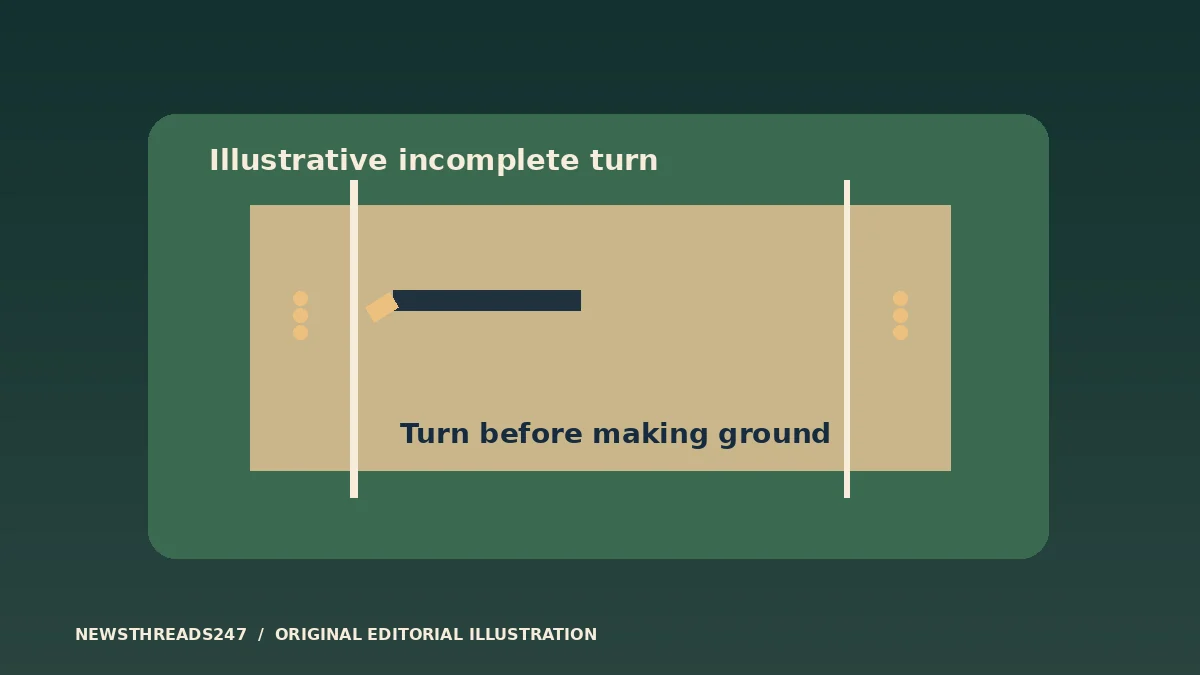
A short run in cricket is a run that the batters have not properly completed before turning for another. It is not automatically a run-out, and an accidental short run is not the same offence as deliberately pretending to complete runs. Start by checking whether the batter made their ground, then look at what the umpire decided and how the scorers recorded it.
In this article
Use the playing conditions for the match
The ICC playing-conditions directory provides the governing documents by competition and format. Use the WTC edition for these examples rather than a differently dated or white-ball rulebook.
This guide uses clause 18 of the ICC World Test Championship 2025–2027 playing conditions, effective October 2026. It explains a Test-match scorekeeping decision. Domestic leagues, junior competitions and other formats can have their own applicable playing conditions, so check the competition before applying the example.
A normal run is completed when both batters make their ground at the other end. Under clause 18.3, a batter who turns for another run without making good their ground has run short. A completed next run can still count even though the short turn made the distance covered on it a little shorter.
That is why simply counting how often the batters cross on a broadcast is not enough. The relevant detail is at the crease when a batter turns. The umpire’s signal and the final score are better evidence than the television commentator’s first guess.
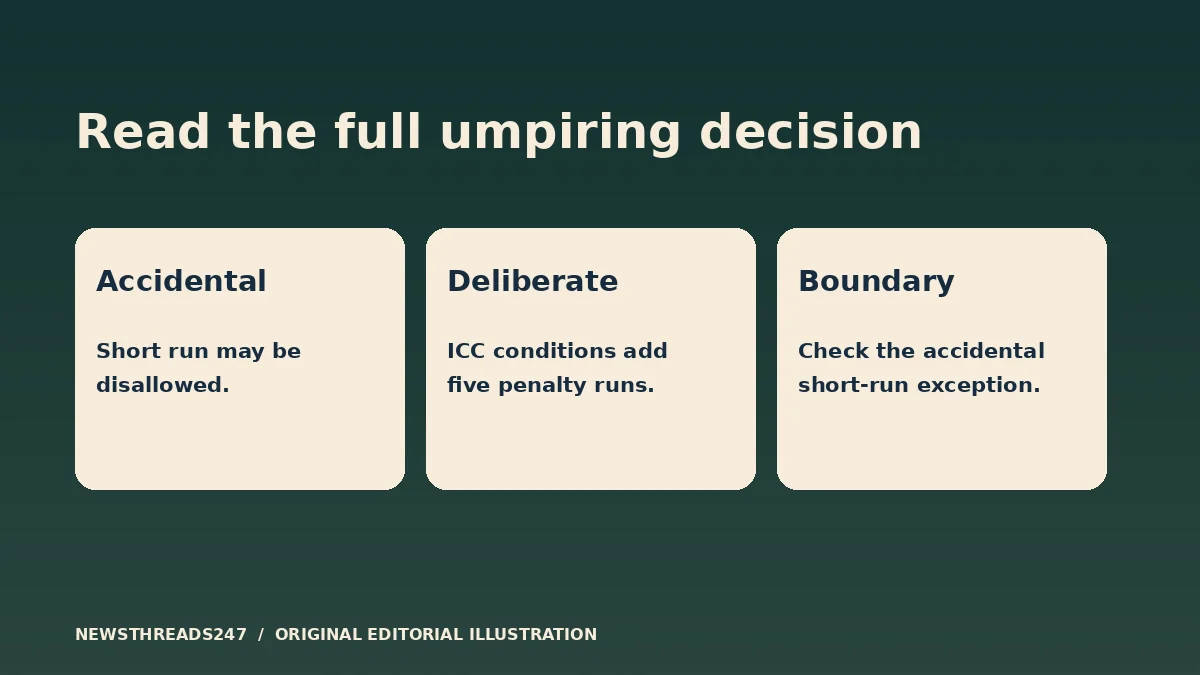
One unintentional short run usually removes one run
Imagine two batters attempt two runs from a shot. At the first turn, one batter accidentally fails to make their ground, but both batters complete the return run. On this ordinary non-boundary example, one run is called short and the completed return run can count. These are fictional incidents to explain the rule.
If both batters run short during the same one run, clause 18.4 treats that as one short run. It is not two separate deductions simply because two people made the error. If more than one run is short, the number of runs disallowed changes. The umpire informs the scorers so they can record the right total.
The boundary exception also matters. Clause 18.4 says that if a boundary follows unintentional short running, the short running is disregarded. Do not subtract one from every boundary merely because the replay shows an earlier incomplete turn.
A deliberate short run has a different consequence
Clause 18.5 concerns an attempt to make it appear that more than one run has been completed while at least one batter deliberately fails to make ground at an end. The question is deception, not just whether a bat falls short by a small distance. The umpires make that judgement from what they see.
If the deliberate offence is called under these playing conditions, the umpire disallows the batting side’s runs from the incident and awards five penalty runs to the fielding side. Any applicable one-run no-ball or wide penalty is still signalled. Clause 18.5 also directs the fielding captain to choose which batter at the wicket, including an incoming batter if applicable, faces the next delivery.
The outcome is therefore more than an extra deduction from the batting total. There can be a penalty added to the other team and a decision about the next striker. That is a reason to wait for the complete umpiring decision before interpreting a scoreboard that is still updating.
Abandoning a run is not automatically deception
Batters frequently set off and turn back. The ICC clause distinguishes an abandoned attempted run from a deliberate short run where the umpires believe there was an intention to deceive. An unsuccessful attempt to steal a run and a knowingly false appearance of completed runs are different questions.
A run-out is another separate issue. Whether a batter was short when turning does not itself dismiss them; a dismissal has its own conditions. You can understand a short-run signal without assuming a wicket must follow, just as you can read a run-out without assuming the previous completed runs all disappear.
Our misfield and overthrow guide addresses a different scoring problem: how a later fielding action and the batters’ positions affect boundary allowances. Keep the two rules separate when an event contains both running and a throw. For an unusual combined incident, consult the applicable clauses rather than adding together remembered shortcuts.
Read the score after the umpire finishes
Use three checks on the replay: which turn was incomplete, whether the umpire treated it as unintentional or deliberate, and whether the incident ended with a boundary. Then compare the confirmed total, any penalty credited to the other side and which batter is taking strike. A partial clip can omit the signal or the explanation to the scorers.
For local scorers, ask the umpire to clarify an incomplete signal rather than inferring intent from a camera angle. For viewers, an official scoring correction can arrive after the commentators react. The useful habit is to separate the action, the judgement and the final record.
Recheck this guide when the ICC issues a new edition of the relevant playing conditions. The examples illustrate those conditions; they do not accuse or assess any real player’s conduct.