
A diya looks small, but it is still an open flame. On Diwali, the most important placement decision is not which corner looks attractive in a photograph; it is whether a flame can touch fabric, paper, decorations or a person passing by. This practical guide focuses on arranging traditional oil lamps without turning doorways, balconies or prayer areas into avoidable hazards.
The guidance draws on the US Fire Administration, National Fire Protection Association and Massachusetts Department of Fire Services. These agencies discuss candle and open-flame safety; applying the same basic separation and supervision principles to a diya is a practical precaution, not a claim that their studies specifically measured Indian oil lamps.
In this guide — jump to a section
Choose the surface before lighting the diya
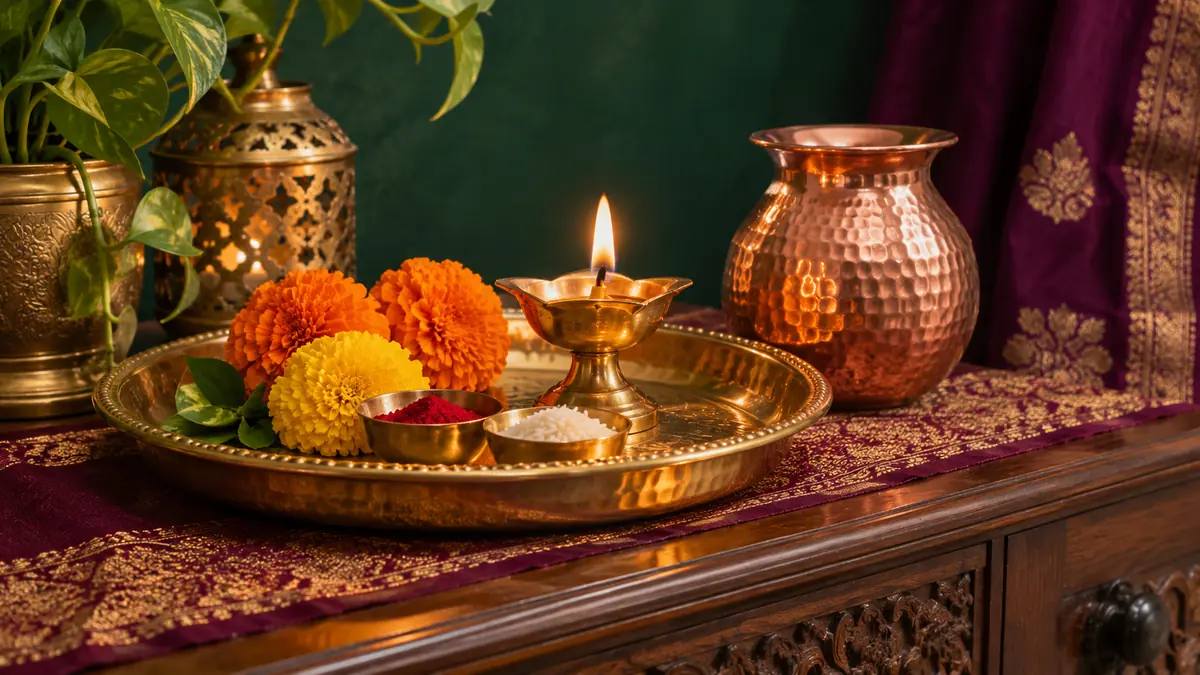
Start with a stable, level, non-combustible base such as a suitable metal or ceramic tray. It should not wobble when someone opens a door, brushes past a table or moves a nearby chair. Keep the lamp away from paper rangoli decorations, gift wrapping, plastic garlands, curtains and loose clothing. The US Fire Administration recommends keeping candles at least 12 inches (about 30 centimetres) from anything that burns. Treat that as a minimum separation precaution, not a guarantee that every oil-lamp setup is safe.
Arrange the unlit lamps first, then walk the route people will actually use. Imagine someone carrying sweets, a child entering in a hurry or an older guest using a walking aid. A floor-level diya may be beautiful in a still photograph but easy to miss during a crowded celebration. Move it rather than expecting every visitor to notice it.
Doorways, steps and balconies need different decisions
An entrance is a movement zone, not simply a display shelf. Keep a clear, unobstructed path through the door and along any staircase. Avoid placing burning lamps beside shoes, doormats, hanging decorations or a threshold where someone may step over them. If a diya can be knocked by an opening door or caught by a long garment, choose another position.
Balconies add wind and unpredictable movement. A gust can disturb a flame or move nearby lightweight decorations; an unsecured lamp can also tip. Do not put a burning lamp on a narrow railing, outside an accessible window ledge or close to stored cartons and fabric. Where supervision and separation are difficult, use a suitable battery-operated decorative light instead.
Keep the prayer area clear of fuel and clutter
Puja arrangements may combine flowers, incense, cotton wicks, cloth, paper packaging and several flames. Put combustible offerings and packaging away from the flame zone. Avoid crowding multiple lamps together on an unstable plate, and do not reach across lit lamps to adjust a picture or decoration. Prepare the layout before lighting, with a clear route for placing and removing items.
A useful household practice is to assign one responsible adult to supervise the lit lamps throughout the ceremony. If the family moves to another room, extinguish the lamps safely rather than leaving them burning for appearance. The NFPA advises extinguishing candles when leaving a room or going to bed; a diya should not be treated as an exception to the underlying unattended-flame risk.
Plan for children, guests and pets
Do not rely on a verbal warning as the only barrier. A small child may reach toward a flame out of curiosity, while a pet may brush past a low table or floor display. Keep lamps out of their reach, use stable holders and supervise the area continuously. If a guest has limited mobility or vision, keep the walking route free of flames and trailing cables.
For a gathering, tell guests where the lit lamps are before the room becomes crowded. Keep matches, lighters and spare oil securely away from children. A separate family guide on Diwali fireworks and pet safety covers another distinct part of the evening.
A simple final check before leaving or sleeping
Do a deliberate room-by-room flame check. Look at the entrance, puja area, balcony and any corner used for photographs. Extinguish every flame before leaving the home or going to sleep. Do not discard a still-hot wick or match into ordinary rubbish. Let the holder cool where it cannot be touched or knocked over, and follow safe handling instructions for the lamp material.
If a fire starts, warn others and move to safety; call the appropriate local emergency service. Do not attempt to fight a growing fire or block your escape. A working smoke alarm and a practised escape route remain important. Our home fire escape plan guide explains how to prepare an accessible route and meeting place.
When flameless lighting is the better choice
Battery-operated flameless lamps can be a sensible option for narrow balconies, busy doorways, homes with small children or pets, or displays that cannot be supervised. Both the US Fire Administration and Massachusetts fire-safety guidance recommend flameless alternatives. They do not reproduce every traditional ritual, but they can provide decorative light without an exposed flame.
If electricity fails, use a torch or battery-powered light instead of introducing an unattended candle or diya. The CDC’s power-outage advice makes that preference explicit.
Editorial note: Prepared 7 November 2026 for readers planning Diwali lighting. This is a preventive home-safety explainer based on public fire-safety guidance, not a laboratory test of diya designs, a claim of official certification or advice to disregard local fire regulations. Images are illustrative and previously published on NewsThreads247. Review lamp-specific instructions and local emergency advice for your circumstances.