
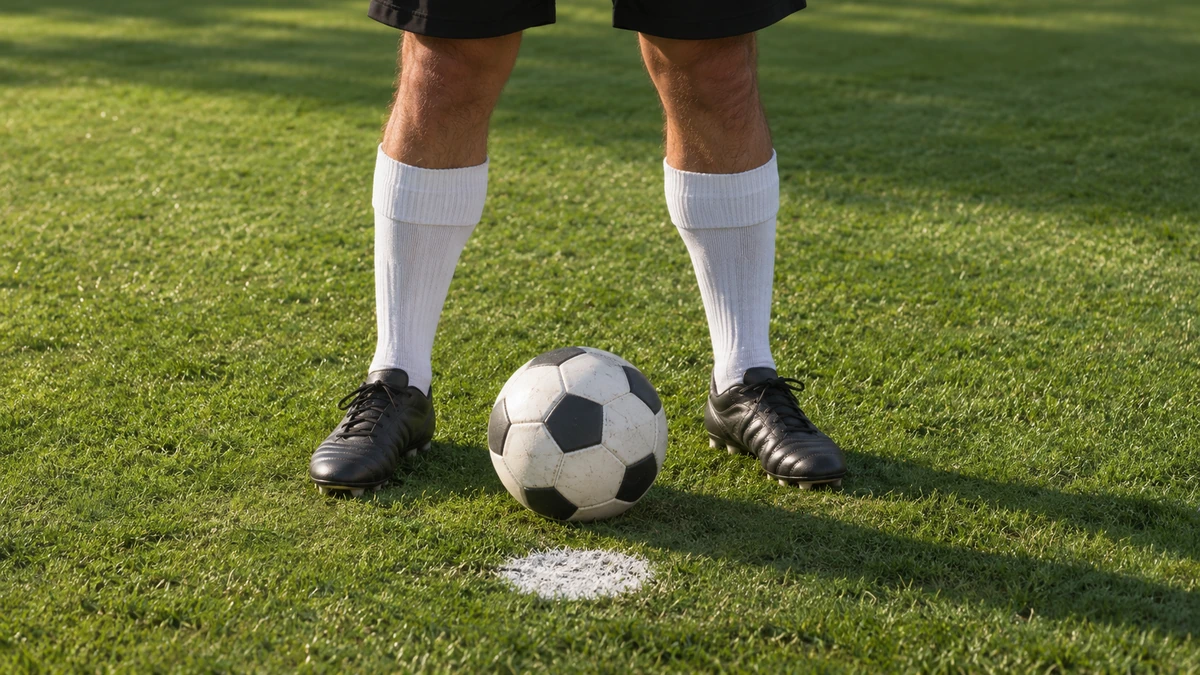
If a footballer slips and the penalty immediately hits their standing foot, the referee needs to know whether the ball entered the goal and whether this was a regular penalty or a shoot-out kick. Under the current IFAB laws, the specified accidental double touch leads to a retake if the ball goes in. If it stays out, the usual outcome is an indirect free kick in play or a recorded miss in a shoot-out. That is different from a player deliberately touching the ball twice.
In this article
Identify which contact you actually saw
Watch the kicking foot first, then the other leg. The IFAB provision covers an accidental simultaneous kick with both feet or immediate contact with the non-kicking foot or leg after the kick. Picture a player planting, slipping and unintentionally sending the ball into their other foot before it travels away. Slow motion may reveal two contacts. It does not, on its own, tell you that the player meant to play the ball again.
The distinction was set out in IFAB Circular 31 and incorporated into the current Law 14 on penalty kicks. The separate Law 10 shoot-out procedure matters for a kick taken to decide the match. The penalty spot looks the same in both situations, but the next action after a miss does not.
If the accidentally double-touched kick goes in
When the specific accidental contact occurs and the ball goes in, the official orders a retake rather than awarding the goal. In a shoot-out, the first attempt in that sequence is not recorded as a miss either. The scoreboard should wait for the retake. This is not a chance for the taker to keep kicking a ball still in motion. The first kick has ended and the referee restarts the procedure.
For example, a right-footed kicker slips and the ball clips the left boot immediately before rolling past the goalkeeper. An official who confirms those facts calls for another kick. If the ball had instead been touched deliberately a second time before another player touched it, a goal from that play would not earn the same retake.
If the kick stays out, distinguish play from a shoot-out
For a penalty in normal play with the specified accidental double touch, the referee normally stops play and awards the defending team an indirect free kick when the ball does not enter. The law allows the referee to apply advantage when it clearly benefits the defending team. In a shoot-out the kick is recorded as missed; there is no indirect free kick to start open play. A missed shot that comes out off a post does not give the taker a second swing in a shoot-out.
Consider the same slip, but this time the goalkeeper saves and the ball rebounds towards an attacking player. With no separate offence by the goalkeeper and no clear benefit for the defenders to keep playing, the referee stops the action for the indirect free kick. An ordinary penalty rebound after a goalkeeper’s save can otherwise be playable during the match; here the confirmed double touch has already changed the decision. Our guide to direct and indirect free kicks explains the restart signal.
Do not confuse a slip with playing the ball again
A taker whose kick hits only the post cannot deliberately play the rebound before another player has touched the ball. The post is not another player. In a match, a normal second-touch offence brings an indirect free kick, though the restart differs if the second contact is a handball offence. In a shoot-out, the kicker cannot play the ball again. Neither situation gets the accidental-slip retake simply because the ball later ends in the net.
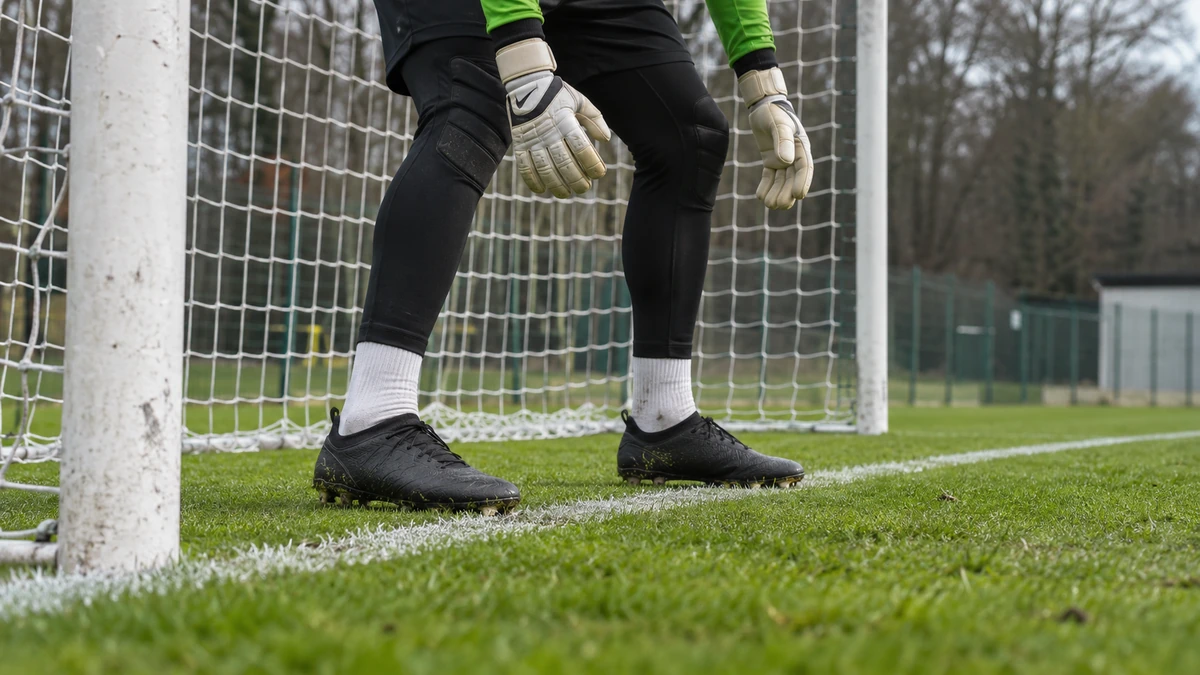
Check what the goalkeeper did separately. The law generally requires at least part of one foot to be touching, in line with or behind the goal line when the ball is kicked. A separate goalkeeper offence can affect the outcome under the law’s combined-offence rules. The examples above assume no separate offence. The published examples at the end of Law 14 are useful if multiple things went wrong during the kick.
Use a three-question replay check
First ask whether the two contacts are the specific accidental kind described in the law or a deliberate second play. Next ask whether the ball went in. Finally ask whether the penalty is being taken during the match or in a shoot-out. Those answers explain the usual decision before you consider other offences.
Treat a replay from only one angle as incomplete when the feet overlap in the frame. Rules can change between editions, and older competition clips may predate this clarification. For a current decision, start with the competition’s applicable rule edition and use the IFAB examples instead of inferring the rule from a previous match.