
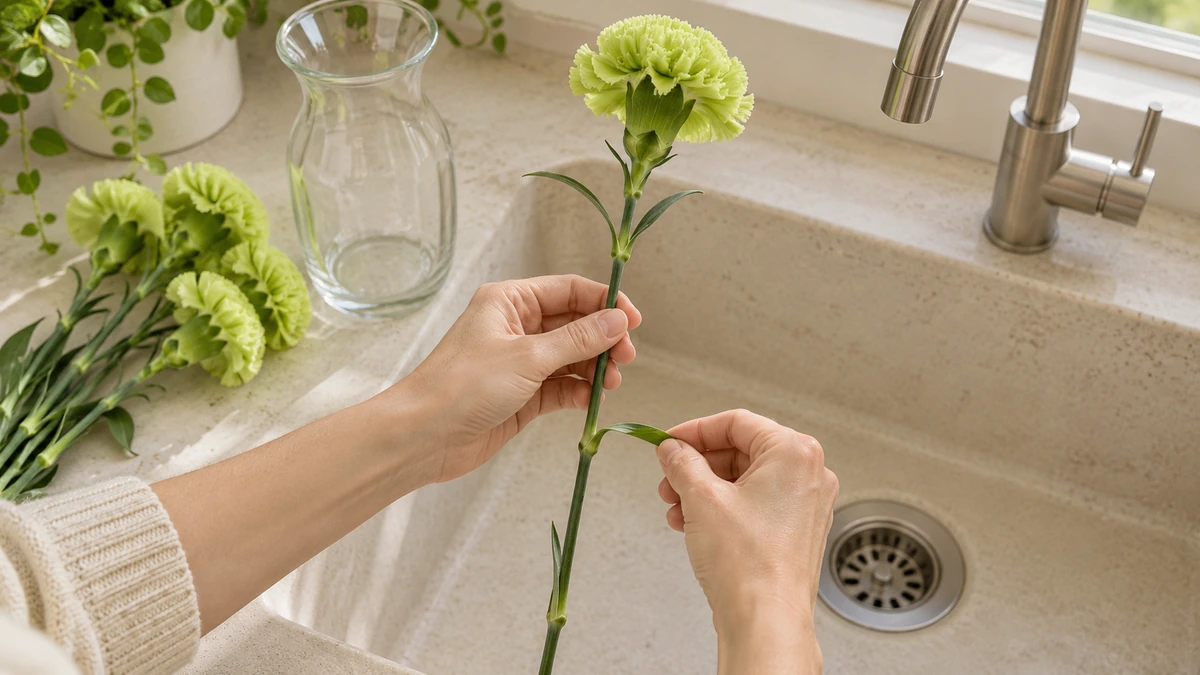
When you bring home cut flowers, start with the vase. Wash it, remove leaves that would sit below the waterline, trim the stem ends and put the flowers into fresh water. A packet of cut-flower food can help when it is mixed with the amount of water on the packet. If the bouquet starts to droop, check the water and the stems before adding anything. A tired flower head and a dry stem can look similar across a room, but they call for different decisions.
In this article
Set up the vase before you trim
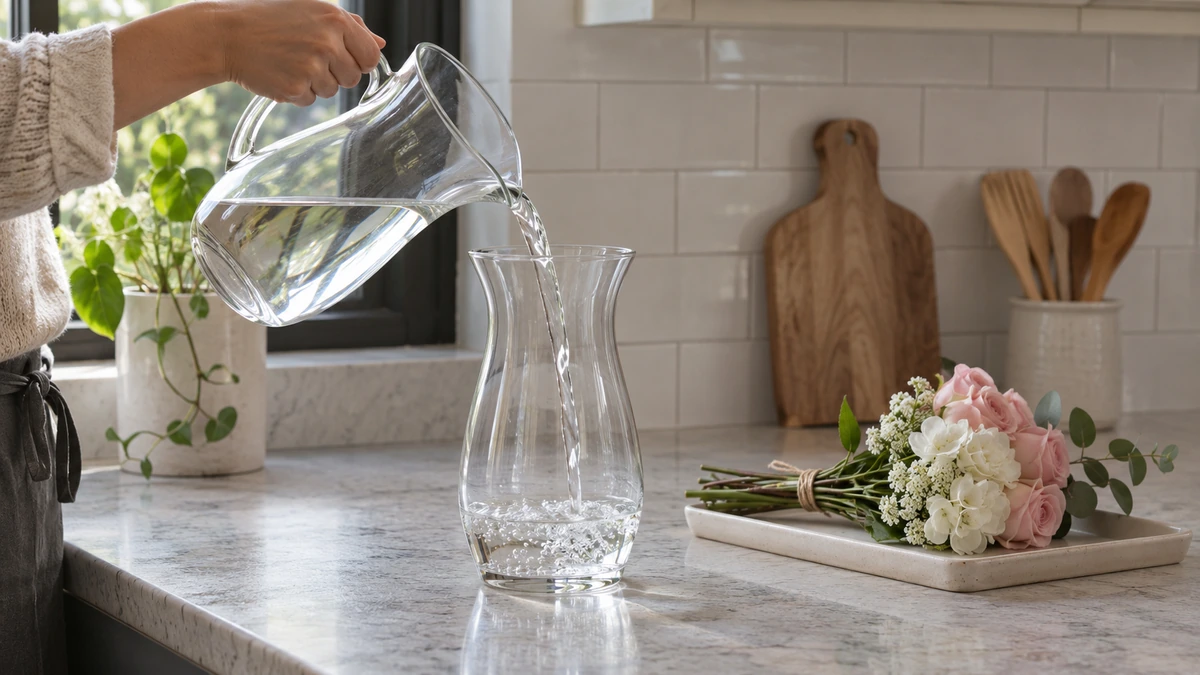
A clear vase is useful because you can see the waterline and spot debris. A clean opaque one works just as well if you remember to check it. Wash the vase with dish soap, rinse it thoroughly and look inside for residue from the last arrangement, especially around the bottom. Put clean water in the vase before you start cutting so freshly trimmed stems can go straight in.
Unwrap the bouquet and hold a stem beside the vase to estimate where the water will sit. Remove foliage that would be under water, but leave healthy leaves higher up if you like how they look. Recut the ends with clean, sharp clippers without crushing them. Guidance from University of Illinois Extension and Iowa State University Extension describes slightly different cutting routines; both start with clean equipment and an unobstructed path for water. With a short arrangement, take off only enough to expose a fresh cut and still leave every stem reaching the water.
Measure flower food to the actual water volume
A vase measures larger at the top than the volume you need to fill it with. That makes it easy to tip a whole packet into too little water. Read the packet first. If it calls for one litre and your vase needs less, you can mix the packet with a full litre in a clean jug and pour in only what the vase needs. Follow the supplied instructions for any unused solution.
Flower food differs from merely spooning sugar into the water. A commercial cut-flower product is formulated for use at its stated dilution, and its job can include supporting the flowers and controlling what grows in the water. University of Illinois Extension cautions against relying on homemade additions such as soda, coins or aspirin. If you have no packet, fresh plain water and a clean vessel give you a useful starting point. Skip improvised mixtures and concentrate on cleaning and checking the arrangement.
Use the water, stem ends and flower heads as clues
Look at the vase the next morning before moving it. If the water level has dropped but the water is clear, top up with the appropriate solution and check that shorter stems still reach it. When water looks cloudy or smells off, move the stems temporarily, rinse the vessel, prepare fresh water or properly diluted flower food, and remove submerged debris. Some extension guides suggest changing water every few days; use that as a prompt to check rather than a reason to wait when the water visibly deteriorates.
If one flower is wilting while the others stand upright, inspect that stem by itself. It may be bent near the neck, stuck above the waterline or visibly worn, even though the rest of the bouquet is fine. If several flowers droop at once after the vase ran dry, clean and refill the vase, recut usable stems and give them time to take up water. If one stem is slimy or a bloom is clearly spent, remove it instead of dismantling a healthy arrangement. NC State Extension’s cut-flower guidance explains why clean water and fresh cuts can matter when water uptake is poor.
Pick a cool location you will actually check
A bouquet may look good on the brightest window ledge and do better on a nearby table out of direct sun. Choose a spot away from a heater, a strong warm air stream and ripening fruit. Illinois Extension discusses keeping arrangements away from heat and fruit; some flowers are more sensitive than others to ethylene released as fruit ripens. Moving the bouquet is an easy intervention when the vase care is already sound.
There is no universal vase-life number. Flower species, harvest stage, travel time and the room itself change the outcome. A grocery-store bouquet that has been dry in transit may behave differently from flowers collected that morning. See also our guide to spotting indoor moisture around windows if you are choosing between a crowded window ledge and a more open part of the room; the flower vase itself does not need to sit by the glass.
Reset the arrangement instead of replacing every stem
Say a mixed bouquet looks uneven on day three: two heads have faded, some leaves sit in cloudy water and the remaining stems feel firm. Pull the faded stems first. Wash the vase, cut away any submerged foliage, then trim only the remaining stems that need it. If the good stems are now different lengths, move the shortest ones to a clean smaller vase rather than cutting the entire arrangement down. That gives you two smaller displays from the flowers that are still worth keeping.
The same sequence works when something seems wrong but you cannot identify the species: stop and look, fix obvious water or stem problems, then remove flowers that have finished. Check any species-specific care directions from the florist or grower, and read the dilution again whenever you use a different packet.