
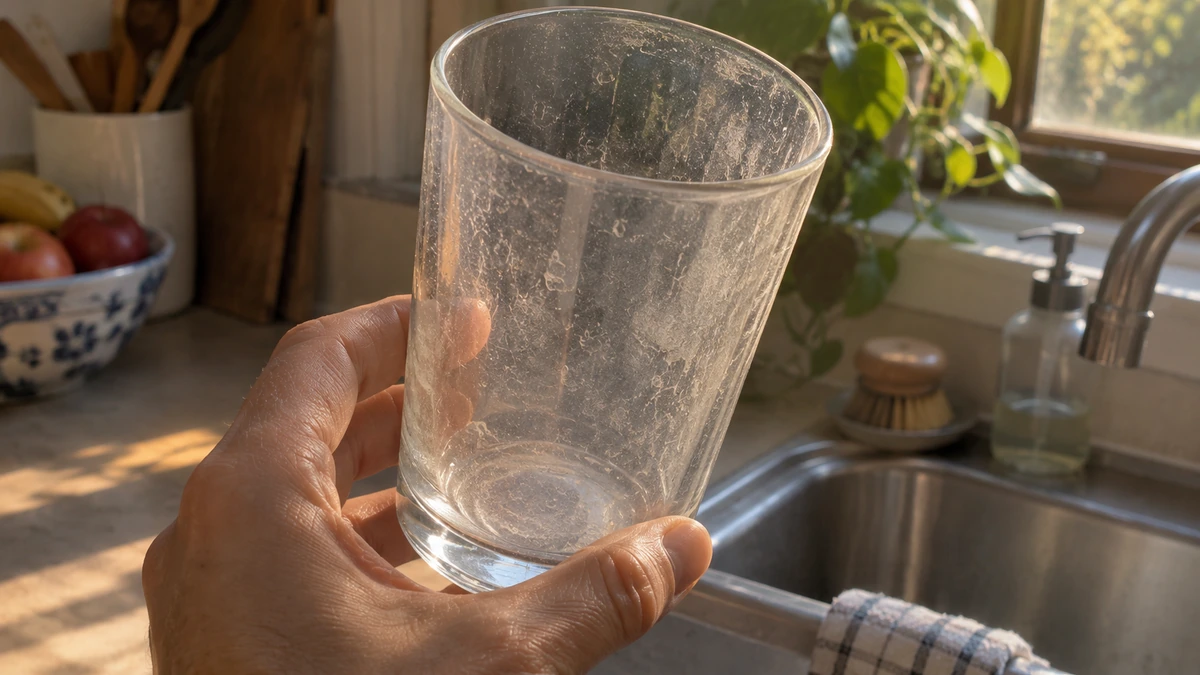
If your drinking glasses come out of the dishwasher cloudy, try to clear a small patch on one plain glass before changing the settings or buying replacements. A removable haze is on the surface. Etching is damage to the glass itself and will not wash off. A quick comparison can show whether you have something to clean, though a patch that stays cloudy does not prove the glass is etched.
In this article
Look at a dry glass under side light
Wash and dry your hands, take one cool, dry tumbler and turn it next to a window. Compare it with another glass of the same type if you have one. Bright spots around dried droplets, or similar marks on a clear kettle or faucet, can point toward mineral deposits. A uniform haze that has built up on older glasses over many cycles is a different clue, but appearances overlap. A glass that looks clear only while wet is also inconclusive; dry the sample before you compare.
It helps to know what you are looking at. University of Maryland Extension defines water hardness in terms of dissolved calcium and magnesium. Minerals in hard water can leave visible deposits as water dries. But not every haze is mineral scale. Whirlpool’s glassware guidance distinguishes surface film, which can also be linked to detergent or loading, from permanent loss of clarity caused by etching.
Try a patch test away from the dishwasher
On an undecorated, dishwasher-safe glass, first rinse away any cleaner, wash with mild dish soap and rinse thoroughly. When the glass is dry, gently wipe a small cloudy area with a soft cloth dampened with a little plain white vinegar. Rinse again and dry both the patch and the area next to it. Leave painted, metallic-rimmed, antique or specialty glassware out of the test unless the maker says it is suitable. Do not combine vinegar with bleach or other cleaners, and do the test at the sink rather than pouring vinegar into the dishwasher.
If the patch clears while the rest stays cloudy, you have evidence of a removable deposit. If it only improves partway, the glass may have more than one issue. If there is no change, permanent etching is possible, but Maytag’s troubleshooting guide also lists films that may resist the vinegar test. That is why repeated scrubbing, gritty powders or stronger acids are a poor next move. A single test tells you whether that particular patch responds; it does not identify every possible deposit.
Match the next check to the pattern of marks
If several glasses suddenly spot and you see new deposits around the sink, check the hardness of the water that actually feeds the dishwasher. A utility report may be a starting point. Where a softener, private supply or a change in supply matters, a test closer to the point of use is more informative. Note the units on the test and the ones in the appliance manual; they may not be written the same way. Confirm the conversion or ask the manufacturer before changing an integrated softener setting.
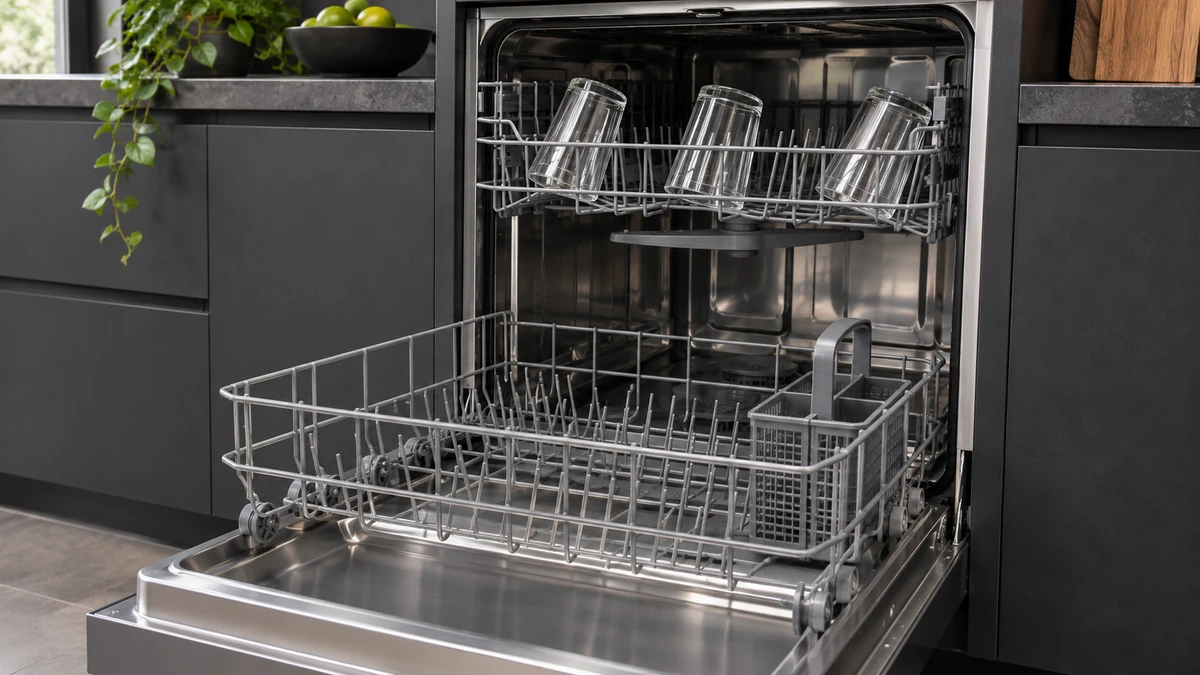
If glasses haze in just one part of the rack, inspect loading and spray reach first. Place glassware as your manual shows and space items so they do not nest or touch. With the appliance off and cool, consult the manual for safe checks of the filter and spray arms. If a softened-water household sees persistent haze on the oldest glasses but not the newest, review the detergent dose and the programmes used. Etching can be associated with soft water and too much detergent; automatically adding more can move you in the wrong direction. Whirlpool’s guide to cloudy glasses explains why prevention depends on which problem you have.
Change one thing on the next comparable load
Keep one previously clear, everyday glass as a comparison and avoid putting valuable or already damaged pieces back in. Run a normal load with a single change your manual supports: for example, adjust loading first, or use the recommended dose for the measured hardness if the dose was clearly wrong. Keep the cycle and other settings the same. Compare both pieces when dry, in the same light. Taking a quick photo before the next cycle gives you a record better than memory.
If you changed loading and the fresh glass dries clear while the old haze stays, that suggests you may have prevented new marks without repairing earlier damage. If spotting continues despite correct loading, consult the manual about detergent, rinse aid and the model’s softener before changing another setting. Use dishwasher salt only in a machine that has a designated reservoir and calls for it. There is no reason to change plumbing or water-heater settings based on appearance alone.
Know when cleaning has done what it can
Persistent haze on several materials and across different settings can justify a call to the manufacturer or a qualified technician, especially if you also see poor cleaning or unusual operation. Send the model number, measured hardness, detergent type, one dry photo and what changed after your comparison load. If a glass has a chip or crack, retire it from drinking use; that is a separate issue from cosmetic clouding.
For an item you plan to replace, keep the purchase details and the maker’s care directions. Our guide to evaluating online product reviews explains how to weight reports from people with similar use conditions. Rerun the same small checks if you change detergent, move home or service a water softener. You will learn more from one controlled comparison than from starting a different remedy with every wash.