
For a fresh banking-service complaint in India, start with the bank’s own complaint process and preserve proof that it received your complaint. Then check the escalation conditions under the Reserve Bank–Integrated Ombudsman Scheme, 2026. Waiting for a response and meeting the Ombudsman filing limit are separate tasks; a reminder in your inbox should not be your only record of either.
RBI’s January 16, 2026 announcement says the revised scheme took effect on July 1, 2026. This is continuing guidance under that framework, not a new rule announced today. Older articles about the 2021 scheme need their dates checked before their timelines are used for a current complaint.
Build the record at the bank stage
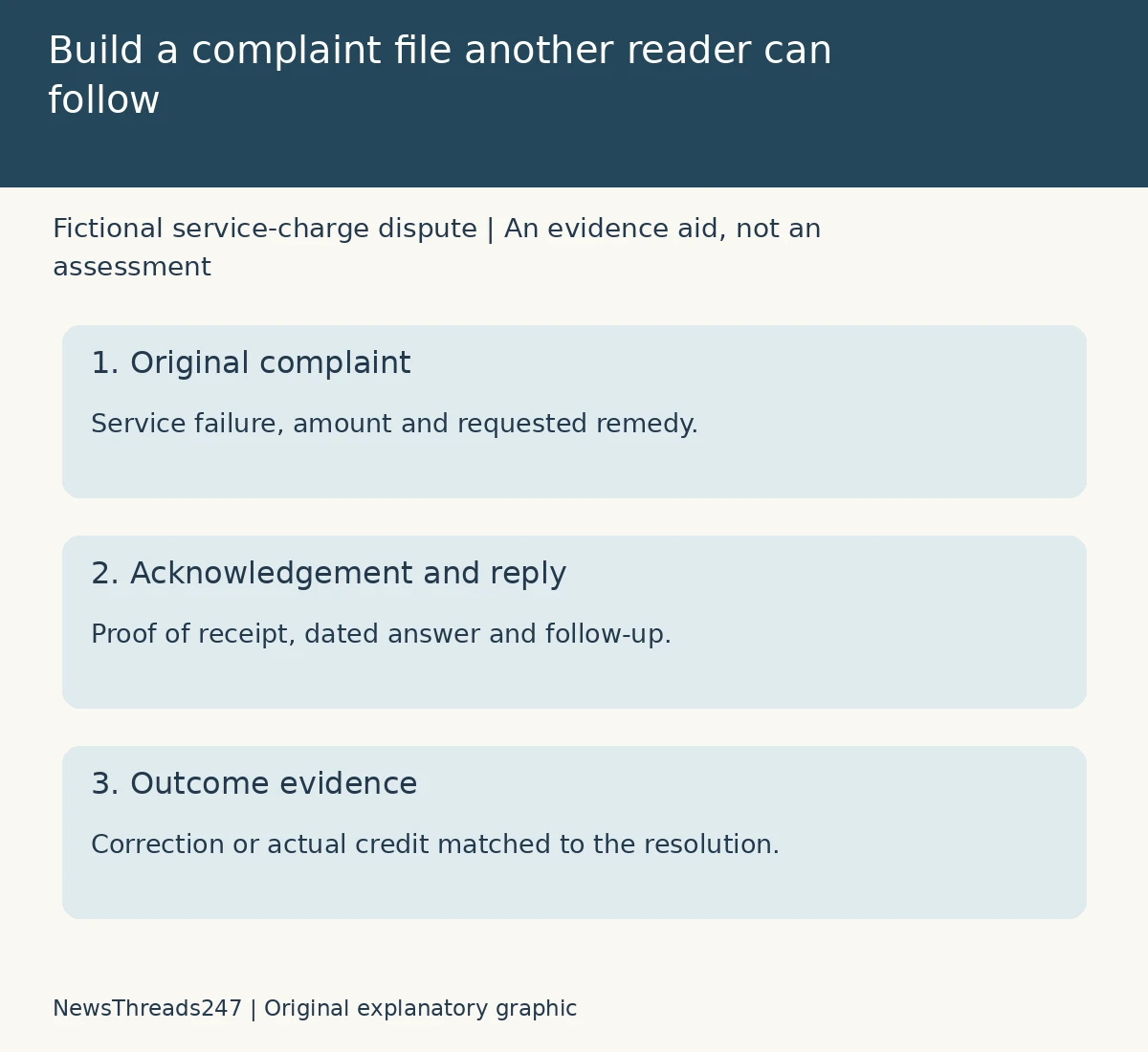
Send a specific complaint through the bank’s verified channel. Identify the service failure, relevant transaction or account reference, what you have already tried and the remedy requested. Retain the submission and acknowledgement together. A telephone conversation can be useful, but a later reviewer needs evidence of what was complained about and when the bank received it.
Keep the original wording. If the issue develops, add a dated follow-up rather than silently replacing the earlier message. A short chronology lets the bank and any later reviewer distinguish a new problem from an unresolved part of the original one. Save meaningful replies, including explanations you disagree with.
For a fictional example, a customer complains about an unexplained service charge. The useful file contains the statement line, the applicable published tariff, the original complaint and the bank’s answer. A folder with ten screenshots of the balance but no complaint acknowledgement leaves a different evidential gap. The number of attachments is less useful than their connection to the issue.
Separate the response period from the filing window
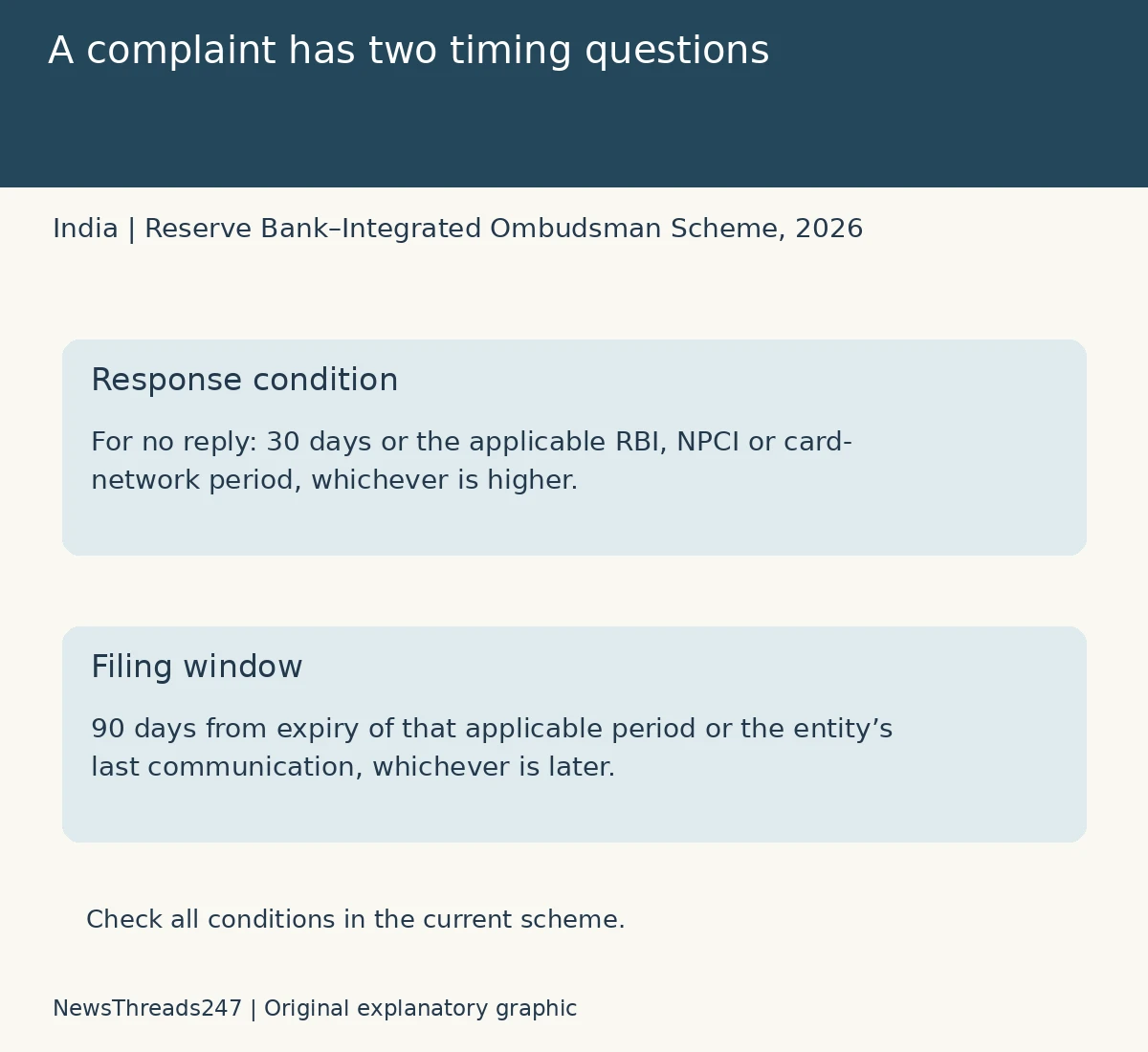
Clause 10 of the 2026 scheme reproduced on Axis Bank’s official website requires a prior complaint to the regulated entity. For a no-reply case, it refers to 30 days or the applicable RBI, NPCI or card-network time, whichever is higher. It also covers dissatisfaction with the reply or resolution. Do not assume every issue has exactly the same waiting period.
The same clause provides a 90-day filing window measured from expiry of that applicable timeline or the entity’s last communication, whichever is later. Read those starting points together. They are not ninety days automatically counted from the disputed transaction. Nor should a reader assume that the date on which an article was published starts a personal deadline.
Use two separate lines in your action record: “When can this unresolved issue be escalated?” and “Which event starts the filing limit?” Attach the document supporting each answer. If the correspondence or applicable period is unclear, obtain clarification promptly through the official process. This article cannot calculate a legally disputed deadline for an individual case.
Make the complaint about a reviewable service failure
Write the complaint so a person unfamiliar with your account can understand it. State what the bank was expected to do, what actually happened and which evidence demonstrates the difference. Distinguish an amount debited, a refund requested and money actually credited. If you are disputing a calculation, show the precise line rather than only stating that the outcome feels unfair.
Describe the outcome sought in concrete terms: an explanation, correction of a record, reversal of an identified charge or processing of an outstanding request. Keep any claim for loss separate from the basic transaction amount and explain its evidence. Neither a complaint reference nor a compensation ceiling is an award of money.
For a failed UPI transaction, the underlying reversal rule is a separate question from the Ombudsman filing process. Our failed-UPI refund explainer helps identify the transaction issue. Establish that issue first, then document the unresolved complaint rather than substituting an escalation headline for the applicable payment rule.
Check that this is the right forum and route
The scheme has coverage and maintainability conditions. A duplicate grievance already pending or decided in specified forums, and other excluded situations, need careful checking. Read the current scheme rather than opening parallel cases on the assumption that more submissions improve the chance of recovery.
The bank’s official summary of the 2026 scheme identifies the CMS portal, email and physical submission routes. Use the current official instructions for the channel you choose. Merely copying RBI on a message to the bank is different from addressing a complaint to the Ombudsman through the prescribed route.
Keep sensitive material inside the verified process. Redact account details from public posts and do not disclose passwords, card security codes or one-time passwords. If someone offers a guaranteed decision for an advance payment, verify the supposed service through the official source before sharing any information.
Track the decision as carefully as the submission
After filing, retain the acknowledgement and the version of the complaint actually submitted. Respond to requests for information against the same reference. A portal status and a reasoned decision are different records; read any closure or settlement communication in full, including what it asks you to do next.
If the issue is resolved, reconcile the actual correction or credit with the agreed outcome and preserve the evidence. If it remains unresolved, use the options and time limits stated in the applicable decision and scheme. Qualified advice may be appropriate where legal limitation, another proceeding or a disputed loss makes the route uncertain.
Sources and scope
India guidance checked October 29, 2026 using RBI’s 2026 scheme announcement and the scheme and summary published by Axis Bank, corroborated with current regulated-entity reproductions. The example is fictional. No complaint was filed or assessed for a reader. This guide does not promise acceptance, compensation or a decision by a particular date.
Visual credits: NewsThreads247. Featured image: AI-generated conceptual illustration, not a record of an event, customer or account. Body graphics: original explanatory artwork; examples are labelled fictional.