
Lifestyle / food-safety guide — 22 November 2026. Thanksgiving falls on Thursday, 26 November 2026 in the United States. If you’re hosting, planning to send guests home with food or hoping to enjoy the meal over the weekend, food safety starts before anyone opens a leftovers container.
The most useful rule is simple: do not leave perishable cooked foods sitting on the table for hours after dinner. The U.S. Department of Agriculture and FoodSafety.gov recommend refrigerating perishable leftovers promptly, normally within two hours, and reheating leftovers to 165°F (74°C). You do not need specialist kitchen equipment beyond clean, shallow containers, a working refrigerator and, ideally, a food thermometer.
Thanksgiving leftovers: the five numbers worth remembering
| Food safety decision | USDA/FoodSafety.gov guidance |
|---|---|
| At room temperature after the meal | Refrigerate perishable leftovers within 2 hours; 1 hour if above 90°F (32°C) |
| Refrigerator setting | 40°F (4°C) or below |
| Freezer setting | 0°F (−18°C) or below |
| Leftovers in refrigerator | Use within 3–4 days or freeze |
| Reheat cooked leftovers | Internal temperature 165°F (74°C), checked with a food thermometer |
These are general US food-safety figures. They apply to common cooked holiday leftovers such as turkey, stuffing, gravy and casseroles, although individual foods and circumstances may need additional precautions. See FoodSafety.gov’s four steps and the USDA leftovers guidance.
What the two-hour rule means at a real family dinner
Suppose the hot dishes come off the stove and enter room-temperature service at 5:00 PM. Family members keep talking after dessert, and a large platter of sliced turkey is still sitting out at 7:30 PM. The safest response is not to put that platter in the fridge for tomorrow. Perishable food that has remained at room temperature beyond the recommended window should be discarded rather than treated as safe because it still looks or smells normal.
The two-hour clock concerns time out of safe temperature control, not only the moment the meal ends. If foods have been reliably kept at safe hot-holding or cold-holding temperatures, the assessment differs; an ordinary dining table does not provide that assurance. On a very hot day above 90°F (32°C), the window is shorter: one hour. The weather outside being cold does not make a warm indoor dining room a refrigerator.
Pack leftovers while they’re still safe, not the next morning
Divide the large dishes
The biggest mistake is placing a whole cooked turkey, large saucepan or deep casserole in the refrigerator and expecting the centre to cool quickly. Instead, carve or divide large portions into smaller pieces and transfer food to clean, shallow containers that cool more quickly. The USDA explicitly recommends dividing large cuts of meat and large pots of food this way; you do not have to let hot food sit on the counter for hours first.
Make room in the refrigerator
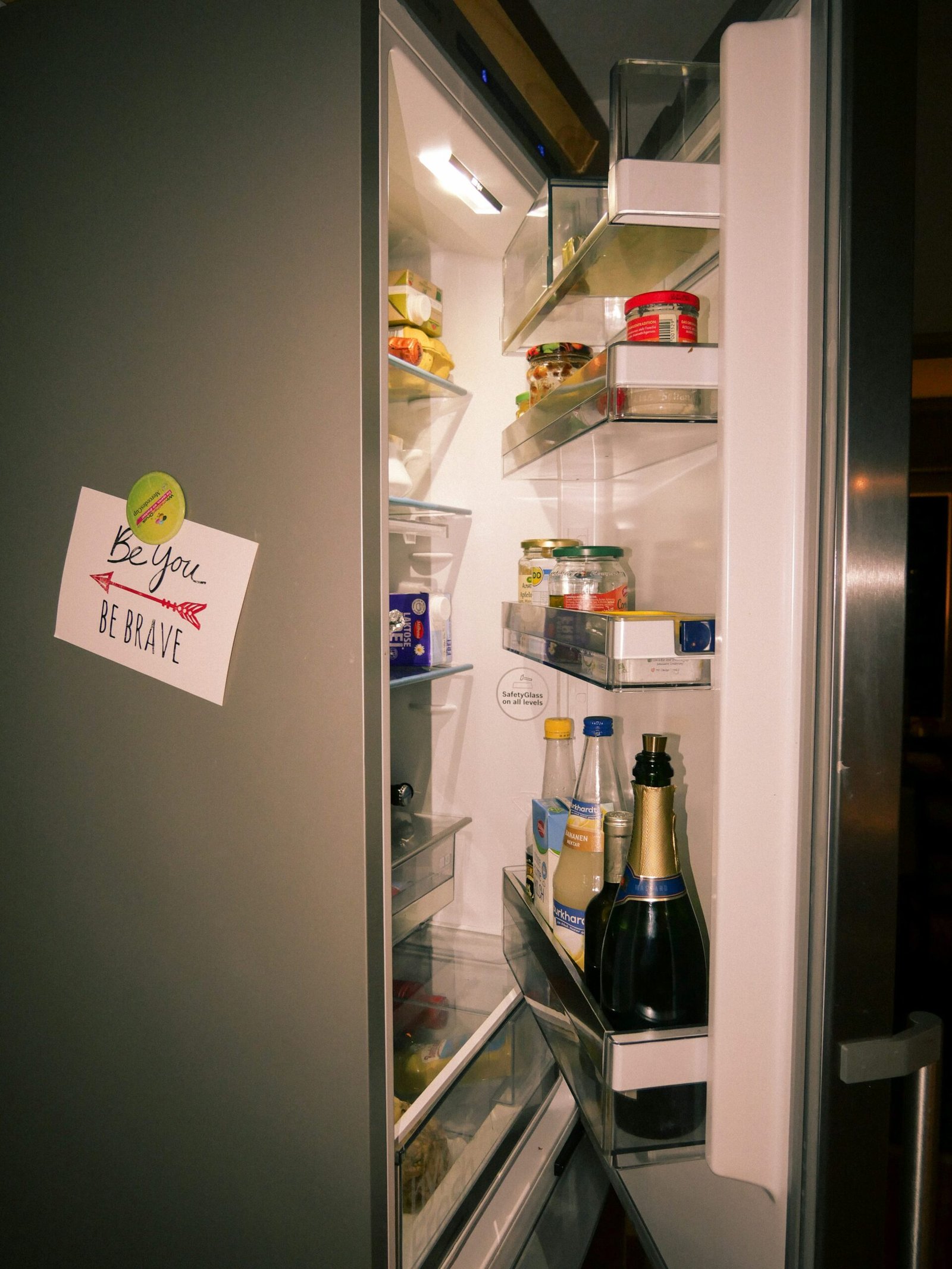
Keep a refrigerator at 40°F (4°C) or colder, and avoid packing it so tightly that cold air cannot circulate. If your fridge is already full of drinks, desserts and groceries, prepare shelf space before the meal. Put raw foods where they will not drip onto ready-to-eat leftovers.
Separate what people will eat now from what must be stored
Use a smaller serving dish that can be replenished safely rather than leaving the entire cooked batch at room temperature. Divide take-home portions promptly into clean containers. Label containers with the storage date and food name; a label helps people distinguish Friday’s prepared meal from a container that has been sitting in the back for a week.
Does cooked turkey last until Monday? Count the days correctly
Refrigerated cooked leftovers generally have a 3–4 day window when cooled and stored safely. For a Thursday, 26 November Thanksgiving meal, that means a properly refrigerated dish should generally be eaten or frozen by Monday, 30 November at the latest under the four-day guideline—not kept indefinitely because it is sealed or smells fine.
A dish that spent too long at room temperature on Thursday is not rescued by putting it in the fridge on Friday. The 3–4 day window assumes it was handled safely in the first place. If plans change, freeze a portion earlier rather than waiting until the end of its refrigerator window. Freezing preserves quality better when the food is packed, labeled and frozen promptly.
Reheat the portion you need to 165°F (74°C)
A microwave, stovetop or oven can reheat leftovers, provided the food reaches the correct internal temperature. For thick or uneven dishes, use a food thermometer in the centre and stir or rotate where appropriate. Steam, bubbling around the edges or a hot container alone does not confirm that the entire dish has reached 165°F.
If someone has reheated a large pot repeatedly and returned it to the fridge, consider portioning differently. Take out only what you need and keep the remainder cold rather than repeatedly warming and cooling the whole batch. Use clean utensils; do not mix leftovers back into the original container after they have been served.
A host’s packing checklist for turkey, gravy and sides
- Turkey: remove meat from the carcass and divide large portions for prompt cooling; label the container with its date.
- Stuffing and casseroles: move into shallow containers, refrigerate promptly, and reheat to the recommended temperature.
- Gravy: store in an appropriate covered container and heat thoroughly when reusing; a food thermometer is more reliable than checking by touch.
- Vegetable sides: cooked sides containing dairy, meat or other perishable ingredients should not remain on the table all evening.
- Desserts: follow the ingredients and storage guidance for custard-, cream-, dairy- or egg-rich items rather than assuming every pie is shelf-stable.
- Take-home boxes: give guests food that has been safely held, pack it cleanly, and remind them to refrigerate it promptly when they get home.
A useful distinction: thawing a turkey versus storing cooked leftovers
A frozen turkey prepared for Thanksgiving needs safe thawing before cooking; that is a different timetable from the 3–4 day refrigerator limit on cooked leftovers. Our earlier NewsThreads247 guide covers the preparation step: when to move a frozen turkey to the refrigerator before Thanksgiving 2026. After serving, follow the leftovers rules on this page.
The same leftover principles help for other family gatherings: birthday buffets, office potlucks, festival feasts and weekend barbecues. The point is not the holiday name; it is how long food stays outside refrigeration, how quickly it cools and how it is reheated.
What if your refrigerator loses power?
During a long outage, avoid frequently opening the refrigerator, and follow official food-safety guidance rather than assuming leftovers stayed cold. Without confirmed safe temperatures and storage duration, cooked perishable foods may need to be discarded. Never taste suspicious leftovers to decide whether they are safe. For households regularly hosting large meals, an inexpensive refrigerator thermometer is more useful than a guess.
Sources, photo rights and scope
FoodSafety.gov: clean, separate, cook and chill; USDA FSIS: handle leftovers safely; USDA FSIS: safely refrigerating hot foods; and USDA FSIS: reheating. Thanksgiving date: 2026 US holiday calendar. Photos are by Ello and Jutta Elisabeth / Unsplash, used under the Unsplash License. They illustrate refrigeration and are not evidence of safe handling for any pictured meal.
Editorial note: These are general US public-health food-handling guidelines, not an assessment of food prepared in any specific home. People with higher risks from foodborne illness should be especially cautious about storage uncertainty.