

Choose job references by matching each one to work the prospective employer needs to understand. A supervisor who watched you handle hard customer calls can tell a hiring manager more about that skill than an executive who only knows your name. In a U.S. application, follow the posting’s instructions on how many people to list, which relationships count and when to supply their details.
In this article
Start with what the employer needs to learn
Start by underlining two or three recurring responsibilities in the job description. Next to each, write one example of you doing similar work and the name of someone who saw it. A reference who can describe a specific strength gives the employer something concrete to evaluate. An extra check helps you put that advice into practice: can the person tell the employer what they observed, when they saw it and how it affected the work? If all they can do is confirm a job title, save them for employment verification if that is what the employer needs.
An early-career applicant can apply the same test to an internship, a sustained volunteer role or a course project, when the employer accepts those references. Virginia Tech’s career guide includes supervisors, faculty members, coaches and advisers among the possibilities. A professor who supervised eight weeks of lab work has more to draw on than someone who taught a large lecture course and never worked with you. If a posting specifically requires supervisors, ask whether a project supervisor qualifies rather than guessing.
Avoid three references who all saw the same thing
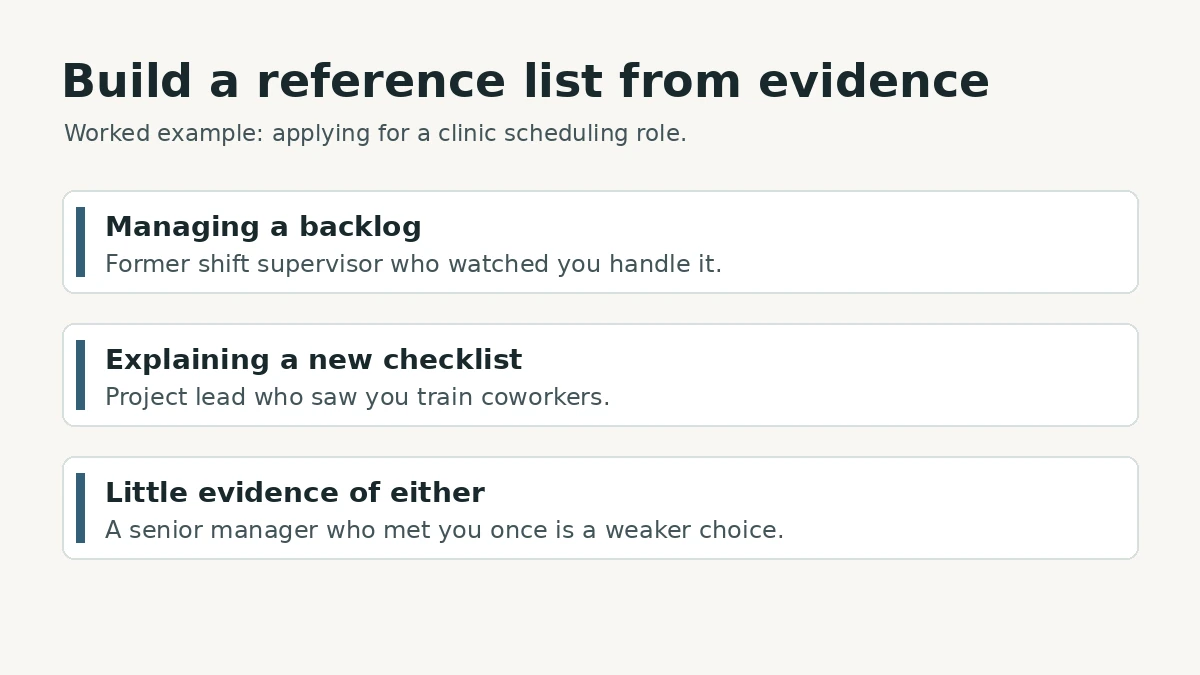
Imagine applying for a clinic scheduling job. In a hypothetical search, a former shift supervisor saw you handle a recurring backlog, a project lead saw you train two coworkers on a new checklist, and a respected manager met you once at a department meeting. Put the first two in contention. They observed different responsibilities, while the third name adds little evidence. If the employer asks for three references, look for a third person who saw a different part of the work or can independently speak to a priority skill.
There are good reasons to pick two people from one organization. One may have managed you directly while another worked next to you on a project. The question is whether the stories will differ. If an employer asks to hear from different workplaces or specific reporting relationships, follow that request. Use the employer’s language exactly when the form distinguishes a direct manager, a colleague and an academic reference.
If a company policy limits what former managers can share, accept that constraint. Ask the recruiter whether HR can confirm dates and title while a permitted reference talks about the quality of your work. If the recruiter needs a separate background screening report, that is a different process; see our guide to a U.S. employment background report error if information in a third-party report is wrong.
Ask for permission and give useful context
Ask before giving anyone’s phone number or email address to a recruiter. Virginia Tech recommends sharing relevant material such as the résumé and job posting, and keeping references updated. Give them a clear way to decline and enough time to answer. Confirm their preferred details, current title and the relationship they want you to list. Use the contact details they choose, rather than guessing from an old company directory.
A short request can be enough: “I’m applying for a scheduling role, and the employer may request references after interviews. Would you be comfortable being a reference and discussing the time we reorganized the shift handoff? I can send the posting and my résumé if that helps.” Replace the example with your actual work. Once the person agrees, send a factual reminder of dates, responsibilities and the work they saw. Let the reference decide what to say; you do not need to send model answers or share a former employer’s confidential records.
Keep a separate reference sheet you can provide when asked. For each person, record their name, approved title and contact details, how they know your work and the dates or context that distinguish the relationship. Confirm the details for each search. If a recruiting portal asks for contact details at the beginning, make sure your references already know where they are being sent. If the employer has not asked for them, keep them off broadly circulated résumés and public profiles.
When the recruiter requests your current manager
A current manager may have the most recent view of your work, and contacting them may reveal a search you have kept private. Raise the issue early if the application names a current manager or if the recruiter asks when references can be contacted. Some employers may accept a former manager for now; others may have a firm policy. The University of Colorado Boulder’s career guidance discusses why current-manager contact deserves separate care.
Try language like: “My current employer doesn’t know I’m searching. Could you use my former supervisor at this stage? If contact with my current manager is required, can we agree on when you would reach out?” If the answer is no, ask what the employer actually needs to verify and make an informed decision about proceeding. Get any agreed timing in writing. Don’t list a friend as a supervisor or leave a required relationship field inaccurate to get through the form.
If you are interviewing with two employers at once, tell your references which recruiter might call and what the role involves each time. A reference who already agreed to speak about a clinic scheduling application might need different context for a role training new hires. If a call comes unexpectedly or from an unfamiliar number, encourage them to verify the requester with you before discussing any past work. A simple note with the role and recruiter’s preferred contact channel is usually enough.
Before clicking submit, compare the request with the sheet: the right number, the required relationships, permission from each person, correct contact details, and an example the person can describe. When a call is likely, send a short heads-up. After the recruiter has what they need, close the loop and thank the people who helped.
Cover image: AI-generated editorial illustration of a job seeker asking for a reference; no real call is depicted.