
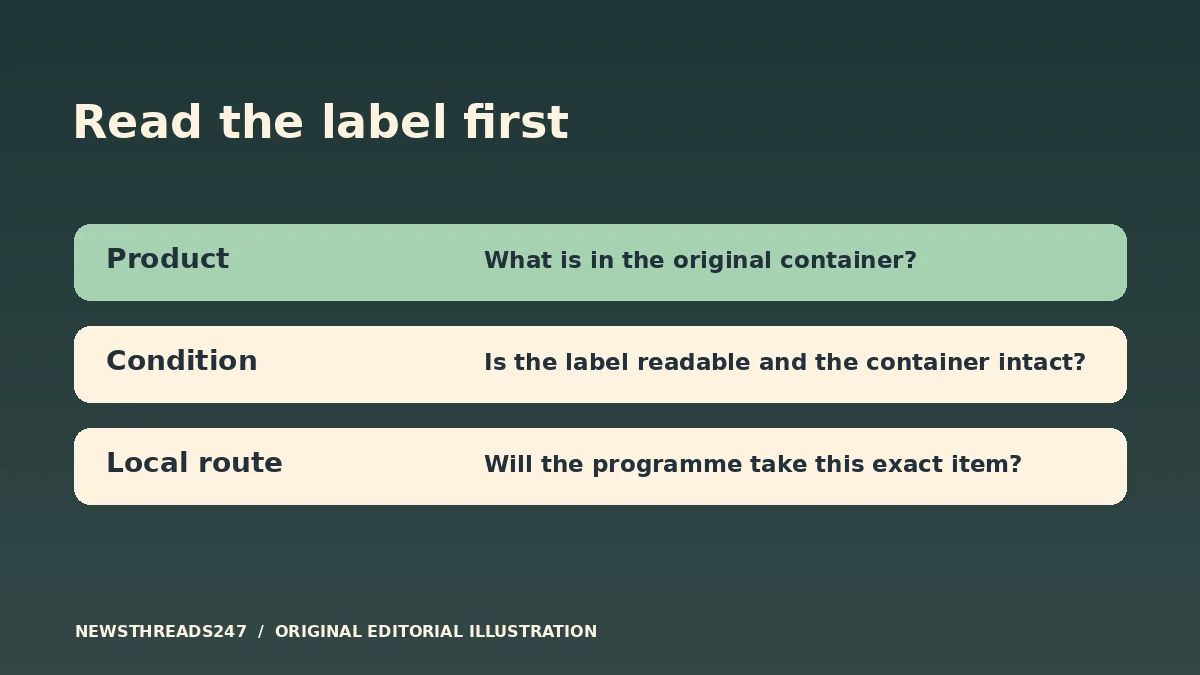
A half-used tin of paint or an old bottle of garden pesticide may need a different disposal route from the plastic and paper you set out each week. For US households, the useful first step is to read the label and identify the item, then check what your city or county actually accepts. Keep intact containers closed, separate and labelled while you make that check. If a container is leaking or corroded, ask your local hazardous-waste authority for instructions before handling or moving it.
In this article
Start with the product, not the recycling symbol
Check what remains in the container and how it was used. A paint can, for example, could contain water-based paint, oil-based paint or a solvent used to clean brushes. Those can have different disposal routes. Write down the name and type from the original label. Warning words such as flammable, corrosive or toxic are useful prompts to look up the item, but a missing or faded warning does not mean the contents are safe.
The US Environmental Protection Agency’s household hazardous waste guide identifies examples including paints, cleaners, oils, batteries and pesticides. Its list helps you spot products that need a closer look. It is not a promise that your local site accepts every product on that list. If the container looks empty, remember that residue can still matter. Keep the label on and check the disposal instructions for that particular product.
For ordinary packaging, use our guide to plastic recycling numbers and local bin rules. A number moulded into a plastic bottle identifies a type of plastic. It cannot tell you whether a bottle with chemical residue belongs in the curbside bin.
Leave each product in its original container
Keep products in their own labelled containers and follow storage directions. Do not consolidate leftovers into one bottle to save space. The mixtures may react, and a receiving site may no longer be able to identify or accept them. Do not put chemicals in food or drink containers, even if you intend to label them yourself.
Avoid trying to identify an unknown product by opening it or smelling it. If the label is missing, say that when you call the local programme. A damaged, leaking or corroded container needs its own instructions. Do not decant the contents or transport it on the assumption that a regular collection site can deal with it. For pesticides, the EPA’s disposal guidance also advises following the label and checking local requirements; it says not to pour them into a sink, toilet or drain.
Ask the local programme five questions before you leave
Look for a government household hazardous waste page for the address where you live. Verify which residents it serves, whether it accepts your exact item, the container or condition it will take, the quantity limit, and whether it requires an appointment or proof of residence. Ask about transport instructions after you know the site accepts the item. A recycling directory or an old collection notice may be a starting point, but the programme’s current instructions should guide the trip.
For example, King County in Washington offers collection sites and a travelling Wastemobile. Austin’s Resource Recovery department offers drop-off by appointment. These are examples of how programmes work in different places. They do not establish the rules for your address, and hours and acceptance lists can change.
Sort a few common items before making one trip
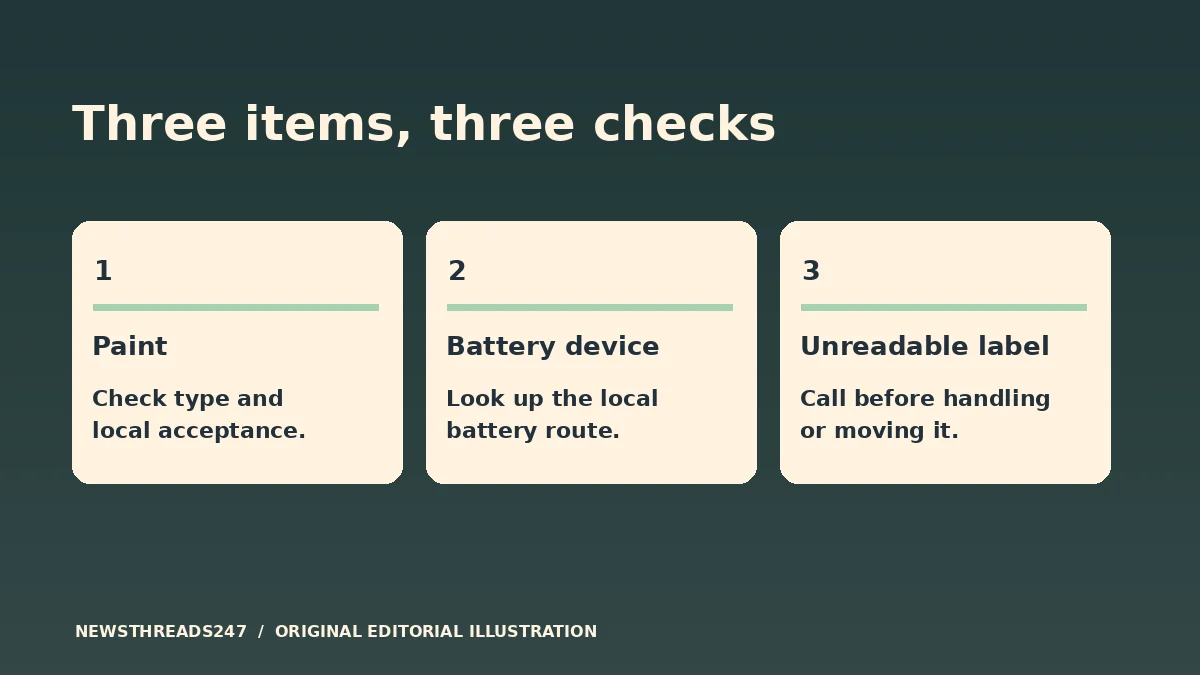
Imagine you have a labelled can of leftover paint, a small rechargeable device and a bottle with an unreadable label. Look up the paint by its type and ask whether the programme directs it to a paint collection point. For the device, check the local electronics or battery route. The EPA’s household battery guide says lithium-ion batteries and devices that contain them do not belong in household trash or municipal recycling bins. If a battery looks damaged, ask for specific handling instructions; do not assume an ordinary collection box is suitable.
For the unreadable bottle, call before moving it and explain what you know. If the programme will take the paint but sends the device elsewhere, write down two destinations rather than putting all three items in a box. This sort takes a few minutes and can prevent a rejected drop-off or unsafe handling.
Keep a small disposal record for next time
Save the official programme page and note the date you checked it. Write one line per item: name, condition, destination and any preparation instruction. Check again before a new trip, particularly if you move or the programme offers only periodic events. The durable rule is to identify the product, keep it separate, then match it to a confirmed route.