
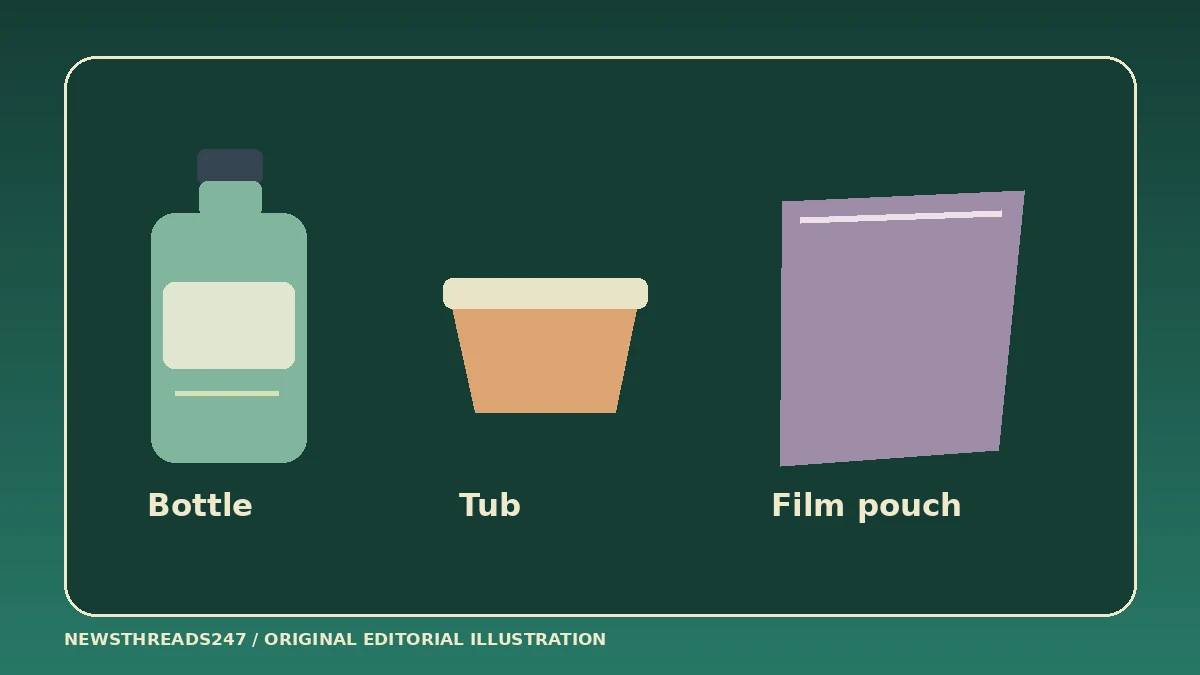
The number on a plastic package helps identify the material. It does not tell you whether your local service accepts the item. Before putting it in a recycling bin, check the current instructions for your address and look up the item by shape: a bottle, a tub, a clamshell or a piece of film. Rules for those items can differ even within the same metro area.
In this article
Read the number as a material label
A plastic bottle and a shallow takeout tray can look equally solid. A label on either one still answers only part of the recycling question. The resin identification code is about the type of plastic. It is not a promise about which household bins will accept the package or what happens to it after collection. The US Environmental Protection Agency’s guide recommends checking what your local program accepts instead of treating the triangle as automatic permission.
A collection guide might talk about bottles, jugs, tubs and cups rather than listing resin numbers. That wording matters. If a guide says bottles and tubs, a clear hinged clamshell does not become a tub because it once held food. If a different program explicitly accepts clamshells, follow that program. The best search term is the name of the item in your hand, not just the number stamped on its base.
Look up the whole item and its parts. A rigid tray may arrive sealed with film. Its label may explain one component, while your collector treats the tray and film separately. Find the local rules for both before assuming they have the same destination.
Start with the service that empties your bin
Use your city, county, waste district or named hauler’s current page for the address. An apartment may use a different service or collection area from the house across the street. The notice inside your building or the landlord’s instructions can help identify the hauler, but compare any old poster with the current list if you find a conflict.
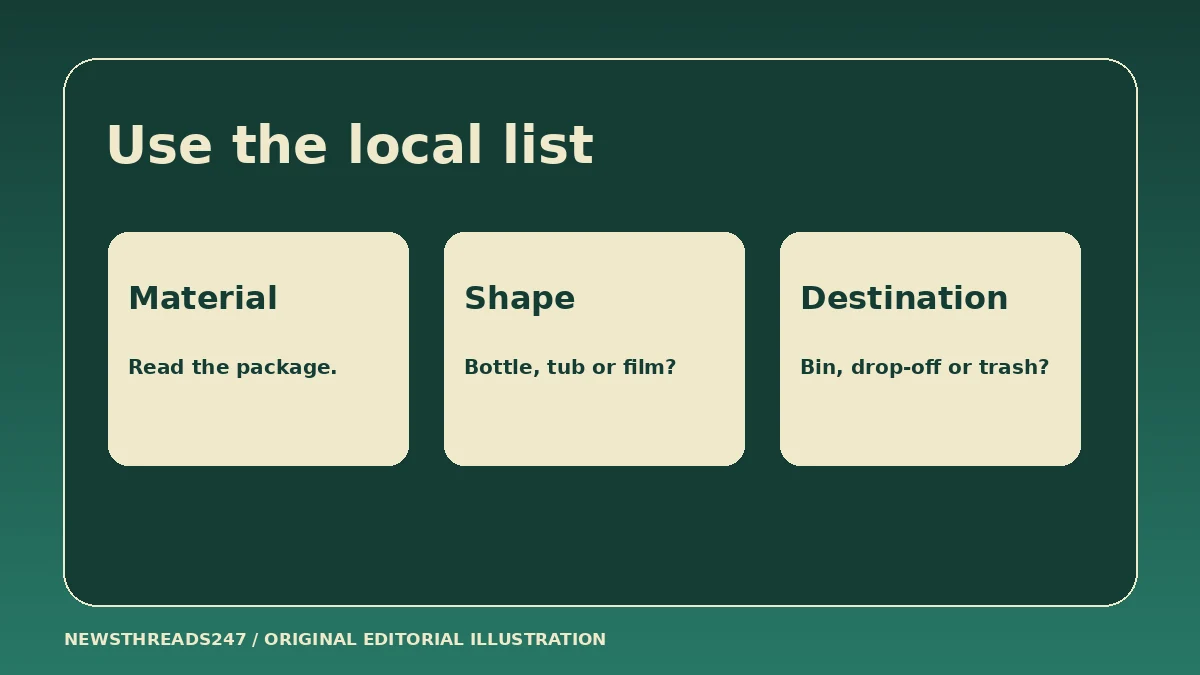
Try a concrete query such as “plastic clamshell” in the local lookup tool. If you cannot find the item, check the instructions for uncertain items, or ask the collector with a photo and a description of the package. A query for “plastic number 5” alone is less useful if the program sorts containers by shape. Save the official guide where the household can find it again.
There are usually two questions to settle: whether the item is accepted, and what the collector wants you to do before you put it out. An instruction about emptying and rinsing a food tub cannot make an excluded tray acceptable. Acceptance comes first; preparation comes second.
See how two cities treat the same package
New York City’s Department of Sanitation lists rigid plastic with metal, glass jars and bottles, and cartons, and says the number on the package is not the deciding factor. Check its list of included items and exceptions. In contrast, the City of Kirkland, Washington accepts named container shapes such as bottles, jugs, tubs and cups, and explicitly excludes plastic clamshell or tray takeout containers from curbside recycling.
Consider a hypothetical clear hinged salad box. The person in Kirkland has a direct answer: the city excludes that shape. The person in New York checks the city’s broader rigid-plastic list for that same object and how to prepare it. A numeric code on both boxes would not settle either address’s instructions.
A flexible mailing pouch is a different case. The Kirkland film guidance describes separate drop-off options and distinguishes certain all-plastic mailers from paper-lined ones. Even where a drop-off accepts a film, that does not authorize putting it in the home recycling cart. Confirm what the drop-off accepts and whether it is still operating before making a trip.
Keep uncertain items out of the wrong stream
Empty containers and prepare them the way your collector specifies. Caps, lids and bags are worth a separate look, because one rule about the container does not necessarily cover the part that comes off it. Local guidance may also specify whether items should be loose or bagged. A convenient routine is to keep a small place near the bin for items you intend to look up rather than guessing as you clean up after dinner.
Do not use a household plastic lookup to decide where batteries, electronics or hazardous containers belong. These have separate rules. Consult your collector’s separate e-waste or battery guidance when that equipment is retired. For food tubs, decide what to do with the contents before preparing the empty container: our leftovers storage guide covers food you intend to keep. The EPA’s broader recycling guide also separates those materials from ordinary packaging.
Keep a short list of the items you actually buy
A complete catalog of plastics is less useful than a short note covering the packages your household sees every week. List the milk jug, yogurt tub, takeout tray and delivery pouch. Next to each, write the route your collector gives it and one preparation note. If a package changes from rigid to flexible, look it up again rather than copying the old entry.
This guide uses US examples; they are not instructions for other countries or even for another US city. Recheck the list after a move, a change in building collection or a new notice from your collector. The graphics are original illustrations of package shapes, not examples of a brand’s recycling claim.