
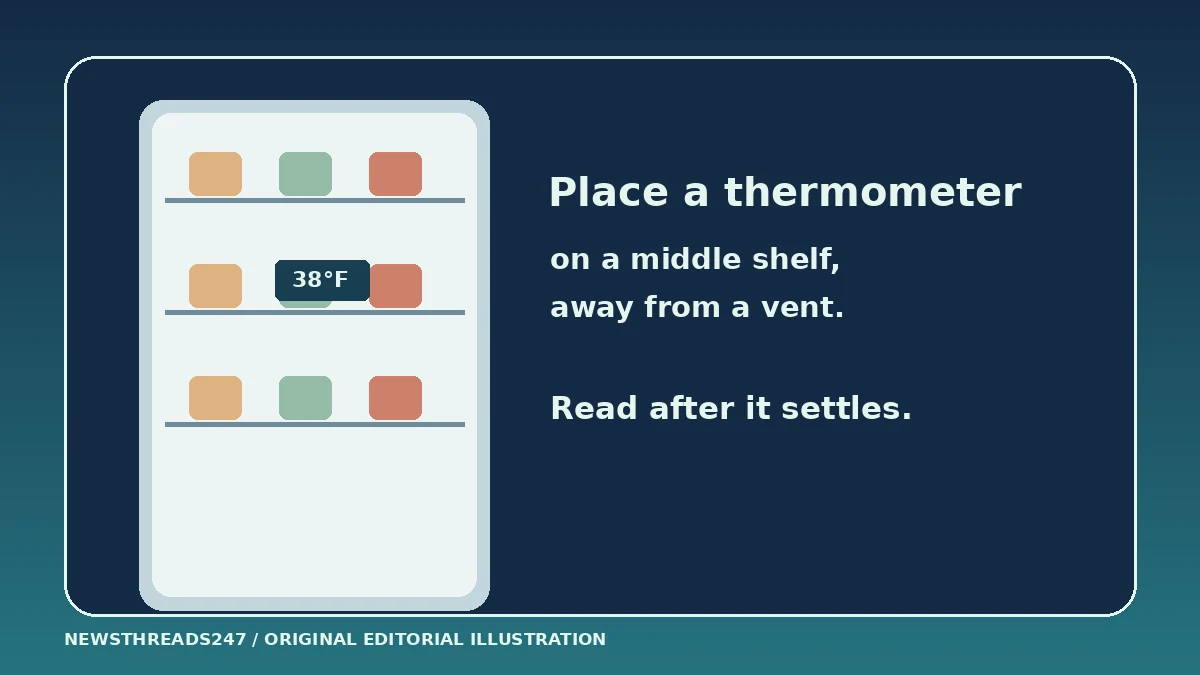
Put a refrigerator thermometer on a middle shelf, away from a cold-air outlet, and give it time to settle with the door closed. The FDA recommends keeping a home refrigerator at 40°F or below. If the number on the fridge display and the thermometer disagree, find out whether the display is showing the set temperature or a measured reading before you turn the dial.
In this article
Set up a reading you can repeat
Choose a thermometer intended for refrigerators. It should be easy to read in the range you need, and stable enough that you will not move it every time you take out a container. The FDA’s refrigerator thermometer guide recommends a separate appliance thermometer to monitor the compartment. The freezer has a different target, 0°F; a reading from one compartment tells you nothing about the other.
A middle shelf is a useful starting point when your model does not specify a location. Leave some space around the instrument and avoid contact with the back wall or a cold-air vent. A reading in the door may be useful if you want to understand the door, but it is a poor stand-in for the whole compartment. Note the shelf, the dial setting and the time. Keeping the conditions similar makes tomorrow’s reading easier to compare.
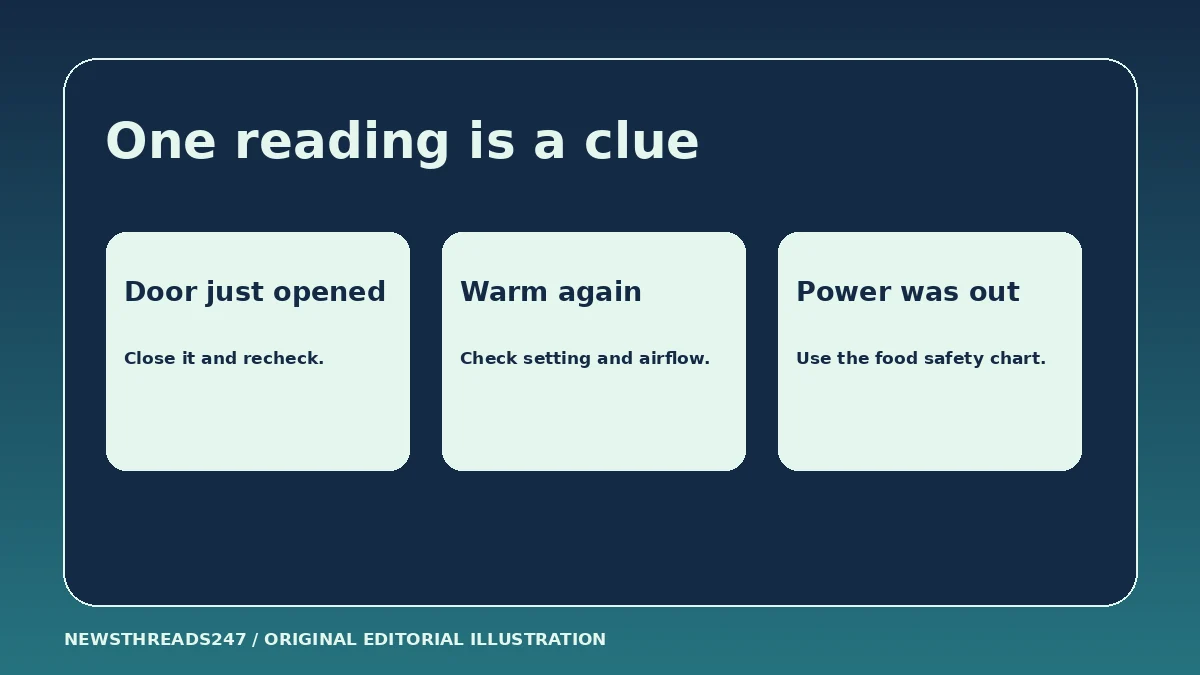
Read it quickly after the door has been shut for a stretch. An air thermometer can respond to incoming room air, and a display on the fridge may be reporting its setting. A reading after unpacking groceries and one after an overnight rest answer different questions. If the maker specifies how to measure temperature in your model, use that procedure for troubleshooting. For example, GE Appliances describes a liquid-based check rather than relying on a brief air reading and allows 24 hours for its controls to stabilize.
Check the shelf that holds your perishables
A satisfactory center reading gives you a starting point. It does not certify the entire fridge. If you keep milk on a different shelf, or a particular drawer routinely freezes vegetables, measure in that area too. Use a second appliance thermometer or move the first and let it stabilize before comparing. Do not move meat or dairy into a suspect warm zone to run the test.
Imagine a middle shelf settles at 37°F, while another shelf repeatedly reads 43°F under similar conditions. That is a reason to move perishables away from the warmer shelf and investigate, even though the center reading looks good. If the second measurement was taken immediately after the door stood open, take a settled reading before deciding whether the shelf itself runs warm. The example readings illustrate the method; they do not establish how long any particular food has been safe.
The aim is a small map you can act on. Write down the normal spot for milk and leftovers, the part of the fridge that sometimes freezes produce, and where you will leave the thermometer so someone else can check it. Keep raw meat contained so that leaks cannot reach food you plan to eat without cooking.
If it stays warm, change one thing at a time
First look for anything blocking airflow, preventing the door from closing or holding the gasket open. The Department of Energy’s Building America guide discusses blocked vents, door seals and a follow-up measurement after changing a setting. Check the manual for the direction of your dial; the numbers on a mechanical control are not necessarily degrees.
Make a small adjustment and recheck after the interval the maker recommends. If you both rearrange a crowded shelf and change the dial, you will know less about which step helped. Move perishables to reliable cold storage if the fridge is staying warm rather than waiting for a repair with food still in it. If temperatures repeatedly remain outside the recommended range after simple checks, consult the manual or arrange service.
A useful record for service is short: the model, which compartment is affected, the settings, the times and locations of the readings, and whether the freezer seems normal. It is better evidence than the dashboard value alone.
After an outage, check food as well as the fridge
Keep the door closed during a power outage. A thermometer can inform decisions after power returns, but a cold reading after the compressor restarts does not reveal the maximum temperature reached earlier. Write down when the power went out and when it returned, if known. The FDA outage guidance explains the limits of closed-door storage and when to discard perishable foods. Apply it to the food and circumstances rather than assuming every item in the cabinet has the same risk.
Do not taste food to decide whether it is safe. For a brief temperature fluctuation with no known outage, repeat the appliance check; for possible prolonged warming, use the food safety guidance immediately. Our leftovers guide covers cooling and storing cooked food in the first place.
Make the next check easier
Pick one ordinary time to read the thermometer, such as before the first meal of the day. Recheck after moving the appliance, changing the settings, making a major change to where perishables are stored or returning after a known outage. Do not compare a measurement made under one set of conditions with a reading from another compartment and call it a trend.
If a household member asks whether a shelf is cold enough, a dated reading from that shelf is far more useful than pointing to the dial. Keep the manual link with the readings, and check the FDA guidance again if its advice or your appliance model changes. All temperatures and placement graphics here are illustrations and guidance for home refrigerators, not performance tests of a particular model.