
Use your two pages to show the reviewer what you did, where you did it and for how long. Start with the vacancy’s specialized experience and required documents, then match them to work you can honestly describe. A shorter resume helps only if the evidence the agency needs survives the edit.
In this article
Where the two-page limit applies
The USAJOBS Help Center says its resume builder and upload process do not allow resumes longer than two pages. Office of Personnel Management guidance describes the rule for competitive and excepted service announcements under Title 5. It also gives instructions for certain non-Title 5, judicial and legislative employers that choose to accept a longer resume. Follow the specific announcement and its document instructions if it expressly offers that route.
Two pages is a maximum in the normal USAJOBS route, not a requirement to fill every line. A readable page with the evidence requested is more useful than a second page of unrelated roles. Conversely, squeezing required dates, hours or relevant duties out of the document to fit one page can leave the reviewer unable to assess the experience.
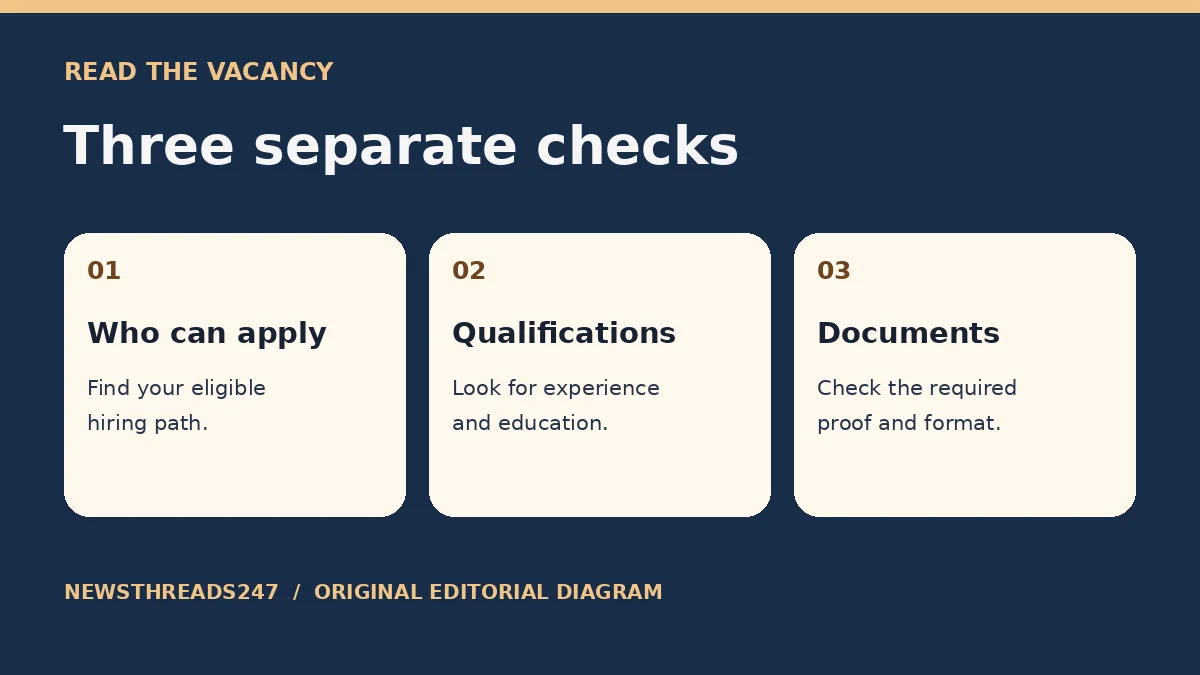
Read the vacancy in three passes
First, look at who may apply. An opening may be limited to one or more hiring paths; a strong resume does not establish that you are in an eligible group. Second, read the qualifications for the grade you are seeking, including specialized experience, education and any permitted alternatives. Third, check the required documents and the application instructions. Some announcements also link to a questionnaire preview.
Make a small evidence map before you edit. In one column, write each requirement in plain language. In the second, note a real example from your own work. In the third, note the dates and hours, the role where the evidence belongs, and whether the agency wants a separate document. Do this for each grade you are applying for rather than treating a multi-grade announcement as one undifferentiated role.
If you cannot find evidence for one requirement, go back to the announcement. It may expressly allow education to substitute for some experience, or it may not. Avoid treating a general degree, an employer’s name or a skill in your summary as proof that the vacancy allows the substitution.
Replace broad claims with useful evidence
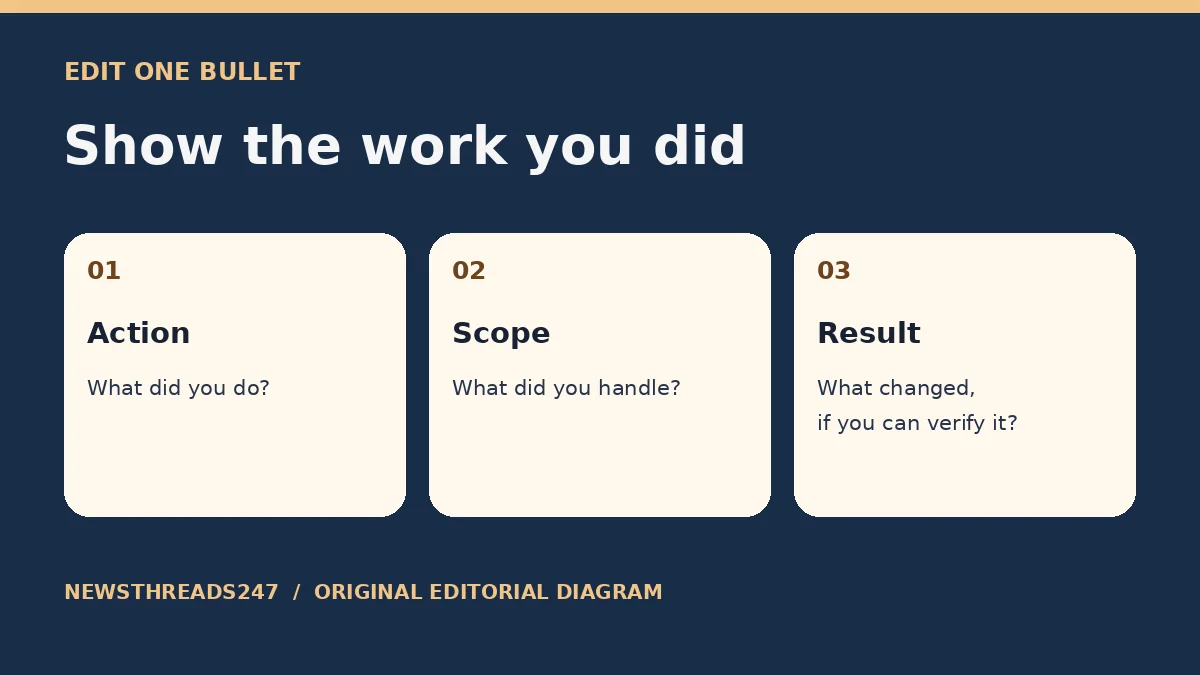
A generic line such as “Responsible for reviewing records” says little about the work. A fictional rewrite is: “Reviewed weekly inventory exception reports, compared flagged entries against receiving records, and documented unresolved discrepancies for a supervisor.” That description tells a reviewer what was checked, what evidence was used and where the work ended. Use those verbs only if they describe your actual role.
A verified result can strengthen a bullet, but there is no need to invent percentages. If you do not have a reliable count, describe the scope honestly: which records, the frequency, the method, and what you handed off. If you worked as part of a team, make your own contribution clear. NIST’s applicant guidance similarly asks for specific examples rather than expecting reviewers to infer experience from a job title.
What to cut first, and what to protect
Start with repeated phrases, old duties unrelated to this vacancy and generic skill lists already proved by your examples. Keep your contact details, employer and role names, employment dates with month and year, and hours per week for relevant experience. For federal experience, include series and grade where applicable. Include requested credentials or education details and attach the required evidence as instructed.
Use the limited space where it changes the decision. If one old role contains your strongest example of a required skill, keep the relevant line from that role and shorten a recent role that does not help. If two positions prove the same requirement, favor the example with clearer duties, dates and scope. The IRS application guide provides another agency example of tailoring the material to the announcement.
| When editing | What to retain |
|---|---|
| Shorten unrelated duties | Relevant evidence for each required skill |
| Remove repeated summary claims | Dates, hours and relevant federal grade |
| Avoid invented metrics | Describe the work and scope you can support |
Do a final check against the actual submission
Open the exported file and confirm it is at most two readable pages under the normal route. Check the second page for cropped lines and broken date ranges. Compare the resume against the questionnaire answers and any supporting documents. A questionnaire answer should not suggest work that your materials cannot support. Where a transcript or another document is required, follow the designated upload route rather than using it as a resume extension.
Before pressing submit, review what the employer will actually receive. Our guide to reviewing autofilled applications covers the separate problem of a portal copying fields incorrectly. Recheck this article when OPM, USAJOBS or the vacancy changes its instructions. The sample bullet and original diagrams are illustrative, not an application that was tested or accepted.