
In this article
Read the pattern on the glass first
If wipers leave streaks, test them while parked on a clean, wetted windscreen. A fine line that returns to the same place can point to something stuck on the rubber or a nick in the edge. A broad haze can be residue on the glass. A patch that remains even after fitting a correctly sized blade is worth showing to a workshop. These are clues for choosing the next check; none identifies the fault by itself.
Visibility comes first. If you cannot see clearly while driving, pull over safely rather than trying different wiper speeds in traffic. Do the inspection somewhere the car can remain parked. Before touching the blades, switch the wipers off, including automatic rain sensing if the vehicle has it, and follow the owner’s manual for the service position. Some arms cannot be lifted safely from their ordinary parked position.
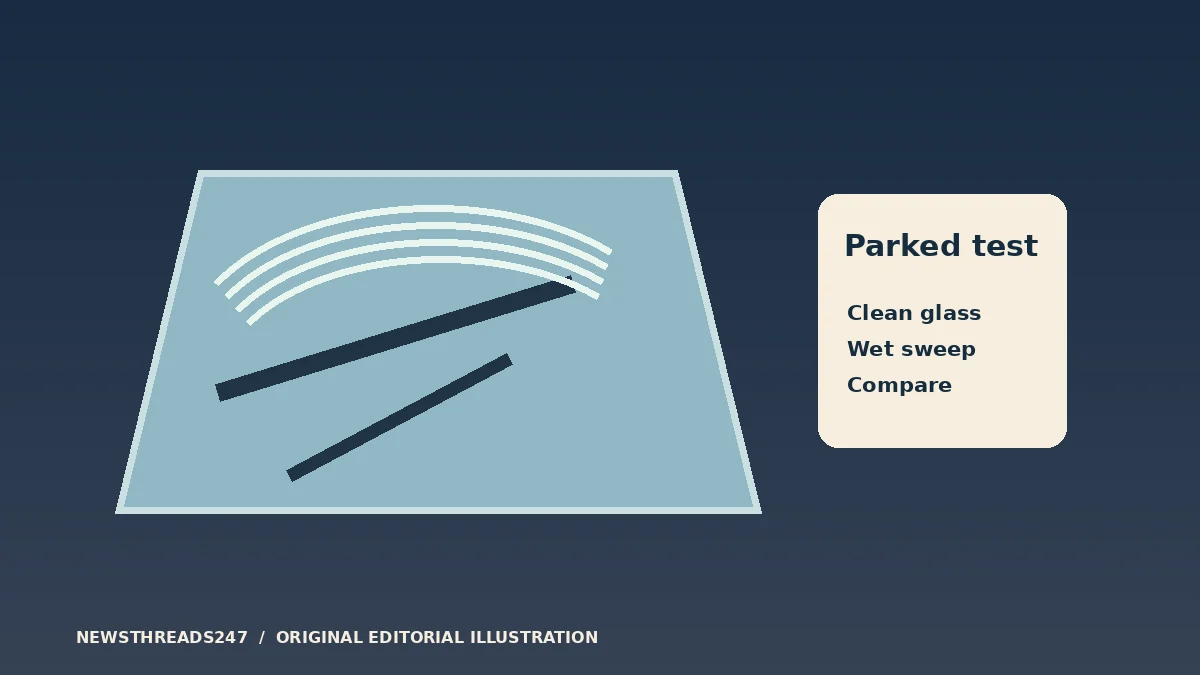
Run a parked test that separates dirt from wear
Start with the glass because it is the larger surface and easiest to check. Wash it with the product the owner’s manual allows. Use clean material so that you do not drag grit across the glass. Then follow the manual’s guidance for wiping the rubber edge and look for splits, missing rubber or an attachment that has come loose. Use the products specified for your own glass and blade. The Tesla Model S manual, for example, gives approved cleaner options and specific service-position instructions; those instructions belong to that model.
Wet the glass with the prescribed washer fluid and run a short sweep from the driver’s seat, keeping hands clear. Note where the line starts, whether it follows one blade and whether it appears on both sweep directions. Compare what you can see before and after cleaning. A line that disappears after cleaning is a reason to stop shopping for parts for the moment. A repeated line next to a visible nick is a much better case for a replacement than noise alone.
Avoid running the wipers on dry, dusty glass as a test. If the spray is weak or misses the affected side, look up the washer-system instructions and check the recommended fluid and its level. A mostly dry sweep can make a good blade look defective. If the manual recommends service rather than adjusting the jet yourself, leave the adjustment to a workshop.
Match the repair to what changed
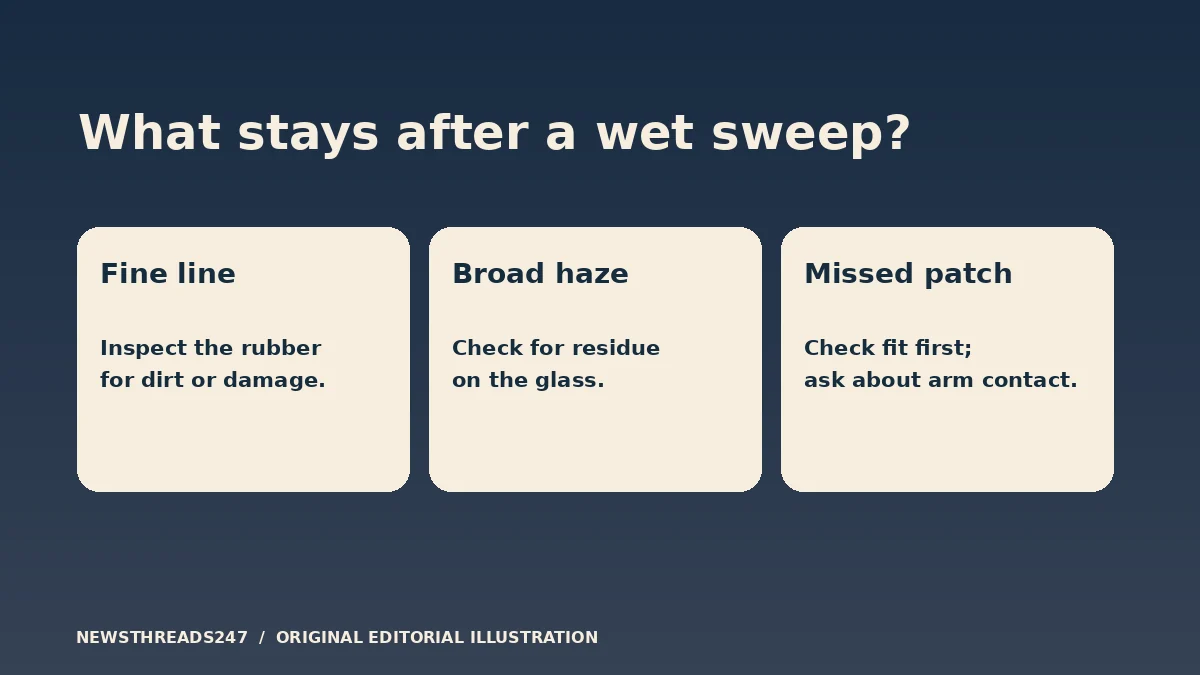
One thin line that repeats in the same place: Look at the blade edge and clean it as directed. If it is split, or the line returns on clean wet glass, replace the worn blade with the correct fit. The blade should match the vehicle’s year and variant as well as the arm connector.
A greasy-looking veil over a wide area: Compare the glass before and after washing. If it appeared just after a wax wash or a glass treatment, mention that history to the shop. The Bosch windscreen care guide identifies surface contamination as one cause of poor wiping and points to pressure and angle checks if maintenance does not resolve it. Use the manufacturer’s instructions for coated glass, and avoid trying random solvents or household abrasives.
A wide missed patch, skipping or chatter that persists: Recheck that the blade is latched and installed in the correct position. If the correct part still leaves a gap, ask a technician to check the arm, glass and contact pressure. Do not bend the arm as a diagnosis. The cost of another blade buys little evidence if the first new one never touched the problem area.
Check the fit before you open the packet
Give a parts seller the make, model, model year and, where relevant, body style or variant. Ask them to confirm the driver and passenger positions separately. The blade lengths and connectors can differ; the rear wiper can require a different part again. Bosch India’s wiper selection guidance explains why the attachment matters alongside the blade type. When in doubt, match the maker’s parts reference rather than the length alone.
If your manual permits DIY fitting, use its service-position instructions and protect the glass so the bare arm cannot snap onto it. Confirm the new blade is securely latched before lowering the arm. Run another wet test while parked. Compare the same area of glass you looked at earlier so you know whether the repair actually changed the symptom.
Give a workshop a useful description
Consider a car that starts streaking the day after new blades go on. A replacement purchase sounds sensible until a parked test reveals that the right side barely gets wet. Checking the washer system or fit first makes the next visit more useful. By contrast, a visible tear on the rubber after months of use points to a different repair. Bring a simple observation rather than asking the shop to guess from the phrase “wipers are bad.”
Tell the technician which side is affected, whether it happens with washer fluid or rain, and whether it began after new blades, a glass treatment or windscreen work. If the windscreen was replaced on a car with driver-assistance cameras, use the windscreen calibration checklist for that separate concern; a working wiper does not establish that the camera is calibrated. Once the glass clears, recheck after any blade, washer-fluid or windscreen change that brings the symptom back.